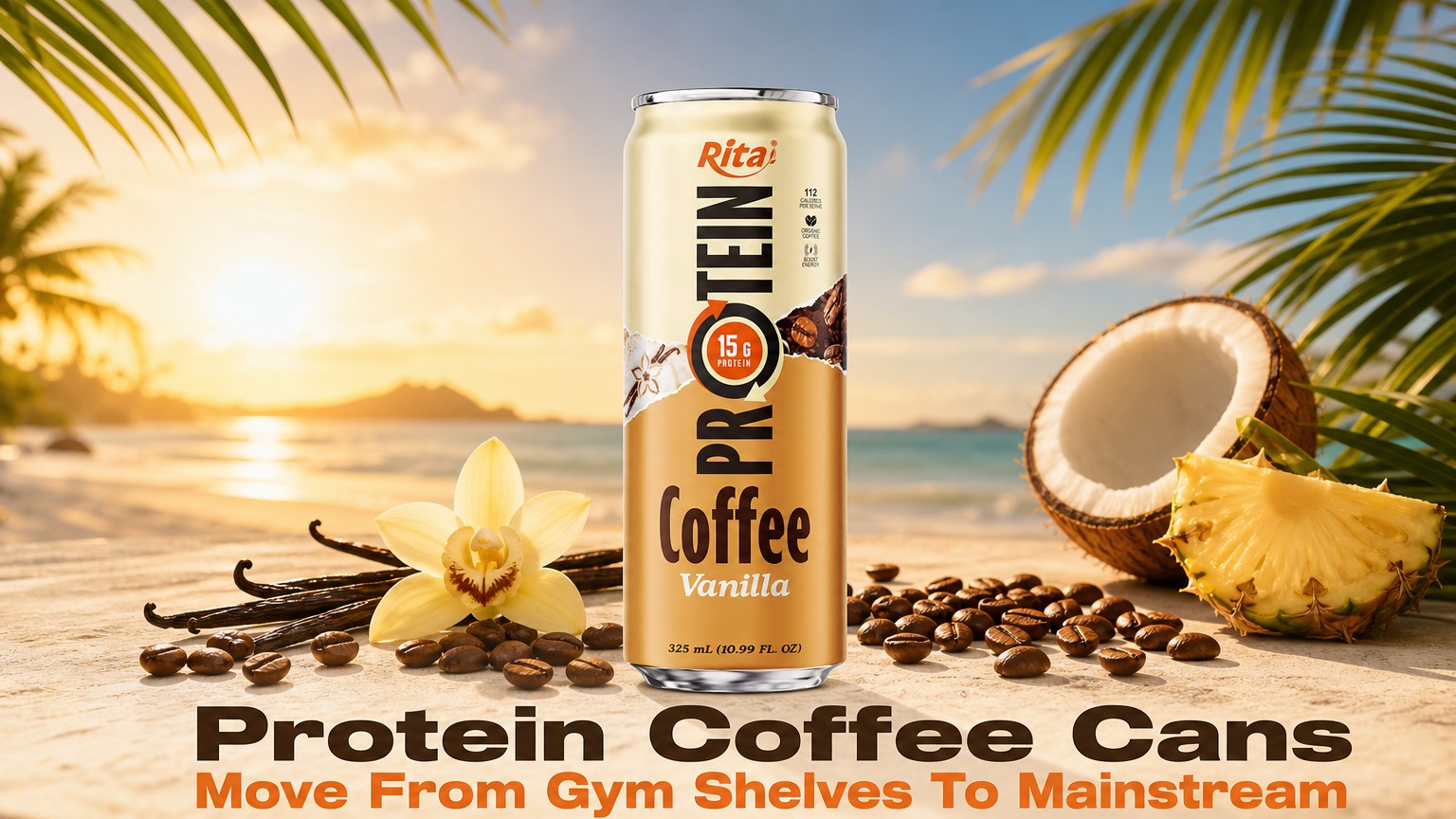
The protein coffee category has moved rapidly from a niche gym-bag format into a serious ready-to-drink line item, and the Rita Protein Coffee Vanilla 325ml can is a clear illustration of where the segment is heading. Fifteen grams of milk-derived protein, a measured vanilla sweetness and a clean coffee finish now sit inside a single aluminum can built for export. For buyers scanning the trade press, the product matters less as an individual SKU than as evidence of how quickly convenience-led beverage formats are being industrialized, certified and shipped across borders.
Key Takeaways
- Ready-to-drink protein coffee is shifting from specialist channels into mainstream retail and foodservice distribution.
- The Rita Protein Coffee Vanilla 325ml can pairs 15g of protein with approximately 183 kcal in a shelf-stable format.
- Aluminum packaging and a 24-month shelf life support long-haul shipping to importers.
- Certified OEM and ODM capacity is the deciding factor for private label buyers entering the segment.
- Tighter regulatory scrutiny of beverage claims is pushing formulators toward simpler, quantified label language.
Protein Coffee Finds A Wider Audience Across Asia
Demand has outgrown the supplement aisle.
Across Southeast Asia, East Asia and South Asia, convenience retail has become the primary discovery point for protein coffee. Chiller doors that once held only flavored milk and energy shots now carry coffee-and-protein combinations in sleek cans, priced between everyday soft drinks and premium cafe beverages. Buyers in Thailand, Indonesia, Vietnam, Japan, South Korea and India describe the same pattern: shoppers reach for the can because it tastes like coffee, then confirm the protein figure on the back label.
The wider RTD beverage trends are impossible to miss. Paulaner’s decision to prepare an entry into the ready-to-drink market is the latest sign that legacy brewers now treat canned convenience as strategic rather than peripheral. When large players validate a format, distributor conversations change tone and shelf space follows.
Price positioning matters just as much as placement. At roughly 183 kcal per can, the format sits comfortably alongside chilled tea and flavored milk, which means listing negotiations happen inside the everyday beverage budget rather than the supplement budget.
Convenience drives the format shift
A 325ml aluminum can needs no refrigeration before opening, survives unloading in tropical humidity and fits a cup holder, a gym bag or a laptop sleeve. That combination removes most of the friction that earlier protein beverages, powders and thick PET-bottled shakes, struggled with. For importers the operational argument is just as simple: a 24-month shelf life under cool, dry storage lets containers be consolidated and shipped without tight expiry coordination.
Distribution has widened accordingly. The format now shows up in:
- Convenience store chillers and front-of-store impulse racks
- Gym, studio and sports-club counters
- Office towers, campuses and transit retail
- Airport duty-free and airline trolley service
Flavor decides repeat purchase
Repeat purchase in this category is driven by taste rather than specification sheets. Coffee carries an inherent bitterness that many casual consumers find abrasive in a protein format, and vanilla rounds it off without pushing the drink into dessert territory.
Rita Protein Coffee Vanilla pairs artificial vanilla flavor with instant coffee powder, producing a creamy profile that stays consistent can to can. The approach mirrors what RITA has refined across its coffee drinks catalogue, where milk-based and black coffee formulations are tuned for regional palates. Consistency is the quiet requirement here: a distributor cannot rebuild a listing if batch two tastes different from batch one.
Inside The Protein Coffee Can – Formulation, Taste And Packaging
The specification sheet is short, deliberate and export-minded.
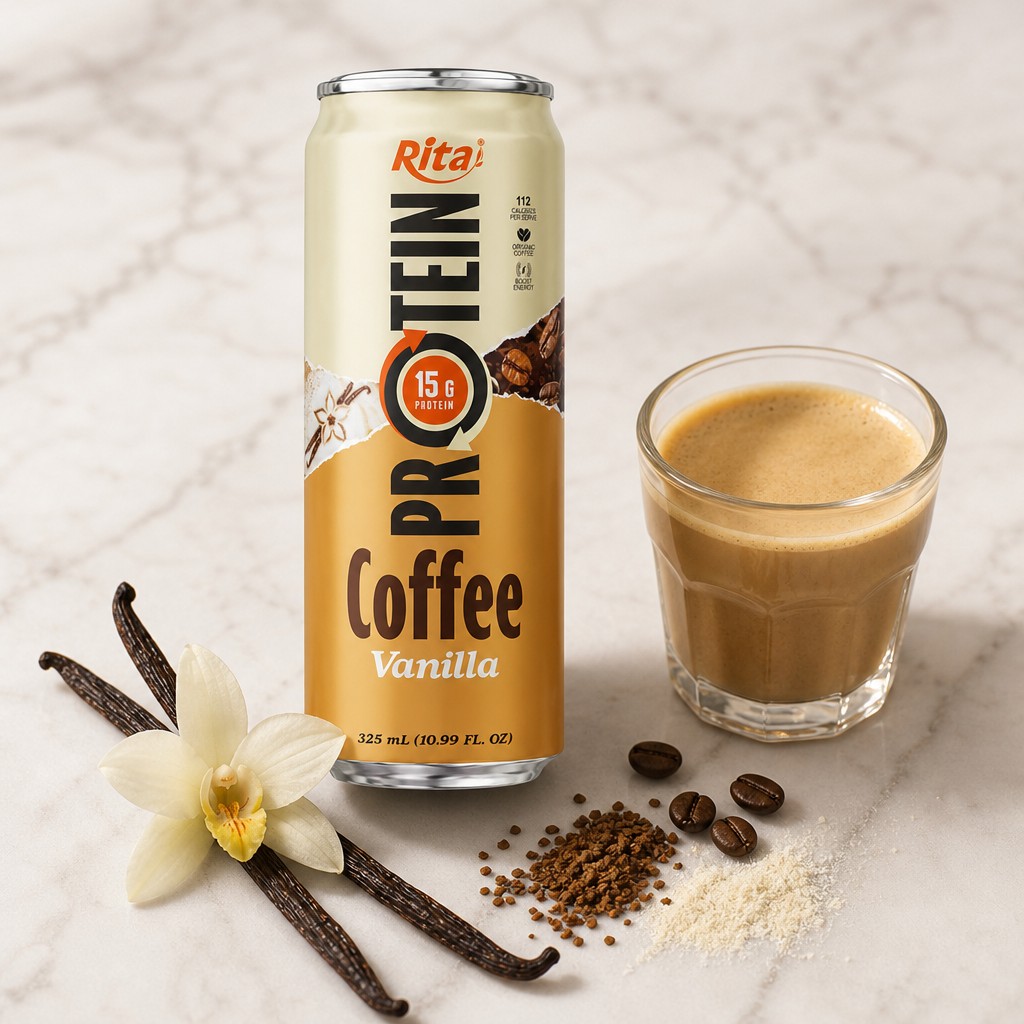
The ingredient deck reads whole milk powder, milk protein concentrate, instant coffee powder, artificial vanilla flavor, and a sweetener system of sucralose with acesulfame potassium. The two milk-derived inputs carry the body of the drink, which is why the texture stays smooth rather than chalky, a familiar challenge in the milk series category that RITA formulates every day.
Each 325ml can delivers 15 grams of protein and approximately 183 kcal. For buyers benchmarking a high protein coffee can against competing listings, those two figures are what end up on comparison sheets alongside sugar and caffeine. Full specification, imagery and case configuration are published on the Rita Protein Coffee Vanilla 325ml product page.
Label language under pressure
Regulators are reading labels more closely. India’s food regulator issued notices to Nestle and Unilever over alleged misleading claims, a reminder that wording around protein content and everyday nutrition is now a compliance question rather than a marketing flourish. The implication for new entrants is straightforward: state what is in the can, quantify it, and avoid narrative that cannot be substantiated in an audit.
The vanilla protein coffee can follows that logic. Front-of-pack typography leads with the protein figure, the flavor name sits beneath the coffee wordmark, and the claim set stays deliberately narrow.
Packaging built for long-haul shipping
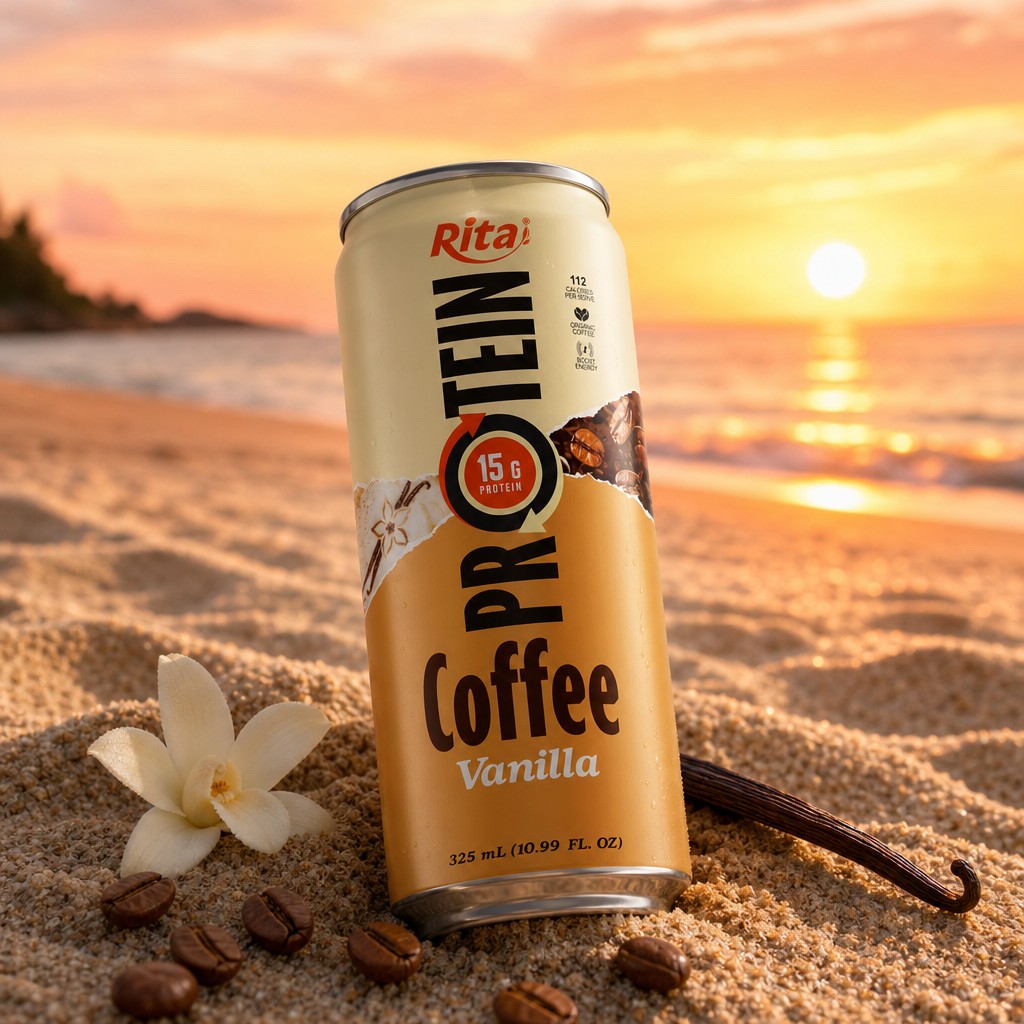
The 325ml sleek can carries a cream-to-gold gradient with silver rims, bold vertical PROTEIN lettering, a circular arrow graphic calling out 15 G PROTEIN, roasted coffee beans on one side and a vanilla flower with pods on the other. Aluminum protects aroma from light and oxygen, tolerates pallet stacking and holds a 24-month shelf life in cool, dry conditions, a practical advantage for coffee drink export routes that cross several climate zones.
The design also does merchandising work. The can reads clearly from a meter away in a crowded chiller, which matters when a new listing competes against established tea, juice and dairy brands on the same door.
From The Highlands To The Can – Raw Material Sourcing
Coffee quality starts long before the roaster.
Sourcing transparency has become a standard question in beverage tenders, and RITA documents its ingredient origins directly. The company’s team recorded a visit to Vietnam’s coffee gardens at peak harvest season, following beans from highland plots through to the stage where they are ground and brewed into the coffee base used in the can.
Buyers who want to see the origin region for themselves can watch the field footage recorded during that sourcing trip: https://www.youtube.com/watch?v=F2yJLjUYiuo
Milk-derived inputs follow a parallel track. Whole milk powder and milk protein concentrate are drawn from audited suppliers and held to the same certification framework applied across the wider portfolio, so a change of origin never becomes a change of standard.
Export Infrastructure And Private Label Demand
Scale decides who can actually supply a listing.
RITA Food and Drink Co., Ltd, established in 2004, runs more than 50 automated production lines and ships over 1,200 containers a month to buyers in more than 200 countries and territories. That infrastructure is what allows an OEM beverage manufacturer to commit to repeatable lead times rather than one-off trial batches.
For private label buyers, the practical question is whether a supplier can hold specification across a full container program. The Rita Protein Coffee 15g ready-to-drink can is positioned for exactly that scenario: an established formulation that can be re-skinned, re-flavored or reformulated under an importer’s own brand.
Certification coverage is usually the second gate in a tender document:
- BRC and FSSC 22000 for food safety management systems
- Halal Jakim and Halal HCA-GCC for Middle East and Southeast Asian distribution
- Kosher, ISO, GMP, HACCP and SMETA for retail and ethical audit requirements
That breadth matters because private label beverage programs rarely stop at one border. A buyer launching in a single market often plans the next within the same fiscal year, and a re-certification delay can cost a whole season. With Halal, Kosher and international food safety certificates already in place, the path from first sample to first shipment shortens considerably, particularly for a ready-to-drink coffee SKU aimed at several destinations at once.
Industry Headlines Shaping Buyer Decisions
This quarter’s trade news reads like a map of where capital is moving.
Akola’s acquisition of a controlling stake in Lithuania’s OMG Bubble Tea chain shows beverage groups buying distribution rather than building it. Proximo’s temporary halt at its U.S. distillery illustrates how quickly supply assumptions can shift mid-year. Even the German wine harvest, with mixed yield and quality estimates across regions, is a reminder that raw material variability remains a standing risk in every category.
For the protein coffee segment, the transferable lesson is that format credibility travels. When global brands treat canned, ready-to-drink products as core rather than experimental, importers gain the confidence to commit container volumes to a new listing instead of waiting a cycle to see how the shelf performs.
Frequently Asked Questions
What is the Rita Protein Coffee Vanilla 325ml can?
It is a ready-to-drink coffee beverage packed in a 325ml aluminum can, formulated with milk-derived protein, instant coffee and vanilla flavor. Each can contains 15 grams of protein and approximately 183 kcal, with a 24-month shelf life under cool, dry storage.
What ingredients are used in the vanilla protein coffee?
The ingredient list includes whole milk powder, milk protein concentrate, instant coffee powder, artificial vanilla flavor, and the sweeteners sucralose and acesulfame potassium.
How is the product packaged for export?
The 325ml sleek aluminum can is designed for durability and long-distance shipping, with a cream-to-gold gradient, bold PROTEIN typography and coffee-bean and vanilla graphics that stay legible through pallet handling and retail display.
Does RITA offer private label and OEM options for this product?
Yes. RITA Food and Drink Co., Ltd runs OEM and ODM programs that let importers and distributors adapt formulation, flavor, artwork and case configuration under their own brand, backed by more than 50 automated production lines.
Which certifications support export of the product?
The manufacturer holds BRC, FSSC 22000, Halal Jakim, Halal HCA-GCC, Kosher, ISO, GMP, HACCP and SMETA certifications, covering food safety, religious dietary requirements and social audit standards across more than 200 export markets.