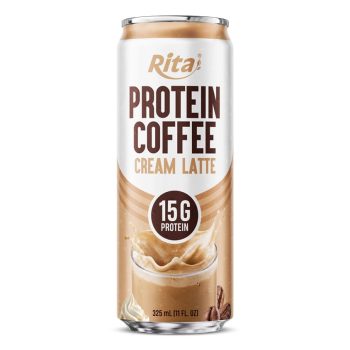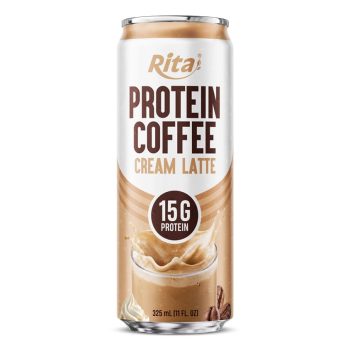
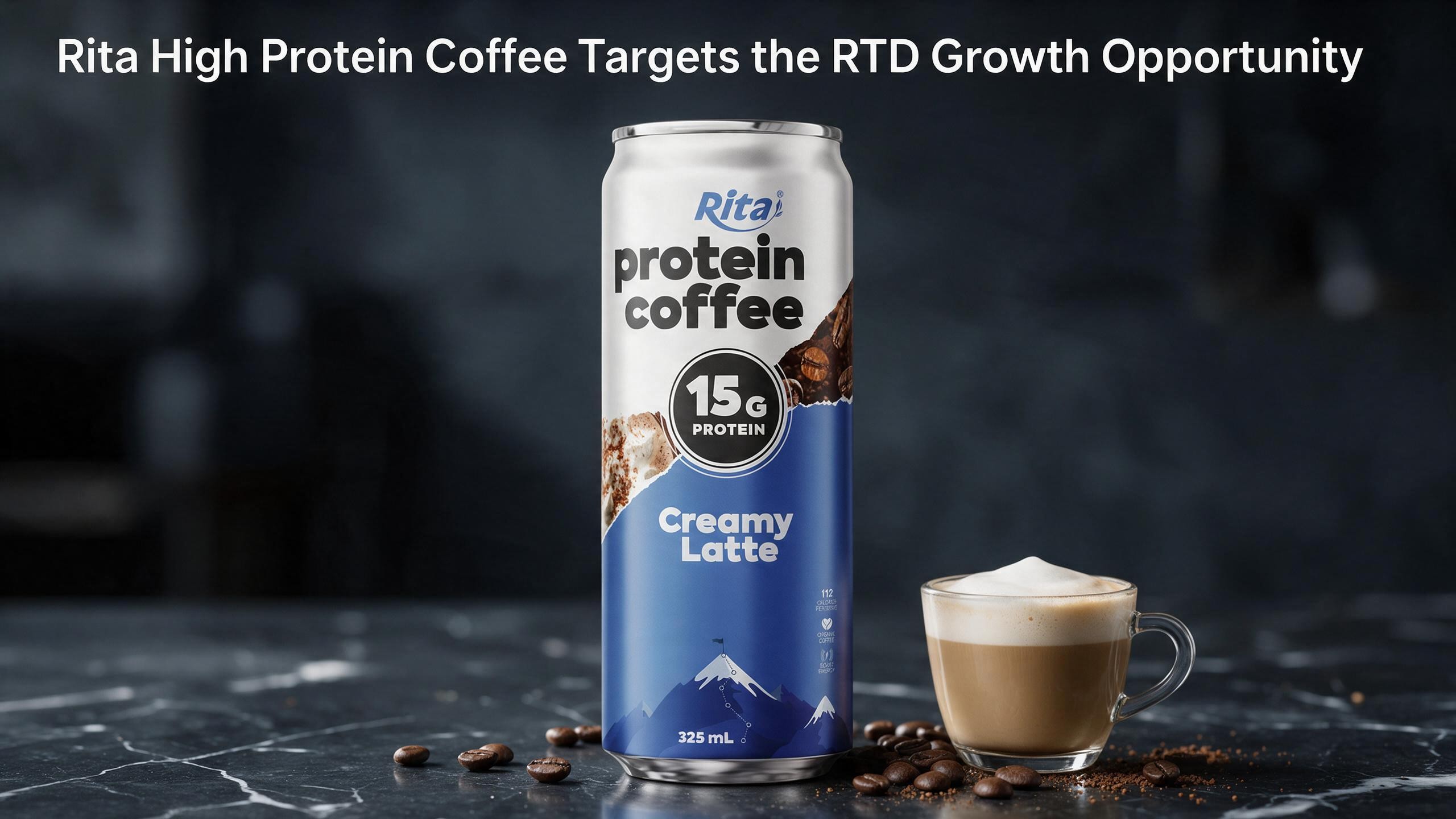
Rita High Protein Coffee Creamy Latte is entering the ready-to-drink coffee category at a moment when consumers are rethinking what a can of coffee should deliver. The 325ml aluminum format pairs 15 grams of protein with a smooth, milky latte profile, giving retailers and distributors a compact proposition to weigh. For buyers scanning the protein-beverage aisle, it offers a clear snapshot of how Vietnamese production capacity meets shifting shelf expectations.
Key Takeaways
- 325ml aluminum can delivering 15g of protein and approximately 112 calories per serving, with no artificial flavors, colors, or preservatives
- Creamy Latte sits alongside Vanilla and Mocha, forming a three-SKU retail set with shared packaging language
- Produced by RITA Food and Drink Co., Ltd., a Vietnamese OEM and ODM exporter shipping to more than 200 countries and territories
- 24-month shelf life under dry, cool storage, supporting long export and distribution windows
- Certified under BRC, FSSC 22000, Halal Jakim, Halal HCA-GCC, Kosher, ISO, GMP, HACCP, and SMETA
High Protein Coffee Arrives in Asia’s Everyday Coffee Markets
The target footprint spans Thailand, Indonesia, the Philippines, Malaysia, Vietnam, Singapore, Japan, South Korea, Taiwan, India, Bangladesh, Sri Lanka, and Pakistan, where canned coffee already occupies a daily retail slot.
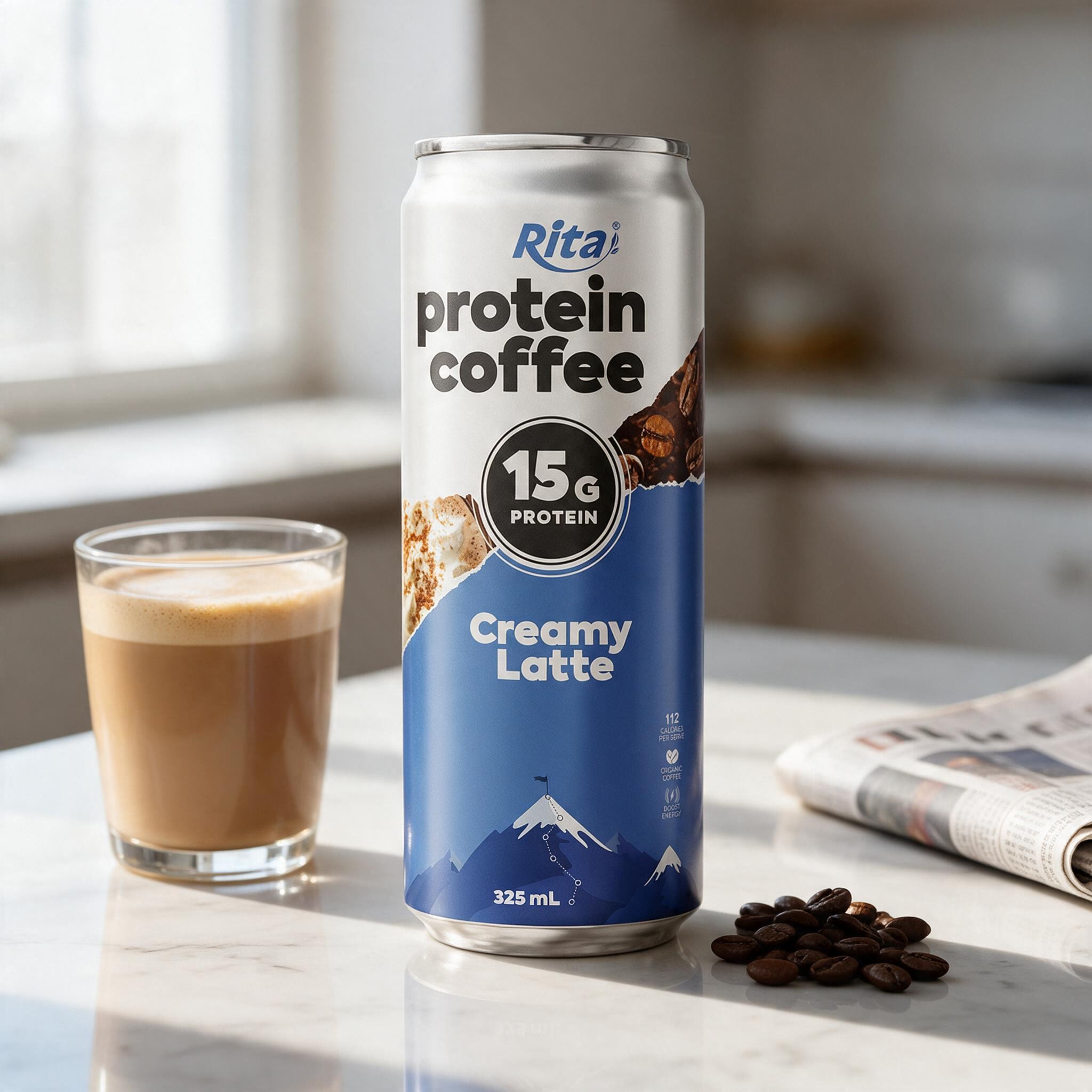
Against that backdrop, Rita High Protein Coffee Creamy Latte is built for grab-and-go occasions: a commute, a desk-side break, or a pause between training sessions. The formulation combines water, whole milk powder, milk protein concentrate, instant coffee powder, and selected stabilizers to produce a velvety body, with roasted coffee notes balanced by mild milky sweetness. At 325ml, the can fits standard cooler facings and vending coils, a practical consideration for buyers planning shelf geometry. The result reads as a straightforward latte first and a protein specification second, which is how most shoppers in this category actually evaluate a purchase.
Inside the Rita High Protein Coffee Creamy Latte Can
Nutrition figures are printed plainly on the label: 15 grams of protein and approximately 112 calories per serving, with 62 milligrams of caffeine appearing in the wider specification set. Alternate figures noted across the product line reach 18.9 grams of protein and 183 calories, depending on formulation and destination market. Constant across variants is the clean-label position, with no artificial flavors, colors, or preservatives added, a detail that matters to shoppers comparing ingredient decks side by side. Importers can request market-specific panels before artwork is locked, so the printed values always match local labeling rules.
A Three-Flavor Set for Shelf Planning
Creamy Latte anchors a lineup that also includes Vanilla and Mocha, allowing buyers to merchandise a coherent three-item block instead of a single stranded SKU. The packaging carries a shared visual identity: a white-to-blue gradient can decorated with coffee bean motifs and mountain peak imagery, a design language that signals strength and endurance inside chilled cabinets. A 24-month shelf life under dry, cool storage gives importers room to schedule promotions without immediate expiry pressure, and the uniform can diameter simplifies secondary packaging across mixed flavor orders.
Specification sheets, nutrition panels, and can artwork are published on the Rita High Protein Coffee Creamy Latte product listing, together with export packing details that help buyers calculate carton counts and container loading plans before committing to an order.
Where the Ready-to-Drink Coffee Category Is Heading
Protein-fortified beverages are attracting fresh capital, and canned coffee formats are traveling in the same lane.
Recent industry moves point in one direction. Del Monte’s investment in the Canadian protein-shake brand Good Protein suggests that legacy beverage groups now treat protein as a durable growth track rather than a seasonal gimmick. In the United Kingdom, nutrient-profiling rule changes are pressuring soft drink formulations, pushing manufacturers toward clearer nutritional positioning and simpler ingredient decks, the same logic that supports a 15-gram-protein coffee with no artificial additives. Spirits markets, by contrast, continue to trade sluggishly with no seasonal relief, a reminder that everyday beverage purchases are absorbing a growing share of consumer attention and shelf budgets.
For exporters, the practical takeaway is that documentation quality now competes with taste in buyer evaluations. Purchasing teams routinely request Halal and Kosher coverage, food safety audit reports, and shelf-life stability data before releasing a first purchase order, which favors manufacturers able to present a complete compliance pack upfront rather than assemble it after the fact.
Private label activity follows the same pattern. Distributors building their own coffee ranges increasingly look for a base formula they can re-badge quickly, with protein content and sweetness level adjusted to local preference. An RTD coffee beverage that already carries global certifications shortens that timeline considerably, because the regulatory conversation starts from a documented position instead of a blank page.
From Coffee Gardens to the Can
Raw material decisions begin upstream. During peak harvest season, RITA’s sourcing teams travel to Vietnam’s coffee gardens in the Central Highlands to review cherry ripeness, processing methods, and lot consistency before green beans enter the supply chain.
Dairy components follow a parallel track. Whole milk powder and milk protein concentrate are chosen for solubility and a neutral flavor base, so the roasted coffee character stays in the foreground rather than being masked. Stabilizers are dosed with the same discipline, targeting a texture that holds through two years of storage and weeks of sea transit without separation or sediment.
Footage from the sourcing journey is published by the company at https://www.youtube.com/watch?v=F2yJLjUYiuo
OEM and Private Label Customization
RITA Food and Drink Co., Ltd., founded in 2004, operates as a Vietnamese beverage exporter and OEM/ODM manufacturer with more than 50 automated production lines and over 1,200 containers dispatched each month to buyers in 200-plus countries and territories.
Certification coverage runs deep: BRC, FSSC 22000, Halal Jakim, Halal HCA-GCC, Kosher, ISO, GMP, HACCP, and SMETA. Holding that set under one roof removes a common bottleneck for importers, who otherwise must coordinate multiple audits across separate suppliers when assembling a multi-category range for regional distribution.
The wider catalog supports cross-merchandising, with a dedicated coffee drinks range and a milk beverage series that sit naturally beside a protein latte on the same shelf, letting distributors consolidate freight, documentation, and reorder cycles with a single partner.
What Buyers Can Adjust
Brands entering or expanding in the category can treat the Creamy Latte listing as a base formula rather than a fixed SKU.
- Protein level, sweetener system, and coffee intensity retuned for local palates
- Packaging adapted across aluminum cans, glass bottles, PET, and PP formats
- Nutrition panels and ingredient lists aligned to destination-market labeling rules
- Label artwork, barcodes, and point-of-sale materials prepared in-house
Turnaround timing depends on formulation complexity, but the company positions free label design and barcode creation as part of the standard OEM package rather than separate billable extras, which lowers the barrier for first-time private label coffee drink programs.
How Rita High Protein Coffee Creamy Latte Fits Asia’s Retail Shelves
Convenience chains, supermarket chillers, workplace micro-markets, and travel retail all offer viable openings for a protein-forward canned latte.
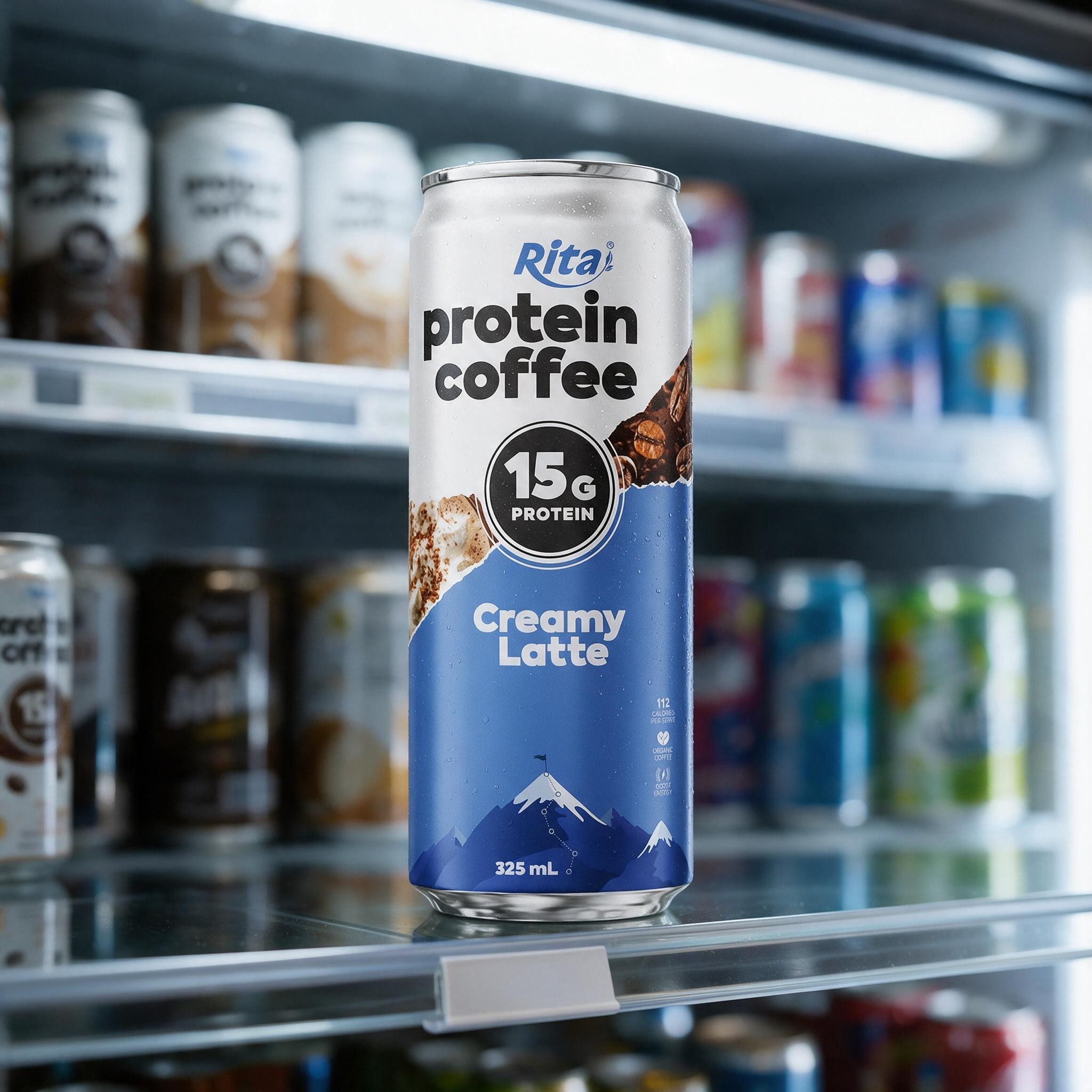
Channel logic differs market by market. In Southeast Asian convenience networks, canned coffee is an established impulse purchase, and a higher protein figure gives counter staff a simple talking point when shoppers compare two cans. Across Japan and South Korea, consumers already accept premium pricing for differentiated latte products, leaving room for a spec-led variant with a clean ingredient deck. In India and Pakistan, expanding modern trade is creating new chilled shelf space faster than legacy formats can fill it. Across all of these conditions, the 325ml can format and 24-month shelf life travel well.
| Specification | Rita High Protein Coffee Creamy Latte |
|---|---|
| Format | 325ml aluminum can |
| Protein | 15g per serving |
| Calories | Approximately 112 per serving |
| Caffeine | 62mg per specification set |
| Shelf life | 24 months, dry and cool storage |
| Variants | Creamy Latte, Vanilla, Mocha |
| Additives | No artificial flavors, colors, or preservatives |
Source: product specification sheet, RITA Food and Drink Co., Ltd.
For distributors, the commercial case rests on range economics rather than novelty: one supplier covering coffee, milk-based drinks, and protein formats simplifies replenishment, while a long shelf life reduces markdown risk on slow-moving weeks. Samples, lab reports, and container loading plans can be requested from the Rita High Protein Coffee Creamy Latte page, where variant options and export configurations are listed together.
Frequently Asked Questions
What is Rita High Protein Coffee Creamy Latte?
Rita High Protein Coffee Creamy Latte is a 325ml ready-to-drink coffee beverage in an aluminum can, formulated with water, whole milk powder, milk protein concentrate, instant coffee powder, and selected stabilizers. Each serving provides 15 grams of protein and approximately 112 calories, with no artificial flavors, colors, or preservatives.
How much caffeine does the drink contain?
The wider specification set lists 62 milligrams of caffeine per serving. Final printed values are confirmed per destination market since labeling requirements differ across import regions.
Can formulation and packaging be customized for private label?
Yes. Protein level, sweetness, coffee intensity, and flavor variant can be adjusted, and packaging is available in aluminum cans, glass bottles, PET, and PP formats. Label design, barcode creation, and promotional support are included in the OEM package.
Which certifications does the manufacturer hold?
RITA operates under BRC, FSSC 22000, Halal Jakim, Halal HCA-GCC, Kosher, ISO, GMP, HACCP, and SMETA certification, covering food safety, religious dietary standards, and social compliance audits.
What is the shelf life and storage requirement?
The product carries a 24-month shelf life when stored in dry, cool conditions, supporting long export and distribution windows.