The Yuzu Lemon Electrolyte Water Drink enters a beverage category defined by rapid change. Low-sugar hydration beverages have moved from specialty shelves into mainstream chilled cabinets, and RITA Food and Drink Co., Ltd, a Vietnamese OEM and ODM manufacturer founded in 2004, has built a 325ml slim-can format aimed at distributors, private-label buyers and retail chains seeking a citrus-led entry in the electrolyte water segment.
Key Takeaways
- Low-sugar electrolyte drinks are winning chilled space as buyers rebuild portfolios around lighter citrus profiles.
- The 325ml slim aluminum can suits single-serve, on-the-go consumption and strong visibility in retail displays.
- Technical parameters such as Brix around 9.4 and pH around 4.1 can be tuned for individual target markets.
- RITA backs private-label programmes with BRC, FSSC 22000, Halal, Kosher, ISO, GMP, HACCP and SMETA certifications.
- Export scale of more than 50 automated production lines and 1,200+ containers shipped monthly supports large regional launches.
Low Sugar Hydration Beverages Move Into the Mainstream
Low-sugar positioning has shifted from the margins to the centre aisle. Across Asia, category managers are rebuilding planograms around lighter citrus drinks and electrolyte formats that read as simple and modern at a glance.
The regulatory backdrop forms part of the picture. A recent study of changes to UK nutrient-profiling models concluded that soft drinks absorb a disproportionate share of the impact, a reminder that sugar thresholds are tightening in mature markets and increasingly shaping supplier briefs written elsewhere. Capital is also moving: Del Monte’s investment in the Canadian protein-shake brand Good Protein shows how established groups are widening their beverage footprint well beyond legacy categories, and that widening brief now includes everyday refreshment cans as much as premium formats.
Consumer taste is doing the rest of the work. Yuzu, once associated with Japanese specialty drinks, now appears in teas, confections and sparkling waters sold throughout the region, while lemon remains the most universally recognised citrus reference point. Combining the two gives formulators an aromatic top note with a familiar, crisp finish that does not require explanation at the shelf edge.
Market observers point in the same direction across the region. Convenience-store chains in Southeast Asia have expanded dedicated hydration facings, citrus-flavoured sparkling water continues to take share from full-sugar colas in East Asia, and warm climates in South Asia sustain year-round demand for chilled single-serve cans. The common thread is a preference for drinks that taste deliberate rather than simply sweet.
Low-calorie counts matter in that decision. Shoppers increasingly compare labels in the aisle, so a citrus electrolyte drink that stays light on sugar and calories removes a familiar objection before the first purchase is made.
What Buyers Are Asking For
Distributors and retail category managers describe a remarkably consistent brief when they approach manufacturers for a new hydration SKU:
- Sugar and calorie figures low enough to sit comfortably against tightening front-of-pack expectations.
- A flavour profile that travels across cultures without a heavy sweetener aftertaste.
- Portable packaging suited to convenience stores, fitness venues, offices and transit retail.
- Certification coverage that clears import documentation across multiple destinations.
- Order flexibility that supports both pilot listings and full national rollouts.
Inside the Yuzu Lemon Electrolyte Water Drink 325ml Can
The format does most of the selling before the first sip. A slim 325ml body, saturated yellow artwork and a clear low-sugar callout give buyers a proposition they can explain in a single sentence.
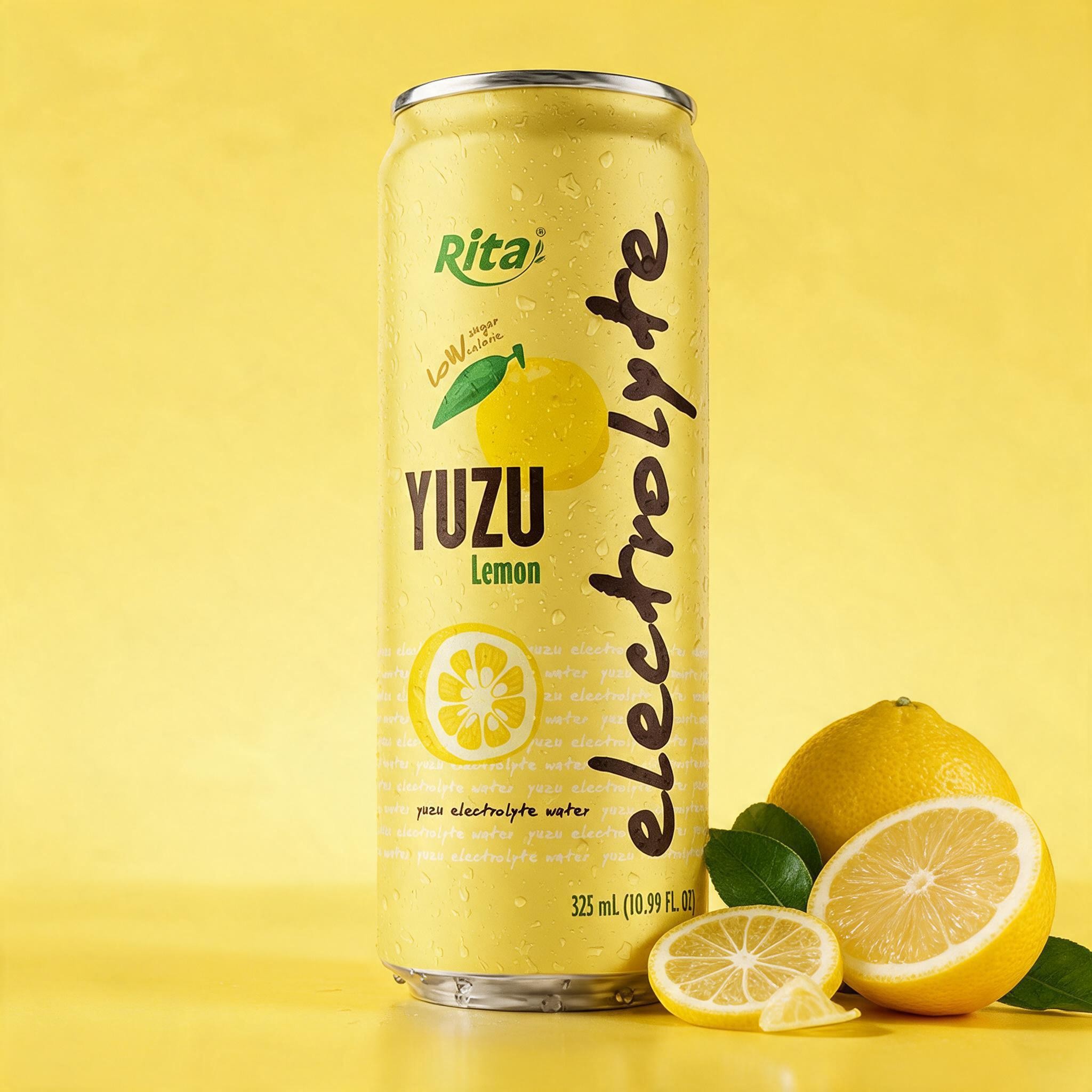
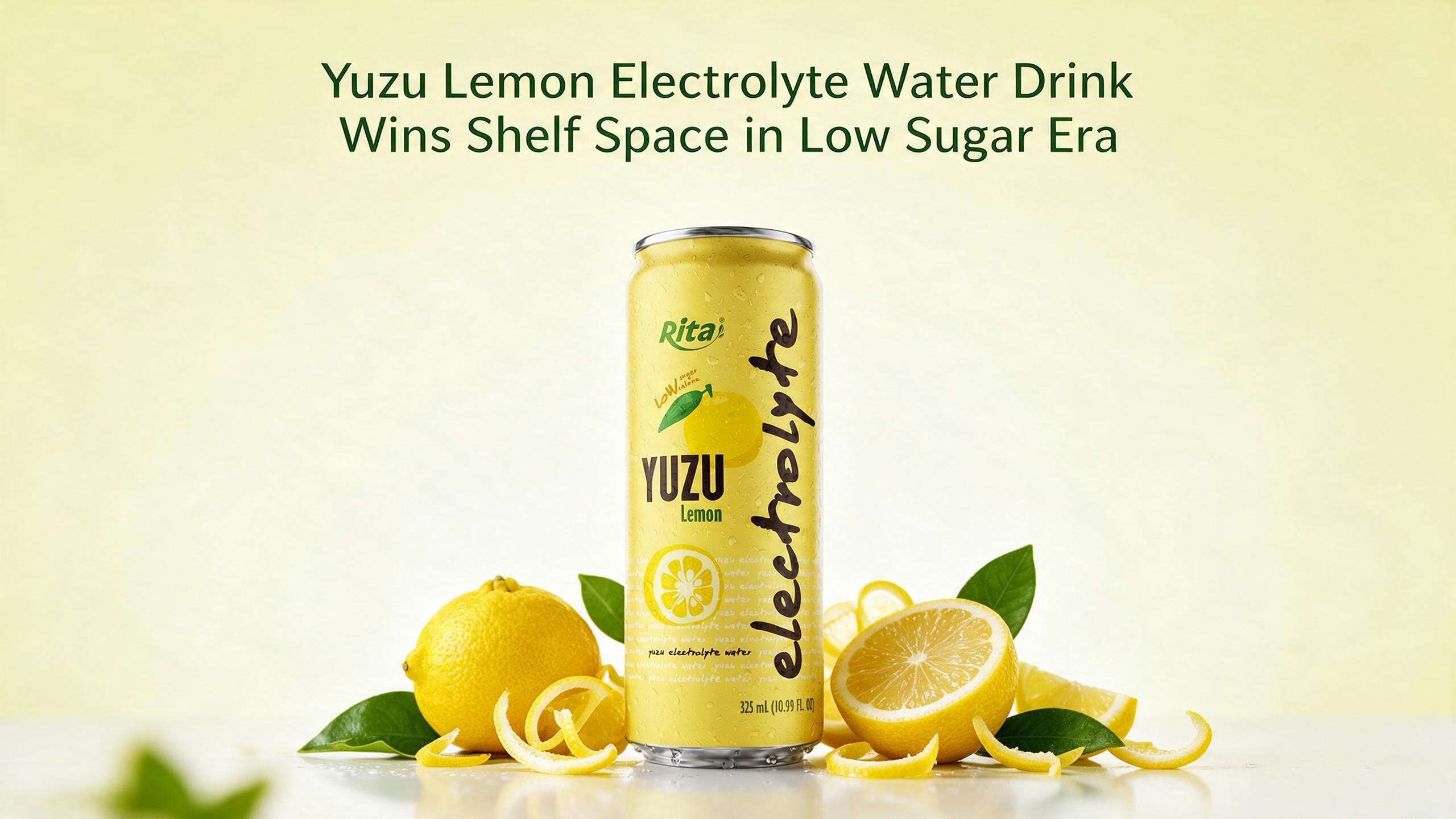
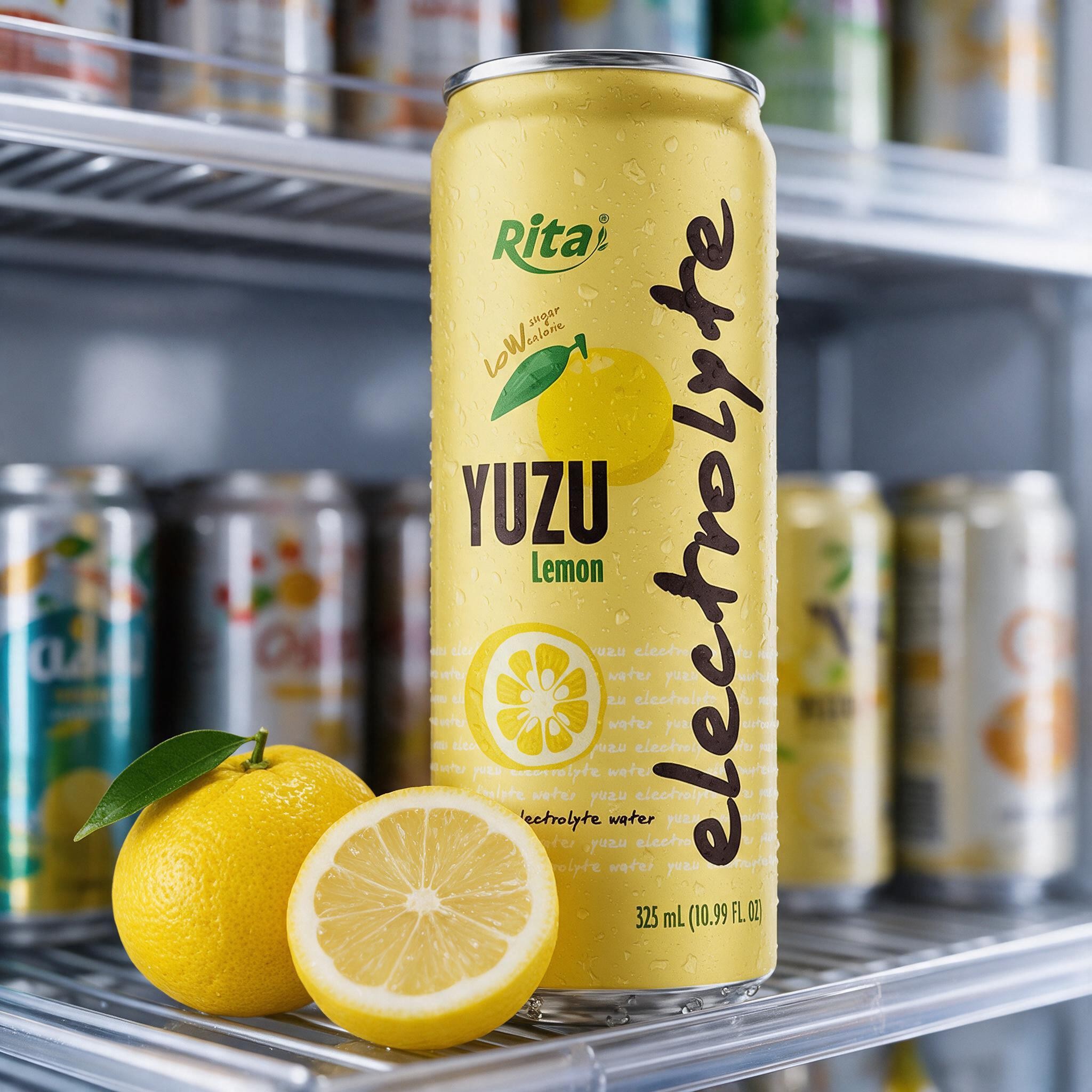
The Yuzu Lemon Electrolyte Water Drink 325ml is packed in a slim aluminum can with silver top and bottom rims and a vivid yellow body. The label sets YUZU in large dark lettering above Lemon in green, with the word electrolyte running vertically and a repeating pattern of yuzu electrolyte water behind it. A lemon illustration and a sliced-citrus icon reinforce the flavour cue, while the low sugar calorie callout and the 325 mL (10.99 FL OZ) net volume sit where shoppers scan first. The drink contains no artificial flavors, colors or preservatives and relies on natural citrus ingredients for a clean, direct taste. Positioned as a low sugar hydration beverage, it is built for work breaks, training sessions, travel and everyday single-serve occasions.
Format matters as much as liquid. Slim can beverage packaging chills quickly, stacks efficiently in display units and travels easily in a bag or cup holder, which makes it a practical choice for convenience-store coolers and impulse zones. The yellow body also stands out against the usual blue and white palette of a chilled cabinet, an advantage in crowded front-of-door placements.
Flavour Profile and Technical Parameters
Yuzu contributes a perfumed, slightly floral citrus aroma, lemon supplies brightness and clean acidity, and the electrolyte component rounds the finish so the drink does not taste flat. Technical parameters remain adjustable during development: Brix sits around 9.4 and pH around 4.1, a combination that keeps refreshment sharp while supporting shelf stability across warm supply chains.
| Parameter | Specification |
|---|---|
| Net volume | 325 ml (10.99 FL OZ) |
| Packaging | Slim aluminum can |
| Brix | Around 9.4 (adjustable) |
| pH | Around 4.1 (adjustable) |
| Sweetness profile | Low sugar, low calorie |
| Flavour base | Yuzu and lemon citrus blend with electrolytes |
| Additives | No artificial flavors, colors or preservatives |
From Our Orchards: Raw Material Sourcing
Citrus quality sets the ceiling for the finished drink. RITA traces its ingredient base to the Mekong Delta raw material area, where fruit sourcing has supported the company’s export programme for two decades.
Fruit is selected for aromatic intensity and consistent acidity rather than size alone, since yuzu-style brightness and lemon clarity depend on peel oils and juice balance. Batches are checked against the target Brix and pH window before blending, which keeps flavour steady from one production run to the next and gives buyers a repeatable taste profile across shipments.
The same supply relationships that support the citrus line also feed a broader range of drinks, so flavour development stays grounded in what the harvest can deliver consistently rather than in what a brief assumes.
A closer look at the sourcing region: https://www.youtube.com/watch?v=jiBixXjeG8A
OEM and Private Label Pathways for Regional Brands
For distributors, the fastest route to a new listing is a proven formula rather than a blank development brief.
RITA operates more than 50 automated production lines and ships over 1,200 containers per month to buyers in more than 200 countries and territories, a scale that lets partners move from sample approval to container-level supply without rebuilding their supply chain. As an OEM beverage supplier and established private label beverage manufacturer, the company lets brands start from the Yuzu Lemon Electrolyte Water Drink and adjust flavour intensity, sweetness, electrolyte levels and can artwork, or extend into the wider soft drinks portfolio for adjacent listings in the same launch wave. Formal engagement usually begins through the company’s OEM service programme, which handles brief, sampling, artwork and export documentation inside one workflow.
Development cycles are typically measured in weeks rather than quarters. Once a brief is agreed, sampling, artwork and documentation run in parallel, so a private-label can can reach a first container without a long sequential approval chain.
Certification Stack for Export Buyers
Documentation often decides cross-border tenders, and the audit trail behind this line is broad:
- BRC and FSSC 22000 for food safety management systems.
- Halal Jakim and Halal HCA-GCC for markets requiring certified supply.
- Kosher certification for retail programmes with dietary labelling requirements.
- ISO, GMP and HACCP covering process control and hazard analysis.
- SMETA for ethical audit coverage in supplier assessments.
Artwork can be produced in the customer’s own language and colour system while the filling standard stays identical across every market in a launch wave. That consistency matters when a brand releases in several countries at once and needs the same shelf presence in each.
Category Signals Worth Watching
The wider beverage trade is sending mixed signals. Portfolio reshaping at the top of the industry is visible on both sides of the Atlantic.
Underberg’s expansion of its German portfolio through Loch Lomond whisky distribution and Constellation Brands’ sale of US whiskey distiller Nelson’s Green Brier point to strategic repositioning, while trading across the spirits sector remains sluggish with no near-term recovery expected. Capital and attention are therefore migrating toward everyday, repeat-purchase formats rather than discretionary premium bottles, and low calorie soft drinks sit comfortably inside that shift.
Competition within electrolyte water is intensifying as sports-nutrition brands extend into mainstream coolers and bottled-water players add flavoured variants. Differentiation increasingly comes from flavour credibility and packaging rather than claims alone, which is why a distinctive citrus profile in a slim can gives buyers a clearer story to merchandise than another unflavoured specification.
For buyers, the practical takeaway is simple. The 325ml Yuzu Lemon Electrolyte Water Drink answers the brief that keeps recurring in tender documents: recognisable citrus, restrained sweetness, export-ready paperwork and a label shoppers can read without decoding.
Export Readiness and Regional Distribution
Reach determines whether a promising SKU becomes a regional programme.
RITA exports to more than 200 countries and territories with monthly shipment volume above 1,200 containers, giving partners predictable lead times and the option to consolidate several products in a single booking. Aluminium cans travel well in mixed loads, and the 325ml electrolyte water drink 325ml format keeps pallet cube efficient for markets where shelf depth is limited. Buyers across Southeast Asia, East Asia and South Asia can therefore source one specification that is locally adapted for language, artwork and sweetness preference without qualifying a second manufacturer.
Lead-time planning usually starts with a sample and artwork round, followed by a pilot container and then scheduled replenishment. Having a single audited partner for both the citrus hydration line and adjacent categories simplifies compliance reviews whenever a distributor adds products later in the season.
Frequently Asked Questions
What is a Yuzu Lemon Electrolyte Water Drink?
It is a low-sugar, low-calorie citrus beverage in a 325ml slim aluminum can, combining yuzu aroma with lemon acidity and an electrolyte component, produced without artificial flavors, colors or preservatives.
Can the formula be adjusted for a private label?
Yes. Sweetness, flavour intensity, electrolyte levels, Brix and pH can be tuned during development, and the can artwork can be produced in the customer’s own design and language.
Which certifications support the product for export?
The manufacturing programme holds BRC, FSSC 22000, Halal Jakim, Halal HCA-GCC, Kosher, ISO, GMP, HACCP and SMETA certifications.
What are typical order and shipping terms?
RITA operates more than 50 automated production lines and ships over 1,200 containers monthly to buyers in 200+ countries and territories, supporting both pilot orders and scheduled container programmes.