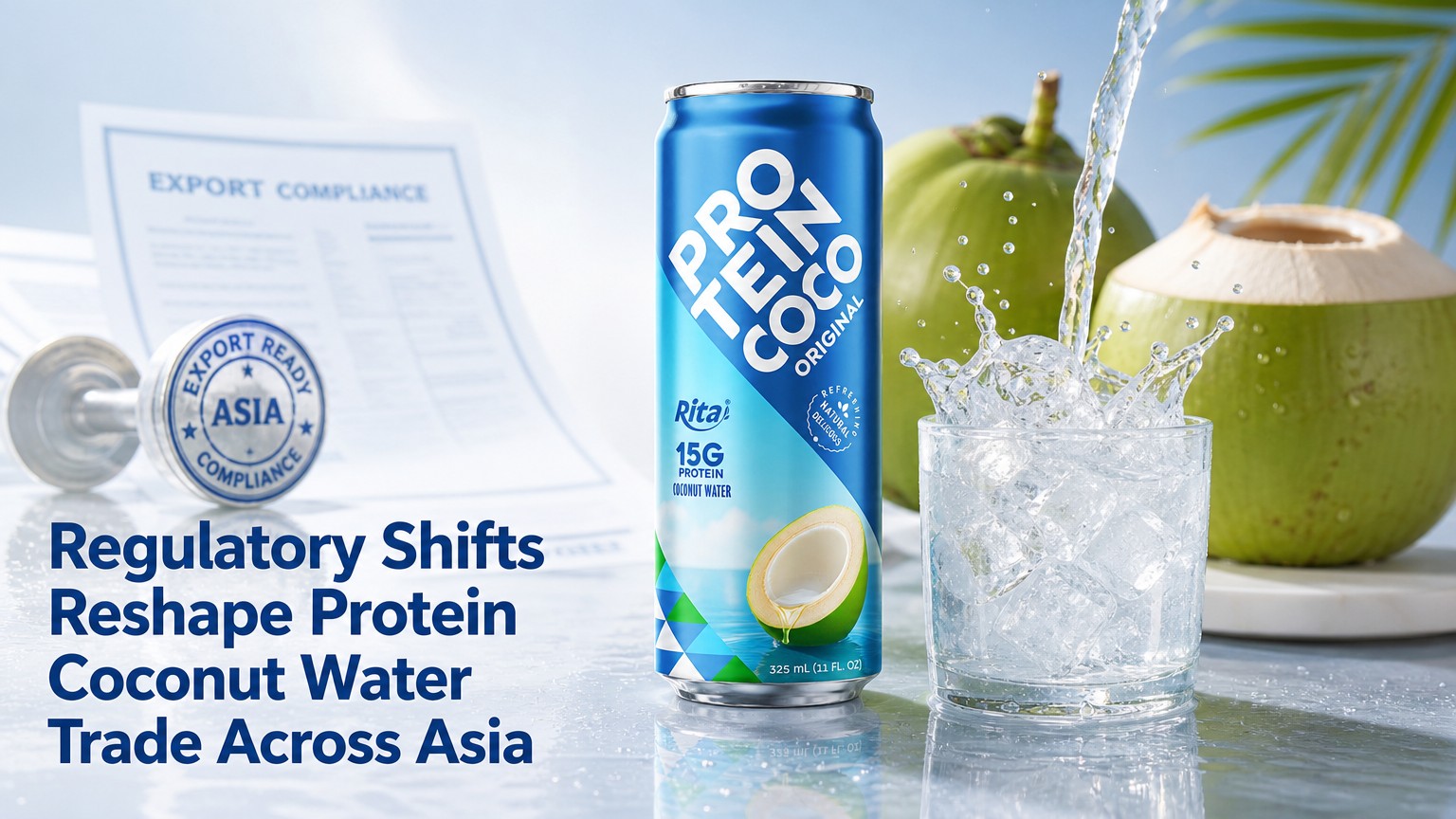
Regulatory frameworks across Asia are tightening their grip on beverage labeling, protein claims, and import documentation, and the timing could not be more consequential for manufacturers exporting protein-fortified coconut water. As trade ministries in Southeast Asia and South Asia update their standards for functional beverage categories, buyers from Bangkok to Mumbai are re-evaluating supplier portfolios. RITA Original Protein Coconut Water 325ml Can with 15g Protein sits squarely at the center of this shift, offering a compliant, export-ready format that aligns with the new compliance expectations sweeping through regional markets.
Key Takeaways
- Labeling and import regulations across ASEAN and South Asia are converging on stricter protein-claim verification requirements.
- Halal, Kosher, and food-safety certifications are becoming non-negotiable for shelf placement in Muslim-majority and premium retail markets.
- The 325ml slim can format meets both regulatory labeling space requirements and modern-trade channel specifications.
- OEM and ODM partners with multi-certification portfolios give importers a faster route to compliant market entry.
- Export documentation and shelf-life stability are now key differentiators in long-haul supply chains from Vietnam.
Why Protein Coconut Water Is Drawing Regulatory Attention
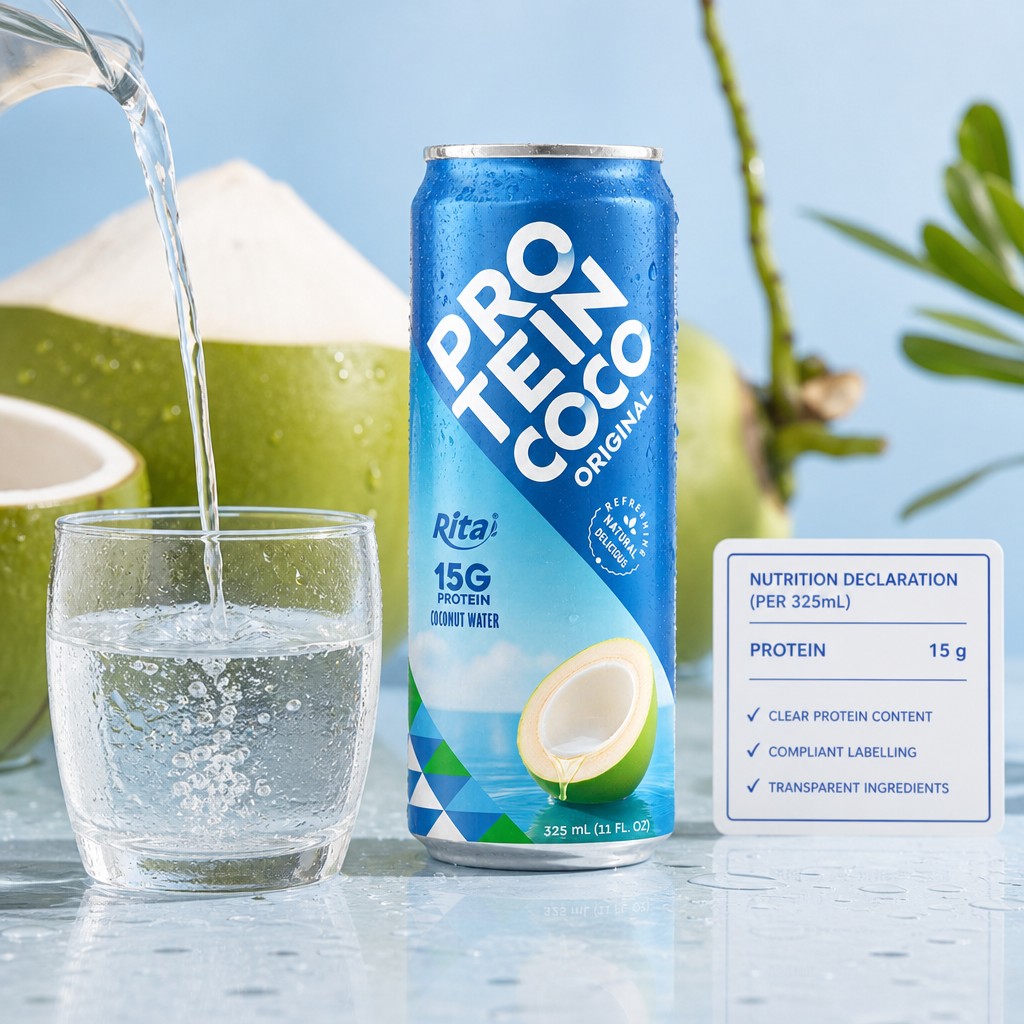
Regulators are watching the protein beverage category closely. Across Singapore, Japan, and South Korea, authorities have signaled stricter scrutiny of front-of-pack claims, requiring substantiation for protein content per serving. For a product like protein coconut water, this means the label must clearly declare protein quantity, serving size, and nutritional breakdown without ambiguity. Importers who fail to verify these details face shipment delays or relabeling costs at the port of entry.
The regulatory lens extends beyond protein claims. Coconut water itself has been reclassified in several markets from a simple beverage to a product with compositional expectations, including minimum coconut water content and restrictions on added sugars. Manufacturers exporting into these jurisdictions must provide full ingredient declarations and batch-level traceability.
Labeling Standards That Determine Shelf Access
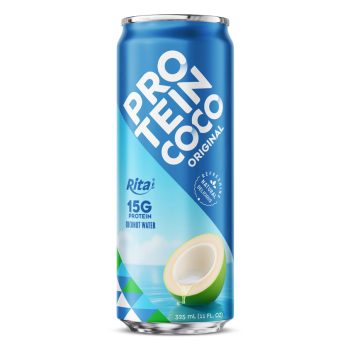
Labeling compliance is the first gate a product must pass. In the Philippines and Indonesia, bilingual labeling requirements mean the protein declaration must appear in both local language and English. Malaysia’s food labeling regulations demand clear allergen statements alongside nutritional panels. The 325ml slim can of RITA Original Protein Coconut Water provides sufficient surface area for these dual-language declarations while maintaining the bold PROTEIN COCO typography that anchors shelf recognition.
Japan’s Food Labeling Act adds another layer, requiring specific font sizes for nutritional information and mandatory listing of food additives. South Korea’s MFDS guidelines similarly prescribe exact formats for protein content display. For distributors managing multi-market launches, a single packaging template that satisfies all these requirements eliminates costly redesign cycles.
Certification Portfolios as Market Entry Credentials
Certifications are no longer optional marketing assets. They are entry tickets. Halal Jakim certification opens doors across Malaysia and parts of Indonesia, while Halal HCA-GCC extends reach into Gulf states that re-export into South Asia. Kosher certification supports placement in premium retail channels in India and Israel-linked distribution networks. BRC and FSSC 22000 certifications satisfy the due-diligence requirements of major European and Asian retail chains that source from Vietnamese manufacturers.
RITA Food and Drink Co., Ltd holds this full stack of certifications, a portfolio that reflects the company’s position among Vietnam’s top beverage companies. For importers, working with a manufacturer that already carries these credentials means the compliance conversation starts at a far more advanced stage. The coconut products catalog from RITA documents the certification coverage across every coconut-based SKU, giving buyers a single reference for audit preparation.
How Export Documentation Is Evolving for Vietnamese Beverage Shipments
Vietnam’s export documentation requirements have grown more detailed in recent years, particularly for beverages destined for ASEAN Free Trade Area partners. Certificate of Origin Form D, phytosanitary certificates, and health certificates are standard, but authorities increasingly request supporting laboratory reports for protein and sugar content. Shippers who prepare these documents proactively avoid the bottleneck that has slowed consignments at regional ports.
The practical implication for buyers is clear. A supplier that maintains complete export documentation files reduces the administrative burden on the importing side. RITA exports to over 200 countries and territories and manages the full documentation workflow in-house, a capability that matters when shipments move from Vietnam to distribution hubs in Singapore, Japan, and India.
Shelf Life and Storage Compliance in Long-Haul Logistics
Regulatory compliance does not end at the port of entry. Temperature and storage conditions during transit affect product integrity, and many Asian markets now require proof of cold-chain or ambient storage conditions throughout the supply chain. The 24-month shelf life of RITA Original Protein Coconut Water under dry, cool storage provides a buffer that accommodates extended transit times and warehouse staging without compromising the declared expiration date on the label.
This storage stability is particularly relevant for importers serving island markets across Indonesia and the Philippines, where multi-modal transport is unavoidable. A product that maintains its declared shelf life through these logistics chains reduces write-offs and simplifies inventory planning for distributors.
The Four-Flavor PROTEIN COCO Range and Regulatory Uniformity
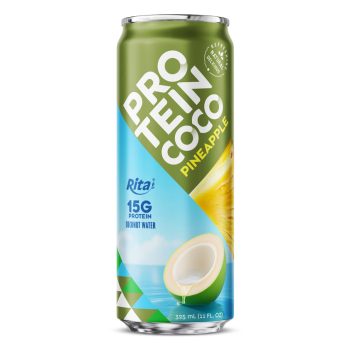
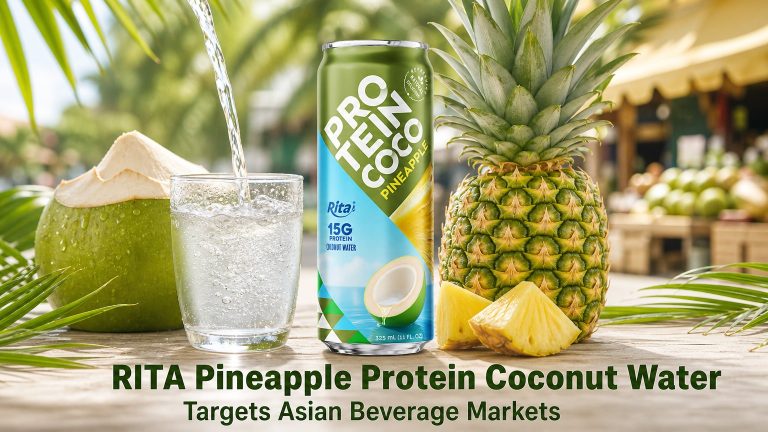
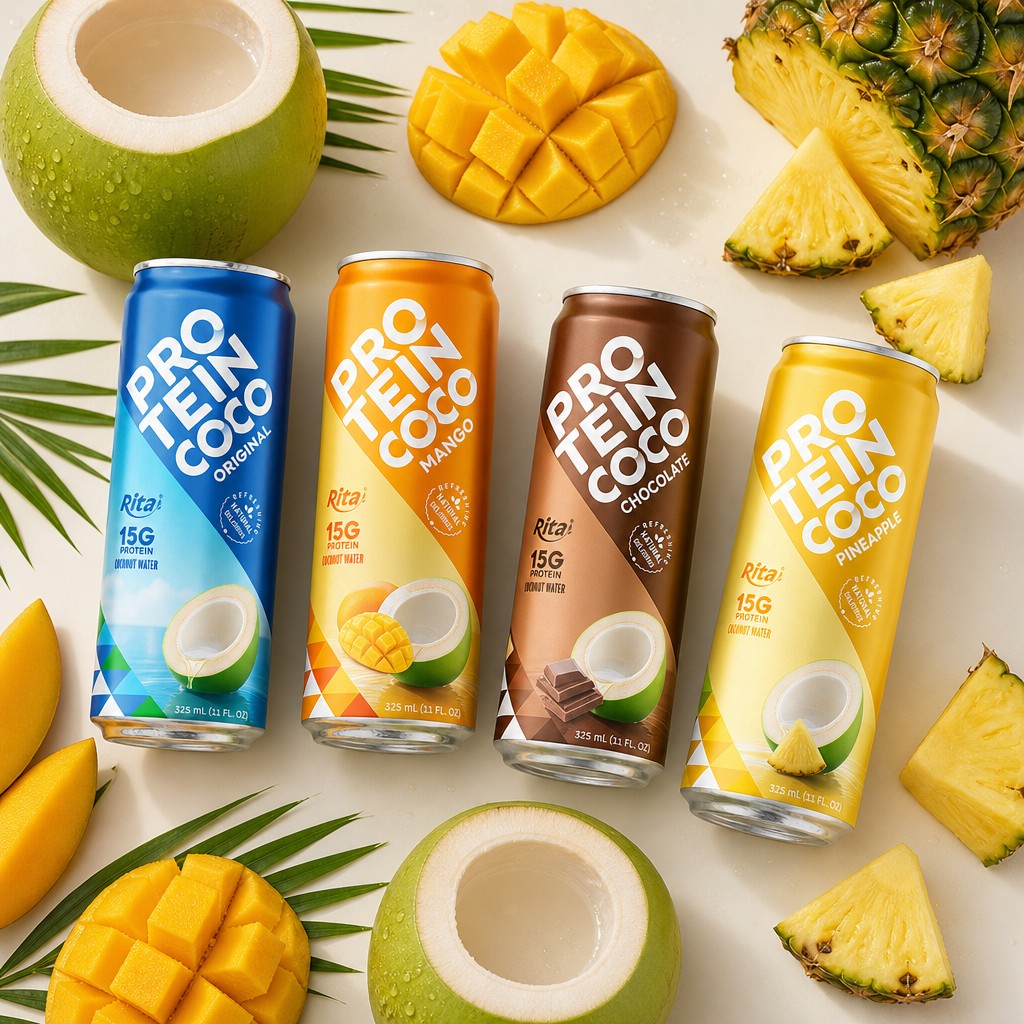
Consistency across a flavor range simplifies compliance. The PROTEIN COCO lineup includes Original, Mango, Chocolate, and Pineapple, each carrying the same nutritional framework while varying only in flavor profile. This uniformity means a single regulatory dossier can be adapted for each variant with minimal revision, accelerating the approval process in markets that require per-SKU registration.
Original Flavor Anchors the Compliance Strategy
The Original flavor, with its cool blue can design and clean coconut water taste, serves as the reference SKU for regulatory submissions. Its straightforward ingredient list and predictable nutritional profile make it the easiest variant to present to food authorities. Distributors typically register Original first, then add Mango, Chocolate, and Pineapple variants under the same filing framework.
Each can delivers 15g of protein per 325ml serving, a figure that must be substantiated by laboratory analysis in most Asian markets. The consistency of this protein level across production batches is what allows the declaration to stand up to regulatory sampling. Buyers evaluating the full range can review specifications through the product dossier for RITA Original Protein Coconut Water before initiating registration.
Market Signals From Global Beverage Regulatory Moves
Regulatory shifts are not confined to Asia. Coca-Cola will replace PepsiCo as KFC’s drink supplier in the United States, a move that underscores how contract-level compliance requirements can reshape supply chains overnight. LVMH’s partner has proposed exiting its China joint venture, signaling that even luxury conglomerates are recalibrating their exposure to regulatory complexity. Meanwhile, AB InBev’s BeatBox faces criticism in the UK over packaging, and Hain Celestial is considering a Chapter 11 filing, both reminders that packaging and labeling missteps carry financial consequences.
Pernod Ricard’s CFO has indicated no material US bounce back is expected for now, a cautious outlook that reflects broader uncertainty in regulated consumer goods markets. For beverage importers across Asia, these signals reinforce the value of partnering with manufacturers whose compliance infrastructure is already built.
From Coconut Groves to Compliant Cans
Regulatory compliance in the coconut water category begins with raw material sourcing. Traceability from farm to finished can is increasingly required by import authorities, and Vietnamese coconut sourcing regions provide the documented origin chains that buyers need.
The Ben Tre coconut farm journey from plantation to high-quality products illustrates how raw material provenance is documented at the source, giving exporters the traceability records that food authorities now expect during audits.
Buyers who visit sourcing regions confirm these practices firsthand. The Ben Tre coconut farm video walkthrough provides a visual record of the cultivation and harvesting process that feeds into coconut-based beverage production.
OEM and ODM Pathways for Regulated Market Entry
For importers navigating unfamiliar regulatory landscapes, OEM and ODM partnerships compress the timeline from concept to compliant shelf presence. RITA’s OEM services allow buyers to adapt formulations, protein content, sweetness levels, and packaging artwork to meet local standards while leveraging an existing certification base. The OEM service framework outlines how customization works across can, bottle, and pouch formats.
ODM services go further, offering ready-made formulations that have already cleared initial regulatory review in target markets. This is particularly valuable for distributors entering markets like Japan and South Korea, where product registration timelines can extend several months. Working with a manufacturer that has navigated these processes before shortens the learning curve considerably.
Packaging Formats That Satisfy Multiple Regulatory Regimes
The 325ml aluminum slim can is more than an aesthetic choice. It satisfies packaging regulations in markets that restrict certain plastic formats, meets recyclability expectations in Japan and South Korea, and provides the barrier properties needed to maintain product stability without preservatives. RITA produces in aluminum cans, glass bottles, PET, and PP formats, giving buyers the flexibility to match packaging type to the specific regulatory environment of each destination market.
For markets where aluminum can recycling targets are enforced, this format aligns with Extended Producer Responsibility schemes. For markets where PET is preferred for cost reasons, the same formulation can be delivered in alternative packaging without reformulation.
Documentation Support for Importers
Beyond the physical product, RITA provides the documentation package that importers need to clear customs and satisfy food authority requirements. This includes certificates of analysis, allergen declarations, nutritional panels, and stability data. Having these documents prepared in advance is the difference between a smooth first shipment and weeks of back-and-forth with local authorities.
The company’s scale, with more than 50 automated production lines and over 1,200 containers exported monthly, means documentation processes are standardized across all shipments. Importers receive consistent document formats regardless of order volume, which simplifies internal compliance workflows.
What Buyers Should Verify Before Signing Supply Agreements
Regulatory due diligence should precede commercial negotiation. Buyers entering supply agreements for protein coconut water should verify certification validity dates, confirm that protein declarations are backed by current laboratory reports, and review the manufacturer’s audit history with recognized certification bodies.
A practical checklist for importers includes the following items:
- Current BRC, FSSC 22000, and ISO certificate validity with scope covering the specific product category.
- Halal certification recognized by the destination market’s authority, not just the issuing body.
- Batch-level traceability records that link finished cans to raw material lots.
- Stability data supporting the declared 24-month shelf life under stated storage conditions.
- Label artwork files that meet destination-market font size and language requirements.
Products that clear this checklist move through customs with fewer holds. The RITA Original Protein Coconut Water product page consolidates the specification data buyers need to begin this evaluation.
Frequently Asked Questions
What certifications does RITA Original Protein Coconut Water carry for export?
RITA Original Protein Coconut Water is produced by RITA Food and Drink Co., Ltd under BRC, FSSC 22000, ISO, HACCP, GMP, Halal Jakim, Halal HCA-GCC, Kosher, and SMETA certifications. These credentials support market entry across Southeast Asia, East Asia, South Asia, and beyond.
How does the 325ml can format support regulatory labeling requirements?
The 325ml slim aluminum can provides sufficient surface area for bilingual nutritional panels, protein declarations, allergen statements, and ingredient lists required by food authorities in the Philippines, Indonesia, Malaysia, Japan, and South Korea.
Can the protein content be adjusted for different market regulations?
Yes. Through RITA OEM and ODM services, buyers can customize protein content, sweetness levels, and flavor profiles to meet specific regulatory thresholds in their target markets while maintaining the core coconut water base.
What shelf life does the product offer for long-haul export?
RITA Original Protein Coconut Water carries a 24-month shelf life under dry, cool storage conditions, accommodating extended transit times from Vietnam to distribution hubs across Asia and other export regions.
Which flavors are available in the PROTEIN COCO range?
The PROTEIN COCO range includes four flavors: Original in a cool blue can, Mango, Chocolate, and Pineapple. Each variant shares the same 15g protein per 325ml serving specification, simplifying multi-SKU regulatory registration.