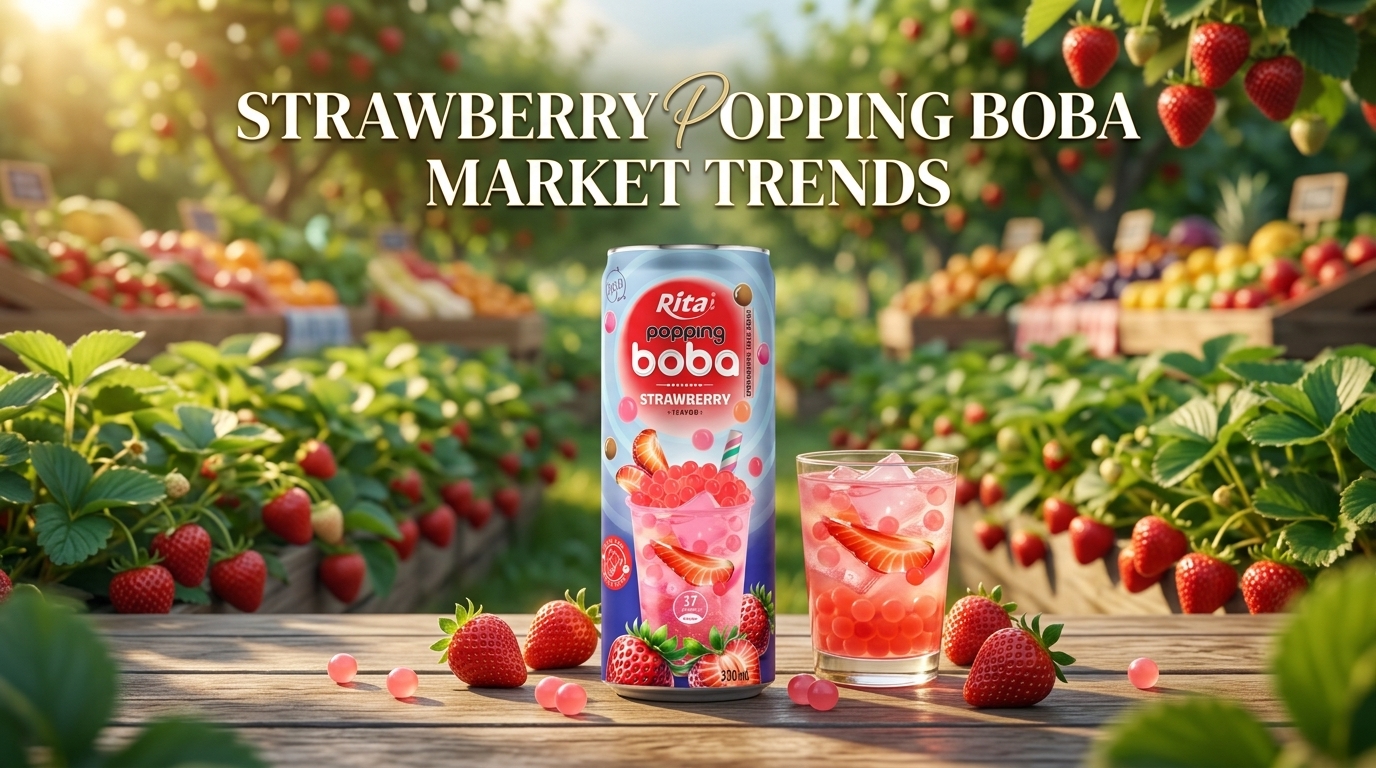
The global beverage industry is witnessing a seismic shift as consumers increasingly seek novel sensory experiences. Among the most captivating innovations is the popping boba tea strawberry flavor market trends, a segment that combines the playful texture of tapioca-like pearls with the refreshing taste of real fruit. This article explores how this product category is redefining the non-alcoholic drink landscape, particularly in the United States and Europe, and what it means for importers, distributors, and F&B businesses.
Key Takeaways
- The popping boba tea strawberry flavor market trends indicate growing demand for interactive, Instagram-worthy beverages among Millennials and Gen Z.
- Private label and OEM production of popping boba tea offer significant opportunities for beverage distributors seeking differentiation.
- Vietnam-based manufacturers like Rita Food & Drink Co., Ltd provide cost-effective, high-volume solutions for global brands.
- RTD (ready-to-drink) popping boba tea in slim cans is gaining traction in convenience stores and vending channels across the US and Europe.
- Sustainability and natural fruit content are key drivers for premium positioning in mature markets.
Market Drivers Behind the Popping Boba Tea Strawberry Flavor Surge
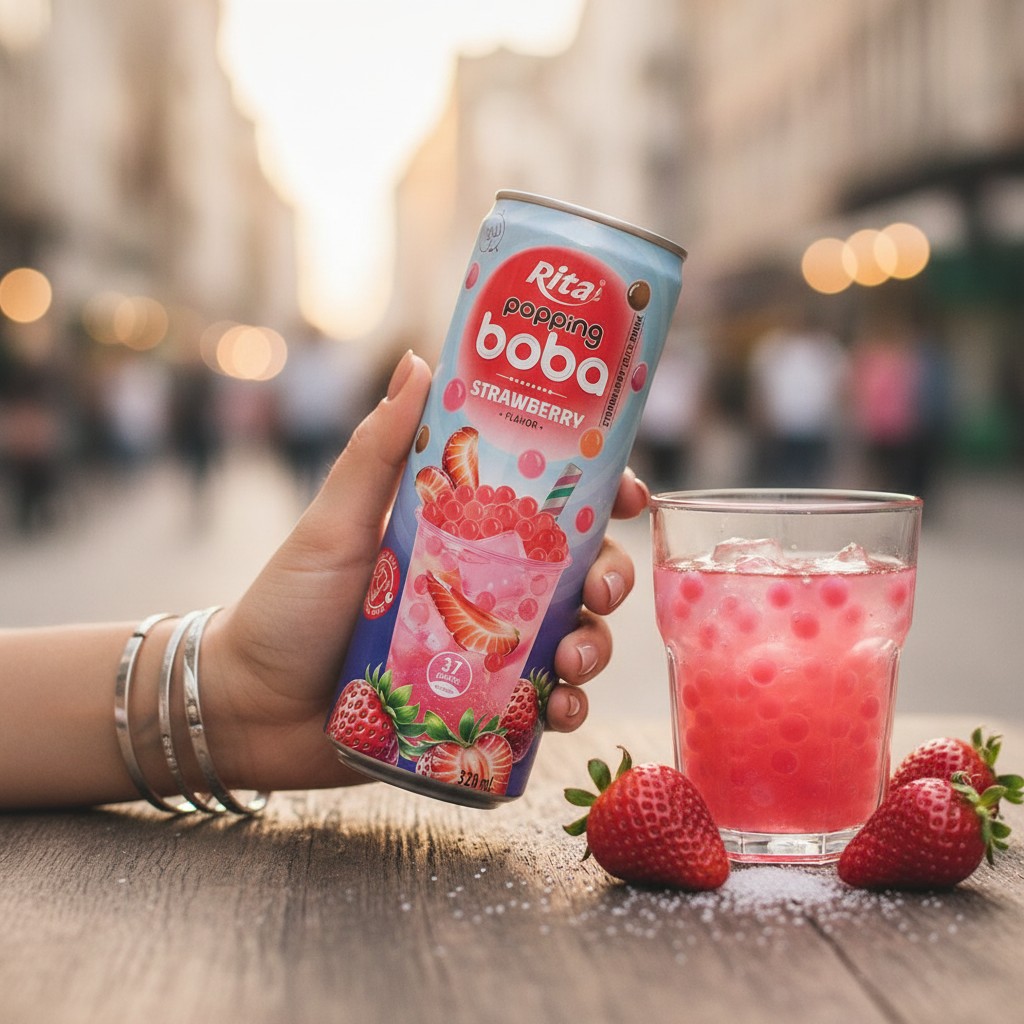
The appeal of popping boba tea lies in its multi-sensory experience: a liquid base with tiny juice-filled pearls that burst upon consumption. Strawberry remains the top-selling fruit flavor globally, making the Manufacturers 320ml Slim Can Popping Boba Tea Strawberry Flavor a strategic entry point for beverage brands. Recent market data from Allied Market Research suggests the global bubble tea market will exceed $4.3 billion by 2030, with popping boba capturing a growing share.
In the United States, consumption of bubble tea has expanded beyond Asian communities into mainstream culture. Chains like Gong Cha and Boba Guys have normalized the drink, but the RTD format offers a new frontier. European markets, particularly the UK and Germany, are seeing rapid adoption of bubble tea products in supermarkets and convenience stores. The slim 320ml can format is ideal for on-the-go consumption, aligning with busy urban lifestyles.
Consumer Preferences and the Role of Strawberry Flavor
Strawberry is universally loved for its sweetness and familiarity. When combined with popping boba pearls, it creates a playful yet satisfying drink that appeals to younger demographics. According to a 2025 Mintel report, 42% of US Gen Z consumers say they are drawn to beverages with unusual textures. The popping element satisfies that craving for novelty without being overly exotic.
Moreover, strawberry flavor allows for easy pairing with various tea bases or fruit juices. In the popping boba tea strawberry flavor market trends, brands are experimenting with green tea, oolong, or even Thai milk tea bases. The flexibility of the flavor profile makes it a safe bet for private label development.
Opportunities for Beverage Importers and Distributors
For importers in the US and Europe, popping boba tea strawberry flavor market trends present a clear opportunity to differentiate from saturated carbonated soft drink and energy drink categories. The product fits well into the “better-for-you” space when marketed as fruit juice-based and free from artificial colors. However, per FDA compliance guidelines, no health claims should be made; instead, focus on the product’s natural fruit content and transparency of ingredients.
The 320ml slim can is particularly attractive for vending machines, airline catering, and hotel minibars. Its sleek aluminum construction preserves freshness and is infinitely recyclable. Rita Food & Drink Co., Ltd., a leading Vietnamese OEM/ODM manufacturer, produces this item with a shelf life of 12–18 months, ensuring long export logistics are feasible.
Distributors can leverage OEM beverage service to create custom formulations. For example, adjust sweetness levels or tea strength to match regional tastes. European importers might prefer less sugar, while US buyers may want a bolder strawberry profile. The manufacturer’s minimum order quantity is flexible, allowing even mid-sized distributors to test the market.
Production and Quality Standards for Global Export
Vietnam has emerged as a strategic sourcing hub for RTD bubble tea products due to its tropical fruit supply and competitive manufacturing costs. Rita Food & Drink holds certifications including ISO, HACCP, HALAL, KOSHER, BRC, and FSSC 22000, which are critical for US and European market entry. The company operates over 50 production lines across 30,000 m² of factory space, with a capacity of 1,200 containers per month.
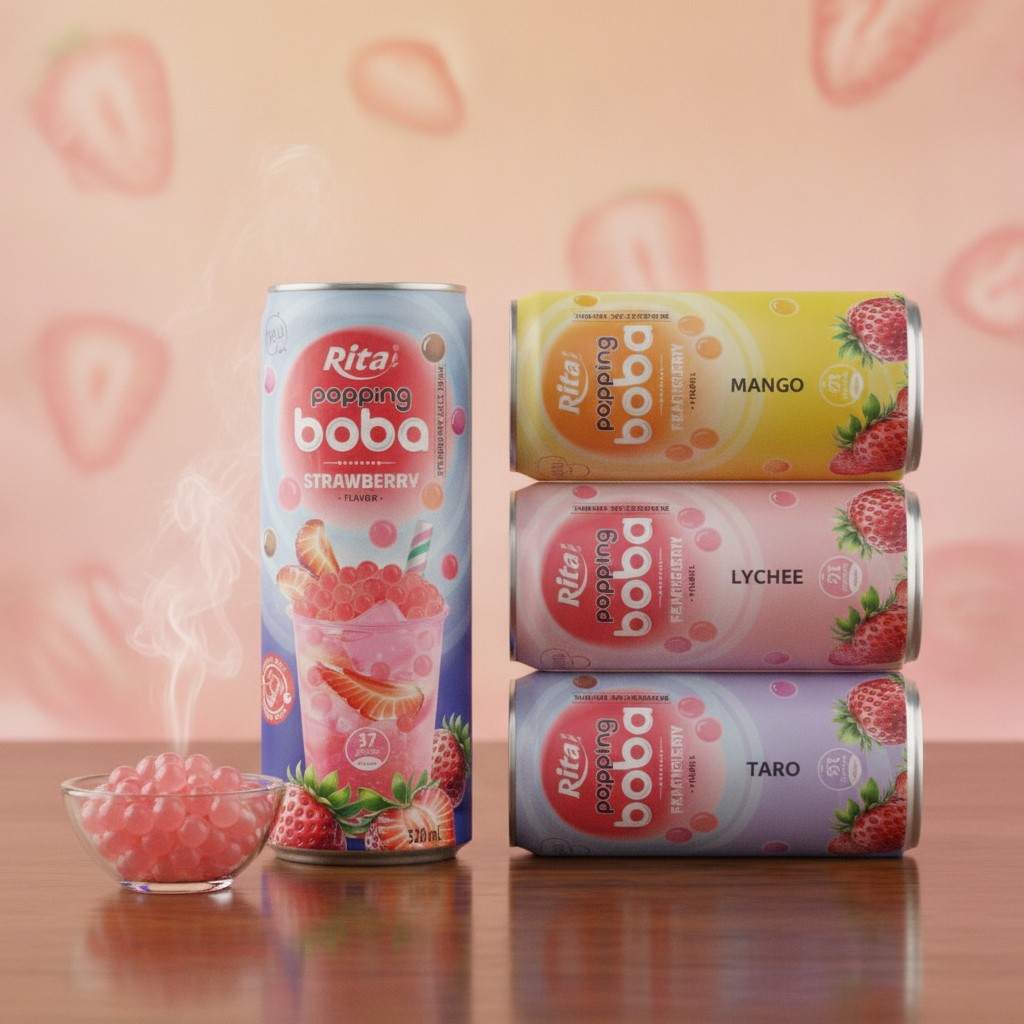
For the Manufacturers 320ml Slim Can Popping Boba Tea Strawberry Flavor, the popping boba pearls are made from natural fruit juice concentrate and calcium lactate, creating a vegan-friendly texture. The base uses real strawberry puree from Vietnamese farms, ensuring a authentic flavor. No artificial colors or preservatives are added, aligning with clean-label trends.
Europe: A Growing Hub for Bubble Tea Consumption
In Europe, the bubble tea market has grown 20% year-over-year since 2022, according to Statista. The UK leads in adoption, followed by France and Germany. However, the RTD segment is still underpenetrated, offering a first-mover advantage for importers. The popping boba tea strawberry flavor market trends in Europe show that consumers prefer drinks that are both exotic and familiar—strawberry hits that balance perfectly.
European Union regulations require strict traceability and ingredient transparency. Rita’s production facility can provide full documentation, including organic certification if needed (USDA Organic and EU Organic options available). The slim can format also meets EU packaging waste directives because aluminum is highly recyclable.
For European distributors, partnering with a Vietnam-based OEM like Rita means accessing competitive pricing without sacrificing quality. The company offers private label solutions, from custom can designs to in-house R&D for flavor variations. A good starting point is to explore fruit juice beverages category to understand the broader product range.
Challenges and Solutions in the US Market
The US market is more crowded with bubble tea options, but the RTD popping boba segment remains niche. Major brands like Oatly and Chobani have not yet entered this space, leaving room for agile importers. However, the US Food and Drug Administration has strict labeling requirements: the term “popping boba” must be accurately described on the ingredient list. Rita provides pre-approved label concepts that comply with FDA regulations.
Logistics is another consideration. Shipping from Vietnam to the West Coast takes 14–20 days. The 320ml can’s lightweight design (approx. 340g filled) helps optimize container loads. Rita can also arrange multi-temperature container shipping if needed, though the product is shelf-stable at ambient temperature.
Distributors should consider partnering with e-commerce platforms like Amazon or Shopify for DTC trials. The company profile of Rita highlights its experience shipping to major retailers across the US, including supermarkets and convenience chains. The popping boba tea strawberry flavor is already listed on the company’s global website with a wholesale price.
Future Outlook: From Trend to Staple
Analysts predict that popping boba tea will transition from a novelty to a mainstream category within three years. The popping boba tea strawberry flavor market trends support this view: product searches on Google have increased 150% since 2023. As more millennials seek non-alcoholic, flavorful alternatives, strawberry popping boba can become a staple in cooler shelves.
For beverage startups, private labeling this product allows rapid entry without heavy R&D investment. Rita’s ODM service can help develop unique recipes—like matcha strawberry boba or sparkling boba—to capture niche audiences. The company’s R&D team has created over 200 custom formulations for global clients.
Ultimately, the key to success lies in understanding local taste preferences and leveraging the manufacturing flexibility that Vietnam offers. Whether you target US convenience stores or European specialty grocers, the Manufacturers 320ml Slim Can Popping Boba Tea Strawberry Flavor provides a versatile platform to build a beverage brand in the booming boba category.
Frequently Asked Questions
What is the primary keyword for this article?
The primary keyword is ‘popping boba tea strawberry flavor market trends’.
Why is the 320ml slim can format popular for popping boba tea?
The 320ml slim can is portable, recyclable, and preserves the texture of popping boba pearls. It suits on-the-go consumption in vending machines, convenience stores, and e-commerce.
How does Rita Food & Drink ensure product quality for export?
Rita holds ISO, HACCP, HALAL, KOSHER, BRC, and FSSC 22000 certifications. The factory uses advanced production lines and strict quality control to meet US, EU, and global standards.
Can I customize the flavor or packaging of this popping boba tea?
Yes, Rita offers full OEM/ODM services including custom formulations, can design, and private labeling. Minimum order quantities are flexible for trial runs.
What is the shelf life of the popping boba tea in a 320ml can?
The shelf life is 12 to 18 months when stored in a cool, dry place. The can’s hermetic seal prevents spoilage during long-distance shipping.