
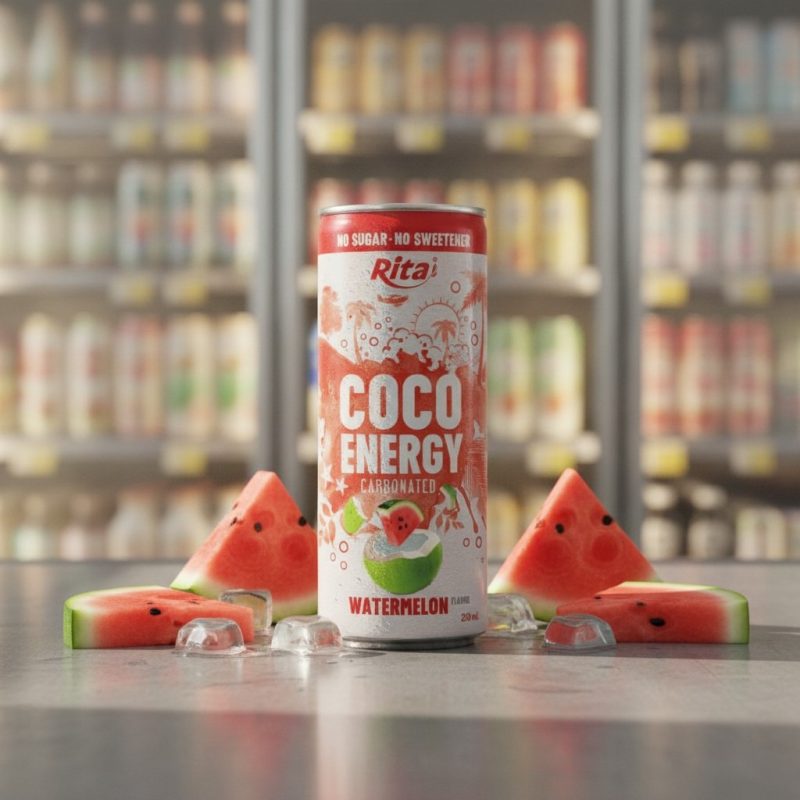
The global beverage industry is witnessing a shift toward functional and flavorful drinks, with coconut energy carbonated beverages emerging as a dynamic segment. Combining the natural appeal of coconut water with the effervescence of carbonation and the energy-boosting properties of caffeine, products like Rita Coco Energy Carbonated Watermelon Flavor are capturing attention across key markets. This article explores the market trends, consumer preferences, and export opportunities in the United States and Europe, two regions with high demand for innovative beverage formats.
Key Takeaways
- The coconut energy carbonated beverage sector is growing rapidly in the US and Europe due to demand for natural energy alternatives.
- Watermelon flavor is a rising trend in carbonated functional drinks, offering a refreshing twist for consumers.
- Vietnam-based manufacturers like RITA provide OEM/ODM solutions with flexible MOQ and large-scale production capacity, ideal for importers and distributors.
- Understanding regulatory and supply chain factors is crucial for success in these export markets.
US Market: Demand for Natural Energy Drinks with Coconut Water
The United States remains the largest market for energy drinks, with annual sales exceeding $20 billion. However, consumer preferences are shifting away from traditional synthetic energy beverages toward products perceived as more natural. Coconut water, known for its electrolyte content, is increasingly used as a base for functional drinks. Combining coconut water with carbonation and natural flavors like watermelon creates a beverage that appeals to health-conscious and taste-focused consumers.
Importers and distributors looking for the next growth category should consider the coconut energy carbonated beverage segment. The US market shows strong acceptance for coconut-based drinks, with coconut water sales projected to reach $15 billion globally by 2025. Carbonated variants add a premium positioning, especially in the convenience store and on-the-go channels.
Consumer Insights and Product Positioning
Young adults aged 18–35 are the primary target group for energy drinks in the US. They seek products that combine functionality with great taste. Watermelon flavor ranks among the top preferred fruit flavors for carbonated beverages, offering a sweet and refreshing profile that pairs well with coconut. The slim can format (250ml) used by RITA is popular in the US for single-serve energy drinks, providing portability and modern branding.
Private label and contract manufacturing are significant opportunities. US beverage brands often outsource production to overseas suppliers with competitive pricing and flexible MOQ. RITA, as a leading Vietnamese manufacturer, offers OEM/ODM services with a minimum order quantity that accommodates both startups and established companies. The company’s production capacity of 1,200 containers per month ensures reliable supply for large-scale distribution.
Europe: Premium and Eco-Conscious Beverage Trends
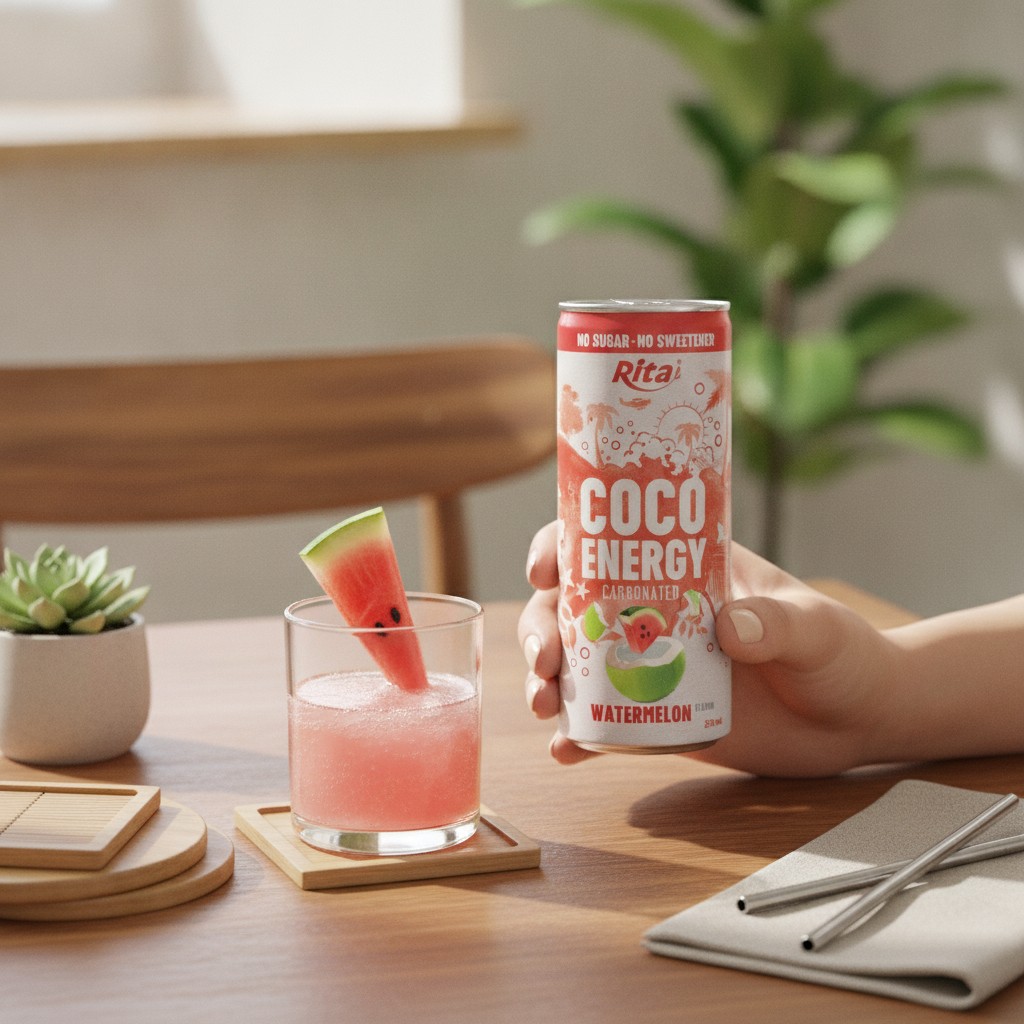
The European beverage market is characterized by strong demand for premium, natural, and sustainably sourced products. Coconut energy carbonated drinks fit perfectly into this landscape. Countries like Germany, the UK, and the Netherlands lead in innovative functional beverages. European consumers are particularly attentive to ingredient transparency and packaging recyclability, both of which are strengths of products manufactured under ISO, HACCP, and BRC standards by RITA.
Exporters entering Europe must comply with EU food safety regulations and labeling requirements. Products such as Rita Coco Energy Carbonated Watermelon Flavor, with a shelf life of 18 months and customizable packaging options (aluminum cans, PET, glass), offer flexibility to meet distributor specifications. The product’s halal and kosher certifications further broaden its marketability across diverse European communities.
Distribution Channels and Private Label Growth
In Europe, the private label segment accounts for over 30% of beverage sales in countries like Spain and France. Distributors and retailers are actively seeking reliable OEM partners to develop exclusive products. RITA’s ODM service allows clients to customize formulations, sweetness levels, and flavor profiles, making it a strategic partner for building local brands. The company’s coconut beverage products have already gained traction in 200+ countries, including multiple European markets.
Energy drinks in Europe face higher sugar taxes, but carbonated coconut water with natural caffeine can be positioned as a low-sugar alternative. The watermelon flavor provides a differentiating element, tapping into the growing plant-based and fruit-forward trend.
Why Vietnamese Manufacturers Are Winning Global Contracts
Vietnam has emerged as a top sourcing destination for coconut-based beverages due to abundant raw materials and advanced processing technology. Companies like RITA Food & Drink Co., Ltd., established in 2004, operate over 50 production lines across a 30,000 m² facility. Their supply ability of 600 twenty-foot containers per month for specific products demonstrates scalability that few competitors offer.
Importers benefit from competitive FOB pricing from Ho Chi Minh port and delivery times of 20–25 days after order confirmation. The combination of speed, flexibility (MOQ as low as a few hundred cases for trial orders), and quality certifications (BRC, FSSC 22000, Organic, SMETA) makes Vietnamese suppliers ideal for both US and European buyers.
Product Adaptation for Target Markets
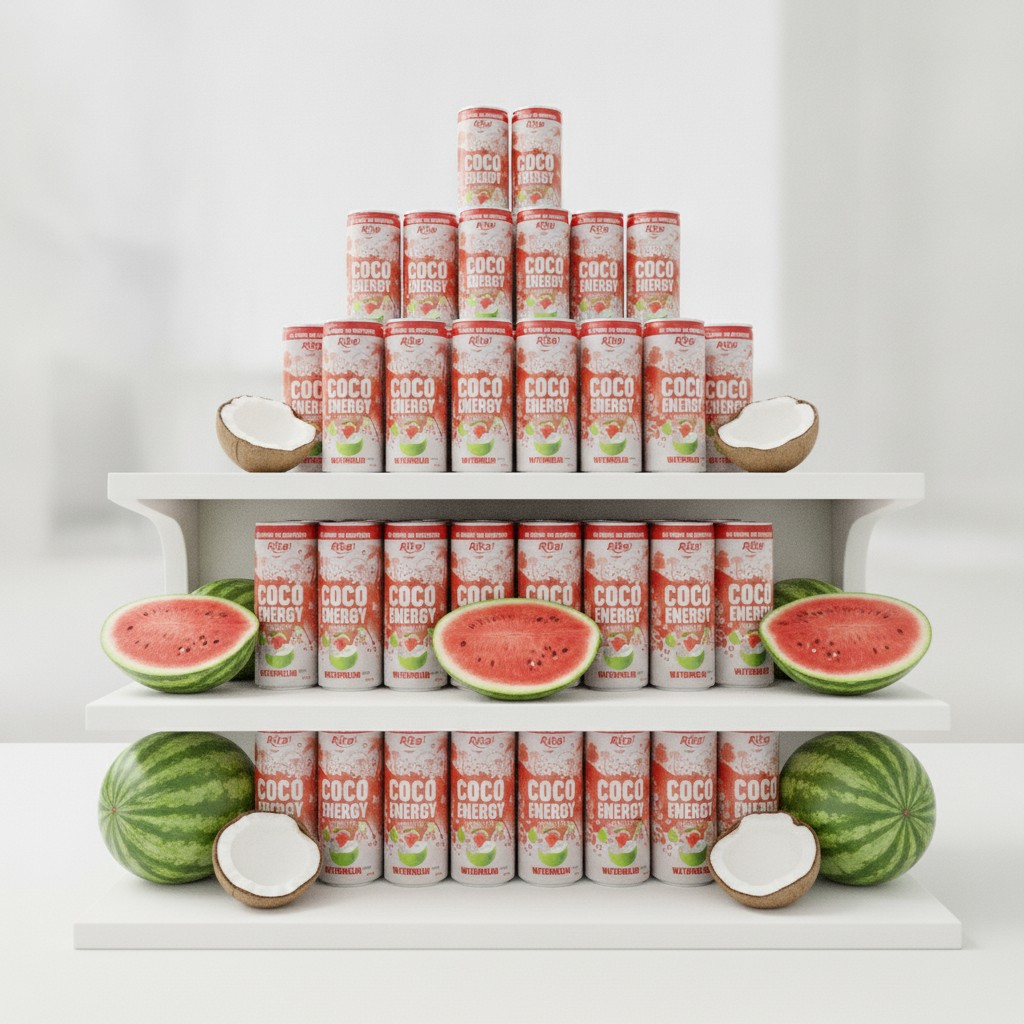
Successful export strategies involve adapting the product to local taste preferences. For the US, a sweeter profile with higher carbonation may be preferred, while European markets might opt for less sweetness and more natural coconut flavor. RITA’s R&D team can tailor formulations, and packaging options range from slim cans to PET bottles of various volumes. The same flexibility applies to private label designs, allowing distributors to launch their own brand under the Rita Cocopack line.
Additionally, the energy drink category in both regions is witnessing a shift toward clean labels and recognizable ingredients. Coconut water, carbonated water, natural watermelon flavor, and caffeine from green tea extract or guarana are acceptable to most consumers. Avoiding health claims per FDA guidelines, the product can be positioned as a refreshing, energizing beverage for active lifestyles.
Supply Chain and Logistics Considerations
Exporting from Vietnam to the US and Europe requires careful planning of shipping routes and documentation. Standard shipping time to the US West Coast is about 15–20 days, and to Europe approximately 25–30 days. With 18 months of shelf life, products remain fresh upon arrival. RITA’s facilities are audited by international certifiers, ensuring compliance with import regulations.
Distributors should also consider the energy drinks category for wider assortment. By sourcing multiple SKUs from a single supplier, buyers can optimize shipping costs and streamline inventory management.
Conclusion: Seizing the Coconut Energy Carbonated Opportunity
The coconut energy carbonated beverage market is at an inflection point. US and European consumers are moving toward natural, functional drinks that do not compromise on taste. Watermelon flavor offers a unique point of differentiation, and the slim can format appeals to modern on-the-go consumption. For importers, distributors, and private label companies, partnering with a capable OEM/ODM manufacturer like RITA provides a competitive edge through product customization, reliable supply, and cost efficiency.
To explore how the coconut energy carbonated beverage can fit into your portfolio, request samples and discuss bulk pricing with the RITA team today.
Frequently Asked Questions
What is a coconut energy carbonated beverage?
It is a drink that combines coconut water with carbonation and caffeine, often flavored with fruits like watermelon. Products such as Rita Coco Energy Carbonated Watermelon Flavor offer a refreshing energy boost without synthetic ingredients.
What markets are best for coconut energy carbonated drinks?
The United States and Europe are prime markets due to high demand for energy drinks, natural ingredients, and functional beverages. Consumers in these regions appreciate the combination of coconut water and carbonation.
How can I import coconut energy carbonated beverages from Vietnam?
Contact manufacturers like RITA, who offer OEM/ODM services. They provide free samples, flexible MOQ, and delivery from Ho Chi Minh Port within 20–25 days. Ensure your order meets the required certifications for your target market.
Can I create a private label coconut energy drink?
Yes. RITA offers private label solutions with custom formulations, packaging design, and flavor adjustments. You can develop your own brand using their production capacity and expertise.
What certifications does the product have?
RITA’s products are certified with ISO, HACCP, HALAL, KOSHER, BRC, FSSC 22000, and organic standards. These certifications facilitate entry into regulated markets like the US and Europe.
