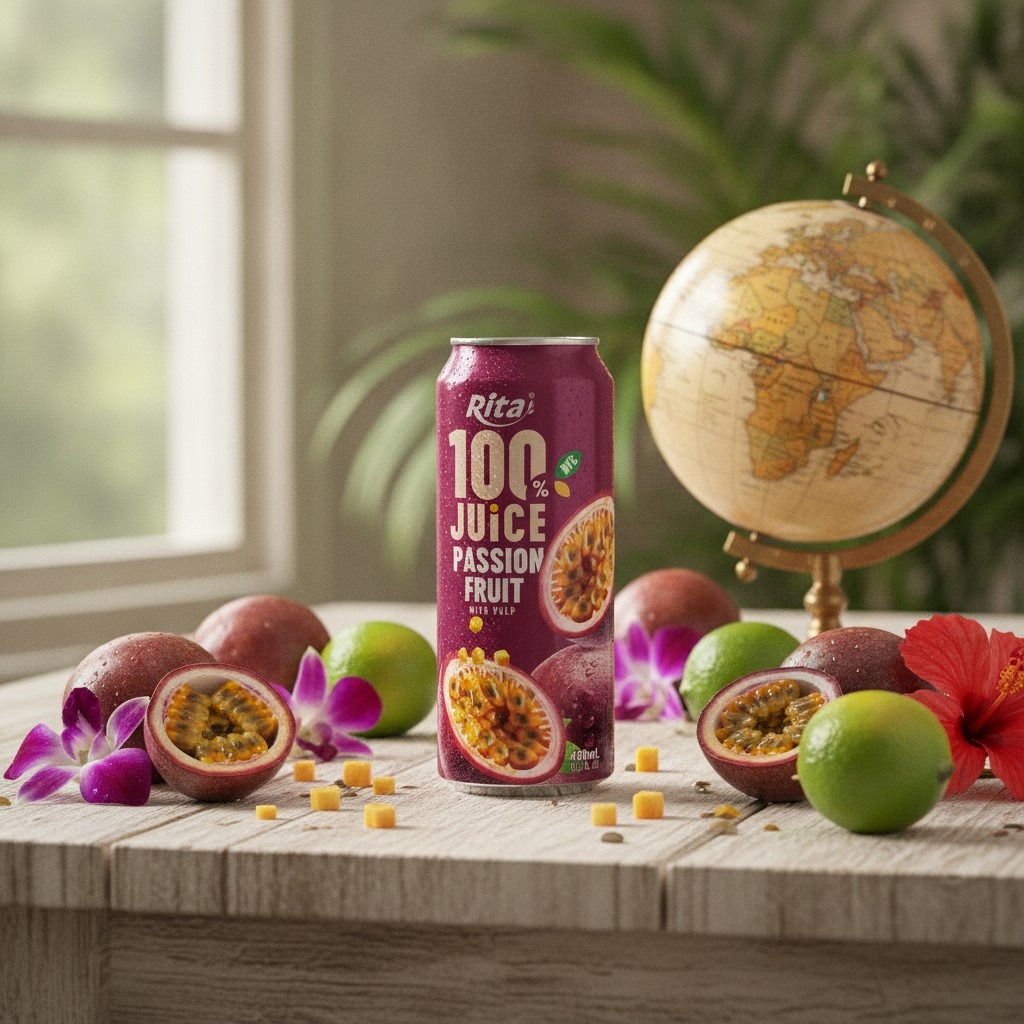
Global beverage buyers are increasingly turning to exotic fruit juice options to differentiate their portfolios. Among these, passion fruit juice with pulp wholesale has emerged as a high-demand category, particularly in the United States and European markets. The unique sensory experience of real fruit pulp, visible seeds, and intense tartness aligns with consumer cravings for authenticity and adventure in flavor.
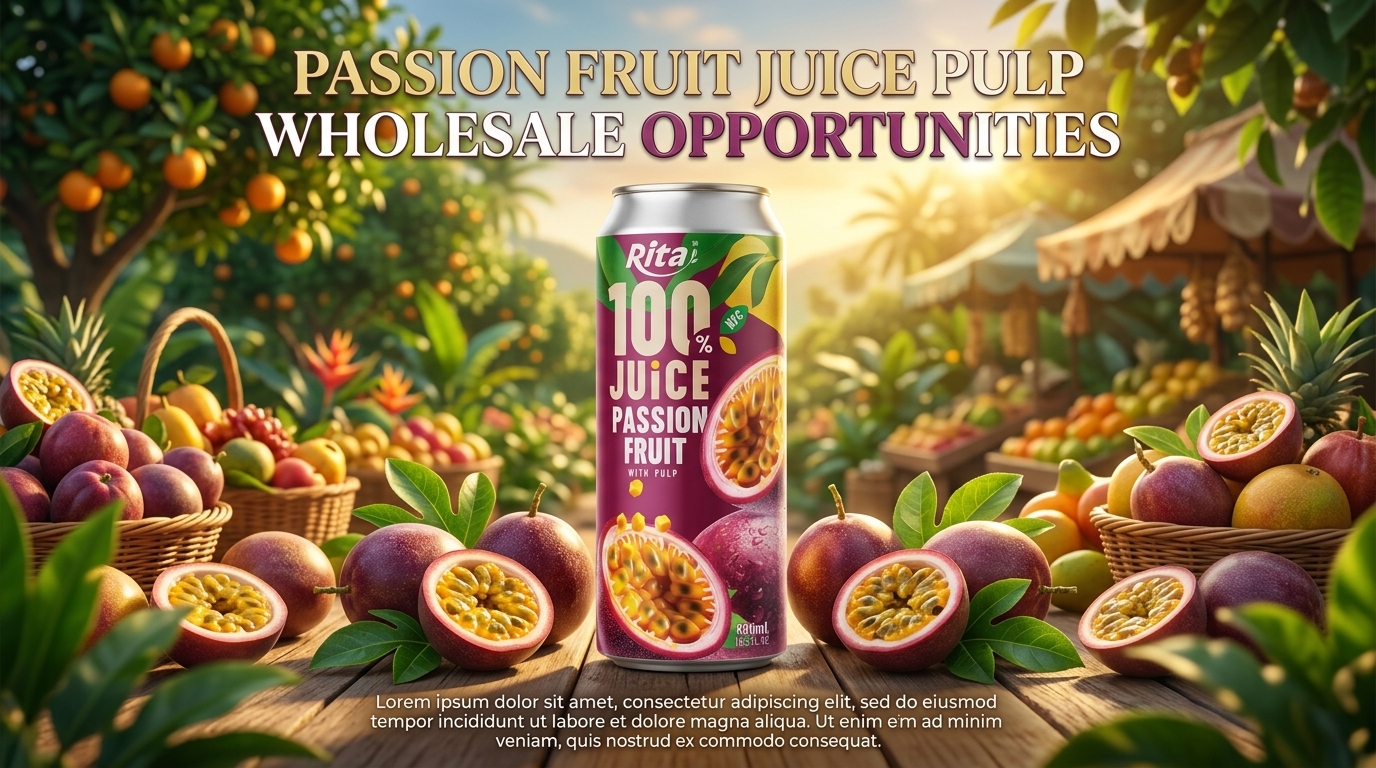
Key Takeaways
- Demand for passion fruit juice with pulp wholesale is accelerating in USA and Europe, driven by the rise of exotic, functional, and natural beverages.
- Real fruit pulp content, visible seeds, and NFC (Not From Concentrate) production methods are key differentiators for premium positioning.
- B2B buyers benefit from flexible OEM/ODM partnerships, competitive pricing from Vietnamese manufacturers, and scalable supply chains.
- Quality certifications (ISO, HACCP, BRC, HALAL) and rigorous COA documentation are non-negotiable for export-ready products.
- Passion fruit’s versatility in cocktails, smoothies, and culinary applications expands wholesale opportunities across channels.
Market Trends for Passion Fruit Juice with Pulp in the USA and Europe
The United States remains the largest global market for premium canned juices, with a growing appetite for exotic flavors like passion fruit. According to recent trade data, imports of tropical fruit juices into the US have increased by 12% year-over-year, with passion fruit juice leading growth at 18%. This trend is fueled by the popularity of ready‑to‑drink (RTD) beverages in convenient aluminum cans. Similarly, the European Union, particularly Germany, the UK, and France, is witnessing a surge in demand for fruit juices with visible pulp and seeds, as consumers associate these with higher quality and less processing.
Wholesalers and importers in these regions are actively seeking suppliers who can deliver consistent quality at scale. Passion fruit juice with pulp wholesale from Vietnam offers a compelling value proposition due to lower production costs, high fruit quality, and strong export logistics.
Why Passion Fruit Juice with Pulp Is a Strategic Addition to Your Portfolio
Passion fruit juice stands out in the crowded beverage aisle because of its bold taste and distinctive texture. The inclusion of real fruit pulp and edible seeds delivers an authentic mouthfeel that signals minimal processing. For distributors, this translates into a product that can command premium pricing while appealing to health‑focused consumers who prioritize natural ingredients.
In the US, the shelf‑stable canned juice market is expanding at a CAGR of 5.7%, with fruit pulp products growing faster than clear juices. European buyers, particularly in the organic and natural food segment, are also prioritizing products with short ingredient lists. A typical passion fruit juice with pulp contains only passion fruit juice, water, sugar, citric acid, and natural flavors—meeting clean‑label expectations.
The Role of Quality Assurance in Passion Fruit Juice Wholesale
To succeed in competitive markets like the USA and Europe, suppliers must provide full transparency through Certificates of Analysis (COA). This includes detailed physical, chemical, and microbiological parameters. For instance, a COA for a canned passion fruit juice should list pH (typically around 2.92), Brix (11.5), and microbiological safety (TPC <10 CFU/ml). Such documentation builds trust with importers and food safety authorities.
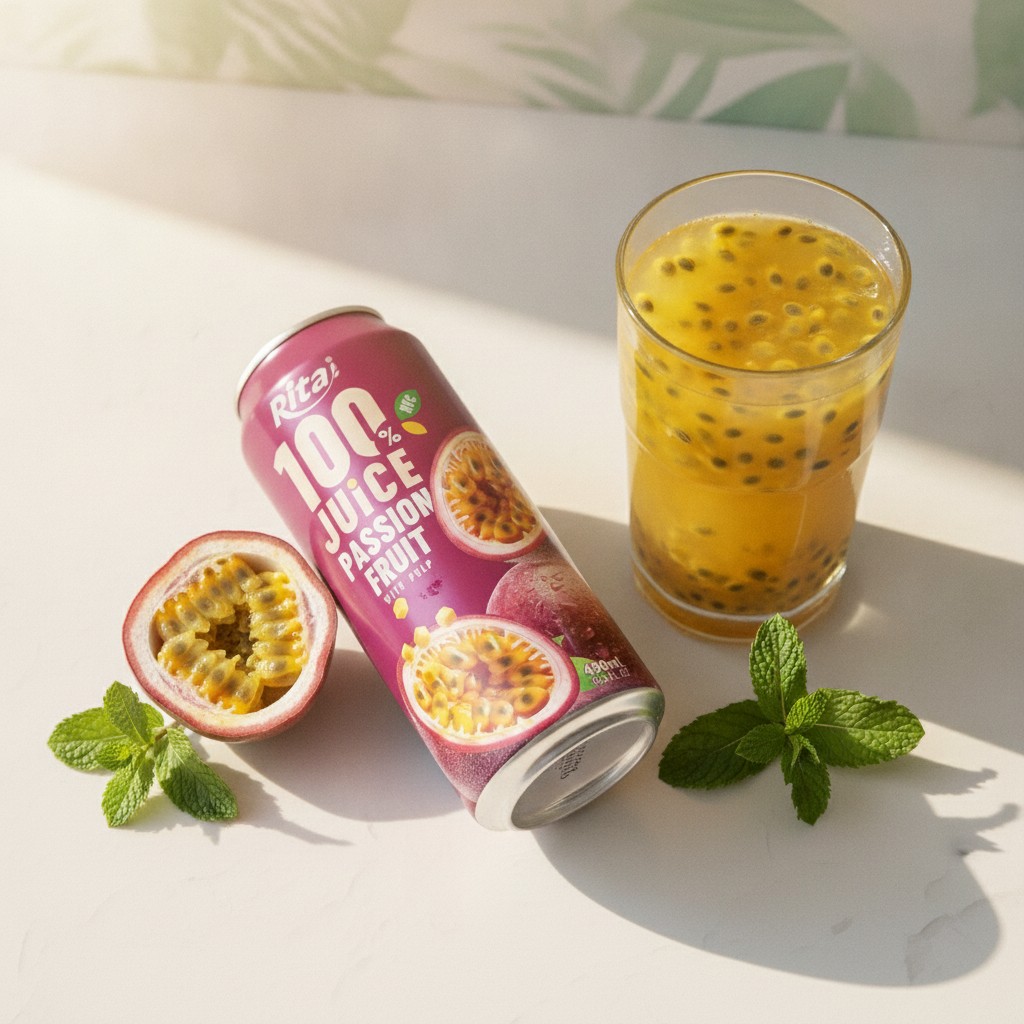
Manufacturers like Rita Food and Drink Co., Ltd., a leading Vietnamese beverage manufacturer, adhere to strict quality standards including ISO, HACCP, BRC, and FSSC 22000. Their production facilities span over 30,000 m² with 50+ production lines, enabling consistent output of over 1,200 containers per month. This scale allows them to serve passion fruit juice with pulp wholesale orders with reliable lead times.
Packaging and Shelf Life Advantages for Global Distribution
Aluminum cans are the preferred packaging for RTD juices targeting US and European markets. They protect the product from light and oxygen, preserving color and flavor for up to 24 months. The 490ml (16.5 Fl Oz) can size is particularly popular for single‑serve consumption in convenience stores, gyms, and vending machines.
For wholesalers, the can format also reduces shipping weight compared to glass and eliminates breakage risks. Additionally, can recycling infrastructure is well‑established in both regions, supporting sustainability claims that resonate with eco‑conscious retailers.
OEM and ODM Opportunities for Private Label Passion Fruit Juice
Many importers and distributors prefer to launch their own branded passion fruit juice lines to build brand equity. Vietnamese manufacturers offer comprehensive OEM (Original Equipment Manufacturing) and ODM (Original Design Manufacturing) services. This includes custom formulation of sweetness levels, acidity, and pulp concentration, as well as packaging design.
For example, a US‑based distributor could work with a manufacturer to create a “California Sunshine” brand of passion fruit juice with pulp, using a proprietary blend that balances tartness with a hint of added sugar. The manufacturer handles everything from sourcing Vietnamese passion fruit to filling and labeling cans, with a minimum order quantity (MOQ) typically starting at one 20‑foot container (approx. 24,000 cans).
These services are detailed on the manufacturer’s OEM service page and ODM service page, outlining capabilities in R&D, quality control, and logistics.
Supply Chain and Pricing Considerations
Vietnam’s proximity to prime passion fruit growing regions ensures a stable supply of raw materials at competitive prices. Labor costs are lower than in China, yet manufacturing standards meet international certifications. This results in FOB prices that are 10–15% below equivalent products from Thailand or Mexico.
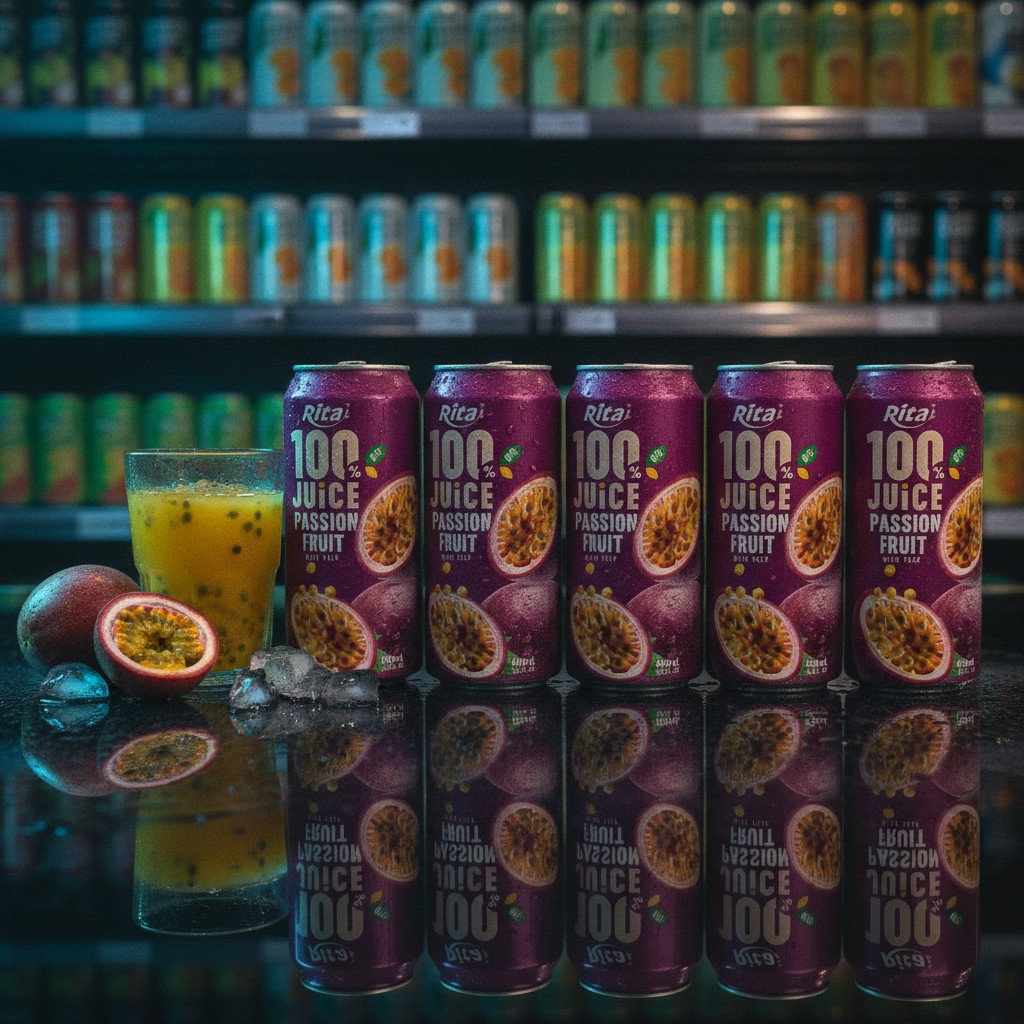
For wholesale buyers, a typical 490ml can of NFC passion fruit juice with pulp costs between $0.80 and $1.20 per unit FOB Ho Chi Minh City, depending on volume. Custom labeling and formulation add a small premium but remain cost‑effective compared to domestic alternatives in the US or Europe.
Regulatory Compliance for Exporting Passion Fruit Juice to USA and Europe
Both markets have strict food safety regulations. The US requires FDA registration, FSMA compliance, and often a third‑party audit like BRC. Europe requires compliance with EU food safety regulations, including labeling in local languages and adherence to organic standards if claimed.
Vietnamese exporters with established certifications can simplify the compliance process. For example, a factory with BRC Grade A certification can export directly to UK retailers without additional audits. Similarly, HALAL certification opens doors to Middle Eastern markets, while KOSHER certification appeals to specific US and European niche segments.
How to Evaluate a Passion Fruit Juice Supplier
When sourcing passion fruit juice with pulp wholesale, request samples and COA documentation. Verify that the product contains actual fruit pulp (not just flavoring) and that the Brix level matches specifications. Also, ask for microbiological test reports to confirm safety.
Visit the manufacturer’s website to review their product catalog and certifications. A trusted supplier will have a clear company profile and transparent contact information. They should also provide sample requests and fast communication via trade platforms like Alibaba or direct inquiry.
Frequently Asked Questions
What is the typical shelf life of canned passion fruit juice with pulp?
Aluminum cans of NFC passion fruit juice with pulp typically have a shelf life of 18–24 months from the production date when stored in a cool, dry place. The specific shelf life can be found on the COA of each batch.
Can I customize the sweetness or pulp content for my private label?
Yes, manufacturers like Rita offer ODM services to adjust Brix levels, pulp percentage, and flavor profiles. Minimum order quantities apply, typically starting at one container (20′). Contact the sales team for formulation options.
What certifications do I need to import passion fruit juice into the USA?
Importers need to ensure the manufacturer complies with FDA regulations, including facility registration and prior notice filings. Certifications like BRC, FSSC 22000, or ISO 22000 simplify the process. A COA with microbial and chemical data is also required.
What is the difference between NFC and concentrate passion fruit juice?
NFC (Not From Concentrate) juice is pressed from fresh fruit and pasteurized without removing water, preserving more of the original flavor and nutrients. Concentrate juice is reduced to remove water, then reconstituted later. NFC is perceived as higher quality and commands a premium price in wholesale markets.