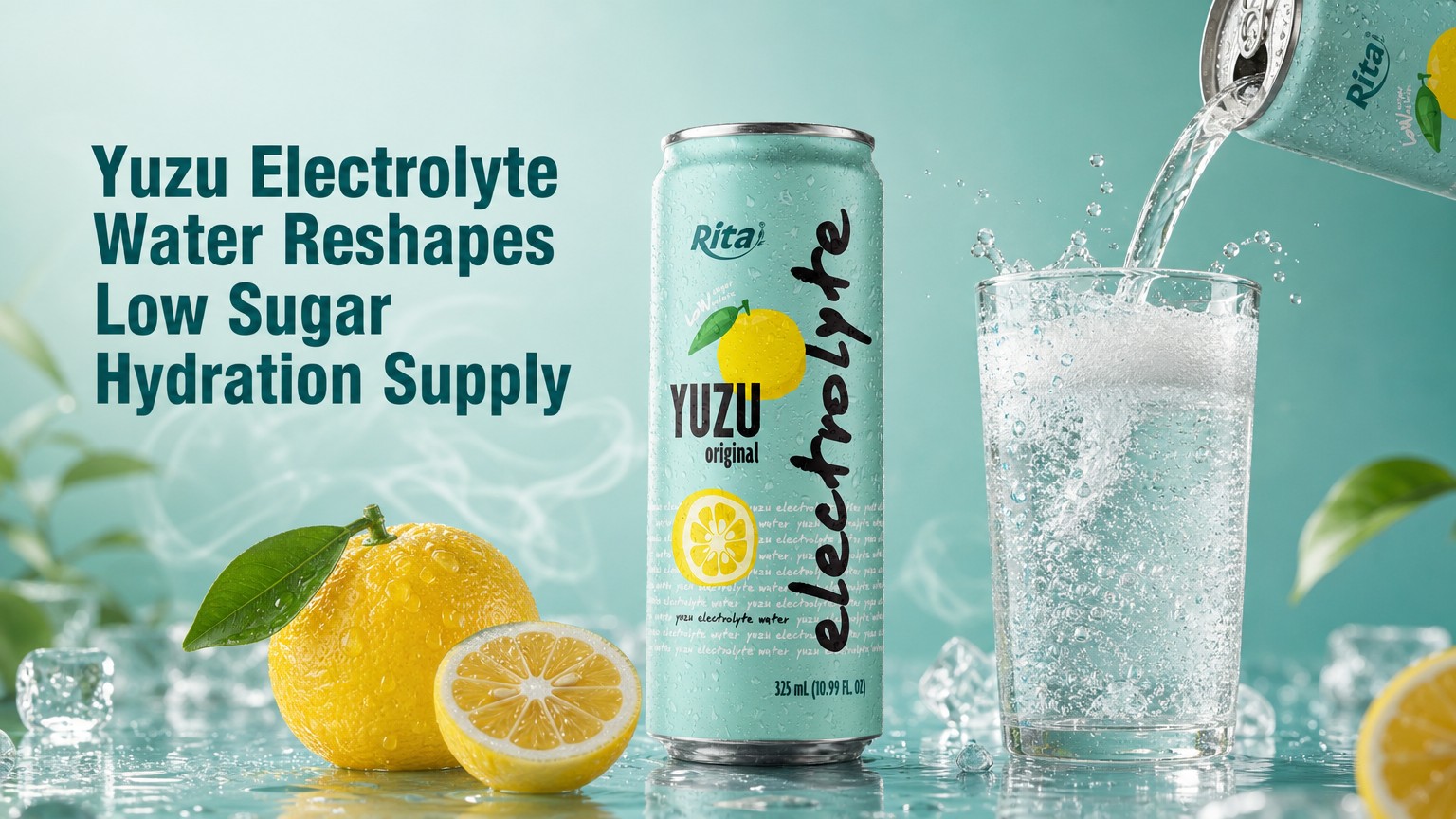
The global beverage industry is entering a period where yuzu electrolyte water formulations and low-sugar hydration formats are being repositioned as core portfolio items rather than seasonal novelties. Across retail and foodservice channels, buyers are scanning supplier catalogs for clean-label refreshment options that combine citrus flavor profiles with mineral content, and RITA Food and Drink Co., Ltd. has responded with a compact 325 ml aluminum slim can built for export scale. The product sits at the intersection of two visible shifts: rising demand for reduced-sugar refreshment and the consolidation of beverage sourcing toward manufacturers able to deliver consistent specifications across hundreds of destination markets.
Key Takeaways
- Yuzu electrolyte water in a 325 ml slim can targets the low-sugar hydration segment expanding across Asian retail channels.
- RITA operates 50+ automated production lines and exports more than 1,200 containers monthly to over 200 countries and territories.
- The formulation is configurable for regional sweetness levels and electrolyte composition, supporting OEM and private-label programs.
- An 18-month shelf life and internationally recognized certifications underpin long-distance distribution reliability.
- Supply chain resilience and specification control are becoming decisive factors in beverage procurement decisions.
Yuzu Electrolyte Water Meets Shifting Beverage Demand
Category watchers note that low-sugar hydration beverages are moving from niche shelves into mainstream cold-vault placement, and the yuzu electrolyte water drink category is one of the clearest examples of that migration. Yuzu, prized across East Asian culinary traditions for its tart, aromatic peel, brings a flavor signature distinct from conventional lemon or lime offerings, giving retailers a story to tell at the point of sale. When paired with sodium and potassium, the resulting drink reads as a purposeful refreshment rather than a sugary soft drink.
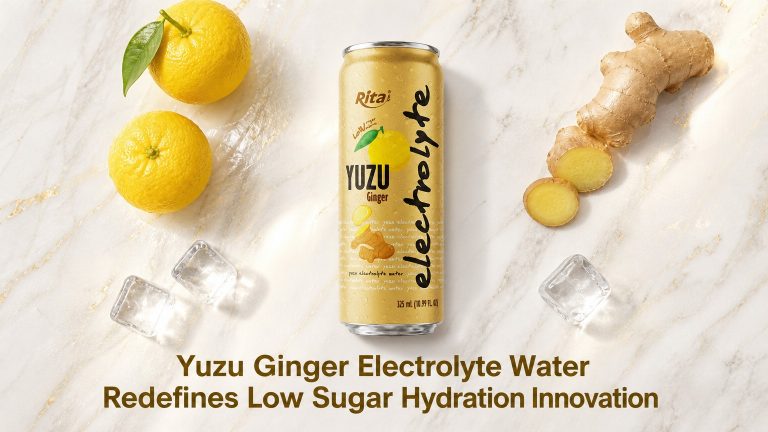
RITA’s 325 ml offering, marketed as the Yuzu Electrolyte Water Drink 325ml Low Sugar Hydration Beverage, combines natural yuzu flavor with a low-calorie profile and a pH of 4.1 ± 0.5 alongside a Brix reading of 9.4 ± 0.5. Those specifications matter to procurement teams because they define the sensory baseline a distributor can promise to end consumers. No artificial flavors, colors, or preservatives are used in the formulation, aligning the product with the clean-label expectations that now shape purchasing decisions in markets spanning Southeast Asia, East Asia, and South Asia.
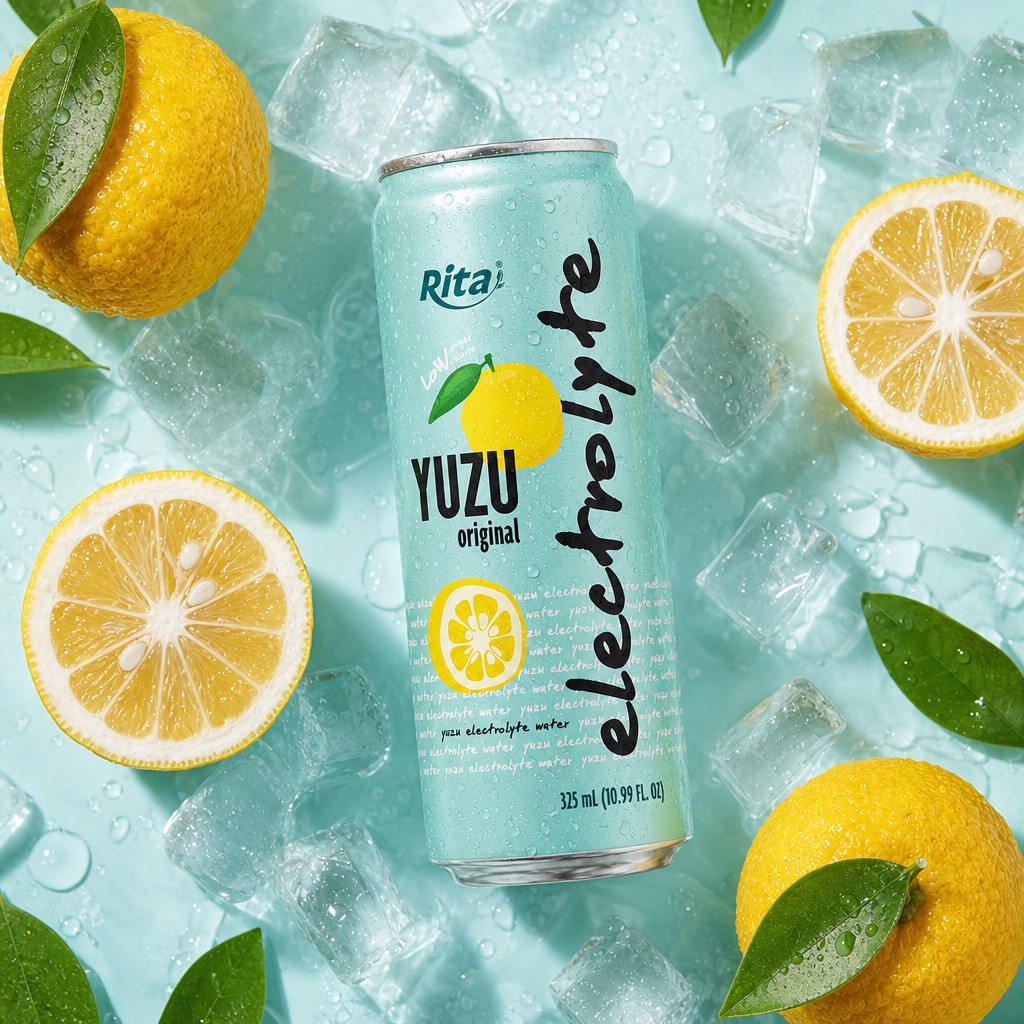
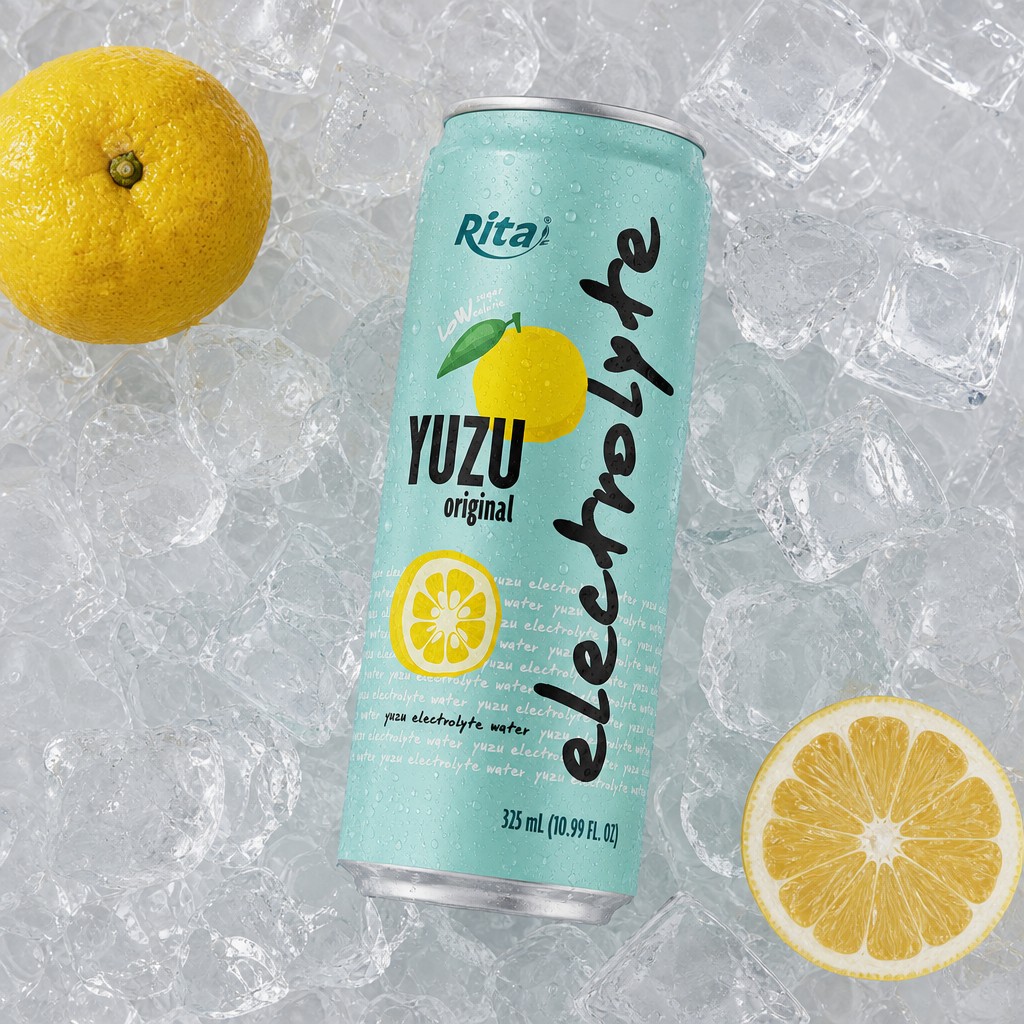
The packaging reinforces the positioning. A minty-teal slim can carries a whole yuzu fruit illustration and a cross-section slice, with condensation droplets rendered on the surface to signal a chilled pour. For buyers evaluating shelf impact, the visual system communicates freshness and restraint without relying on exaggerated claims. The result is a can that photographs well for e-commerce listings and stands out in a crowded refrigerated bay.
Supply Chain Pressures Reshaping Beverage Sourcing
Beverage supply chains are under renewed scrutiny as importers weigh lead times, certification coverage, and packaging resilience against volatile freight conditions. For low-sugar hydration products destined for multiple ports, the ability to lock in consistent taste and electrolyte composition from one production run to the next is a commercial advantage.
Industry commentary this year has highlighted how procurement decisions increasingly hinge on supplier infrastructure rather than unit price alone. Executives at Boston Beer, for instance, have pointed to the spirits-ade hybrid category as a zone of notable activity, underscoring how quickly consumer preference can pivot within the refreshment aisle. Such volatility makes dependable upstream partners more valuable than ever.
Why OEM Capacity Matters for Regional Distributors
Regional distributors frequently seek partners who can scale without renegotiating specifications every season. RITA Food and Drink Co., Ltd., established in 2004, runs more than 50 automated production lines and ships over 1,200 containers per month, supplying brands in more than 200 countries and territories. That scale allows buyers to plan promotions and listing cycles with a clearer view of available volume.
For importers, the practical question is whether a manufacturer can absorb sudden order spikes while holding taste parameters steady. The company’s OEM and ODM services are structured around that requirement, offering formulation adjustment for sweetness, electrolyte balance, and flavor intensity to suit local palates in Thailand, Indonesia, the Philippines, Malaysia, Vietnam, Singapore, Japan, South Korea, Taiwan, India, Bangladesh, Sri Lanka, and Pakistan. Buyers interested in broader portfolio options can review the OEM production services catalog to understand how custom programs are scoped.
Private-label partnerships add another layer of complexity, since artwork, case configuration, and container mix must align with each retailer’s logistics network. The ODM development services outline how formulation and packaging iterations are managed from brief to shipment, giving distributors a structured path from concept to shelf-ready pallets.
Certification Coverage as a Trade Enabler
Certifications function as passport stamps in cross-border beverage trade, and gaps in coverage can delay clearance at destination ports. RITA’s portfolio includes BRC, FSSC 22000, Halal Jakim, Halal HCA-GCC, Kosher, ISO, GMP, HACCP, and SMETA, a combination that addresses the regulatory expectations of both Middle Eastern importers and mainstream Western retail chains.
Halal credentials, in particular, open doors in Indonesia and Malaysia, while Kosher recognition supports listings in specialty channels elsewhere. For a low-sugar hydration drink distributed through mixed retail formats, this breadth of certification reduces the need for separate production runs by destination, simplifying inventory planning for the importer.
From Packaging Line to Port Container Logistics
Aluminum slim cans offer a favorable profile for long-distance shipping: they stack efficiently, resist breakage, and chill quickly at retail. The 325 ml format fits standard cooler configurations without crowding adjacent SKUs, a detail that category managers weigh when allocating shelf facings.
For the Yuzu Electrolyte Water Drink 325ml Low Sugar Hydration Beverage, the 18-month shelf life provides a comfortable buffer against port congestion and inland transit delays. Distributors can hold safety stock without fearing flavor drift, which is particularly relevant for citrus-forward products where aroma volatility is a known challenge.
Container Planning and Order Cadence
Export logistics for canned beverages revolve around container utilization. RITA’s monthly throughput of more than 1,200 containers suggests mature routing relationships with major shipping lines, translating into more predictable sailing schedules for buyers.
- Pallet patterns optimized for 325 ml slim cans maximize cube utilization in 20-foot and 40-foot containers.
- Consolidation options allow smaller importers to share container space while maintaining SKU integrity.
- Documentation packages aligned with BRC and FSSC 22000 requirements expedite customs processing at destination.
Such operational discipline matters when a retailer plans a multi-market launch. A single delay at origin can ripple through promotional calendars, so suppliers who publish reliable dispatch windows earn repeat business.
Shelf Life and Cold Chain Considerations
Not every distribution network maintains unbroken refrigeration from plant to shelf. The formulation’s stability across ambient storage windows gives importers flexibility when last-mile cold chain coverage is uneven, a common scenario across island geographies in Southeast Asia.
Meanwhile, the aluminum can’s thermal conductivity supports rapid cooling at point of display, helping retailers deliver the chilled experience the packaging imagery promises. That synergy between format and storage conditions simplifies merchandising decisions.
Raw Material Sourcing and Quality Control
Flavor consistency begins upstream, and citrus-derived inputs are sensitive to harvest variation. RITA’s sourcing framework draws on established agricultural networks in the Mekong Delta region, an area long recognized for supplying high-quality raw ingredients to Vietnamese beverage producers.
The company’s Mekong Delta raw material area provides a documented pipeline for fruit inputs, supporting traceability requirements that auditors increasingly expect under schemes such as FSSC 22000.
For buyers verifying provenance, this regional sourcing story adds credibility beyond certificate paperwork. It also anchors the brand narrative around Vietnamese agriculture, a positioning that resonates with consumers who follow supply chains more closely than previous generations did.
A closer look at the sourcing geography is available through the company’s https://www.youtube.com/watch?v=jiBixXjeG8A field footage, which documents how raw ingredients move from orchards toward processing facilities.
Market Outlook for Low Sugar Hydration Beverages
Forward indicators suggest the low-sugar hydration category will continue to absorb shelf space previously held by full-sugar carbonates. Celsius leadership has voiced optimism about energy and functional refreshment expansion in the United States, a sentiment that typically precedes broader international adoption of similar formats.
For exporters, the implication is straightforward: buyers will keep scanning for differentiated SKUs that can anchor a hydration set. A yuzu-forward electrolyte water offers that differentiation without requiring education-heavy marketing, since citrus familiarity lowers the barrier to trial.
| Specification | RITA Yuzu Electrolyte Water 325ml | Typical Conventional Citrate Sports Drink 500ml |
|---|---|---|
| Packaging | 325 ml aluminum slim can | 500 ml PET bottle |
| Sugar positioning | Low sugar | Higher sugar load |
| Flavor base | Natural yuzu with electrolytes | Generic citrus blend |
| Shelf life | 18 months | 9–12 months typical |
| Certification breadth | BRC, FSSC 22000, Halal, Kosher, ISO, GMP, HACCP, SMETA | Varies by manufacturer |
Such comparisons help buyers frame trade-offs during tender evaluations. The table is indicative rather than exhaustive, but it highlights where specification depth can influence selection.
Broader portfolio context also matters. Distributors building hydration sets often cross-shop adjacent categories, and RITA’s soft drinks portfolio provides complementary options that share logistics footprints, reducing incremental freight cost per SKU.
For procurement teams seeking a single reference point, the yuzu electrolyte hydration beverage listing consolidates packaging, formulation, and export details in one place.
What Buyers Should Evaluate Next
Supply chain decisions in beverages are rarely about a single attribute. Taste, packaging, certification, and dispatch reliability must align, and the low sugar hydration beverage segment rewards suppliers who can demonstrate all four simultaneously.
RITA’s combination of scale, certification coverage, and configurable formulation positions the company as a candidate for long-term supply agreements rather than one-off purchases. The full product specification page offers the technical baseline buyers need for internal review cycles.
As freight conditions evolve and retail assortments tighten, manufacturers with documented traceability, stable flavor parameters, and proven container throughput will likely capture a disproportionate share of new listings. For teams mapping their next hydration assortment, that combination is worth a closer look.
Frequently Asked Questions
What is the RITA Yuzu Electrolyte Water Drink 325ml Low Sugar Hydration Beverage?
It is a low-sugar hydration beverage in a 325 ml aluminum slim can featuring natural yuzu flavor combined with sodium and potassium electrolytes, with no artificial flavors, colors, or preservatives.
What are the key specifications of the yuzu electrolyte water drink?
The beverage has a typical pH of 4.1 ± 0.5 and a Brix of 9.4 ± 0.5, an 18-month shelf life, and is packaged in a 325 ml aluminum can suitable for export distribution.
Can the formulation be adjusted for different markets?
Yes. Sweetness levels, electrolyte composition, and flavor intensity can be customized through OEM and private-label programs to suit regional taste preferences.
Which certifications does the manufacturer hold?
RITA holds BRC, FSSC 22000, Halal Jakim, Halal HCA-GCC, Kosher, ISO, GMP, HACCP, and SMETA certifications, supporting export to more than 200 countries and territories.
What packaging formats does the manufacturer offer?
The company produces beverages in aluminum cans, glass bottles, PET bottles, and PP bottles across more than 50 automated production lines.