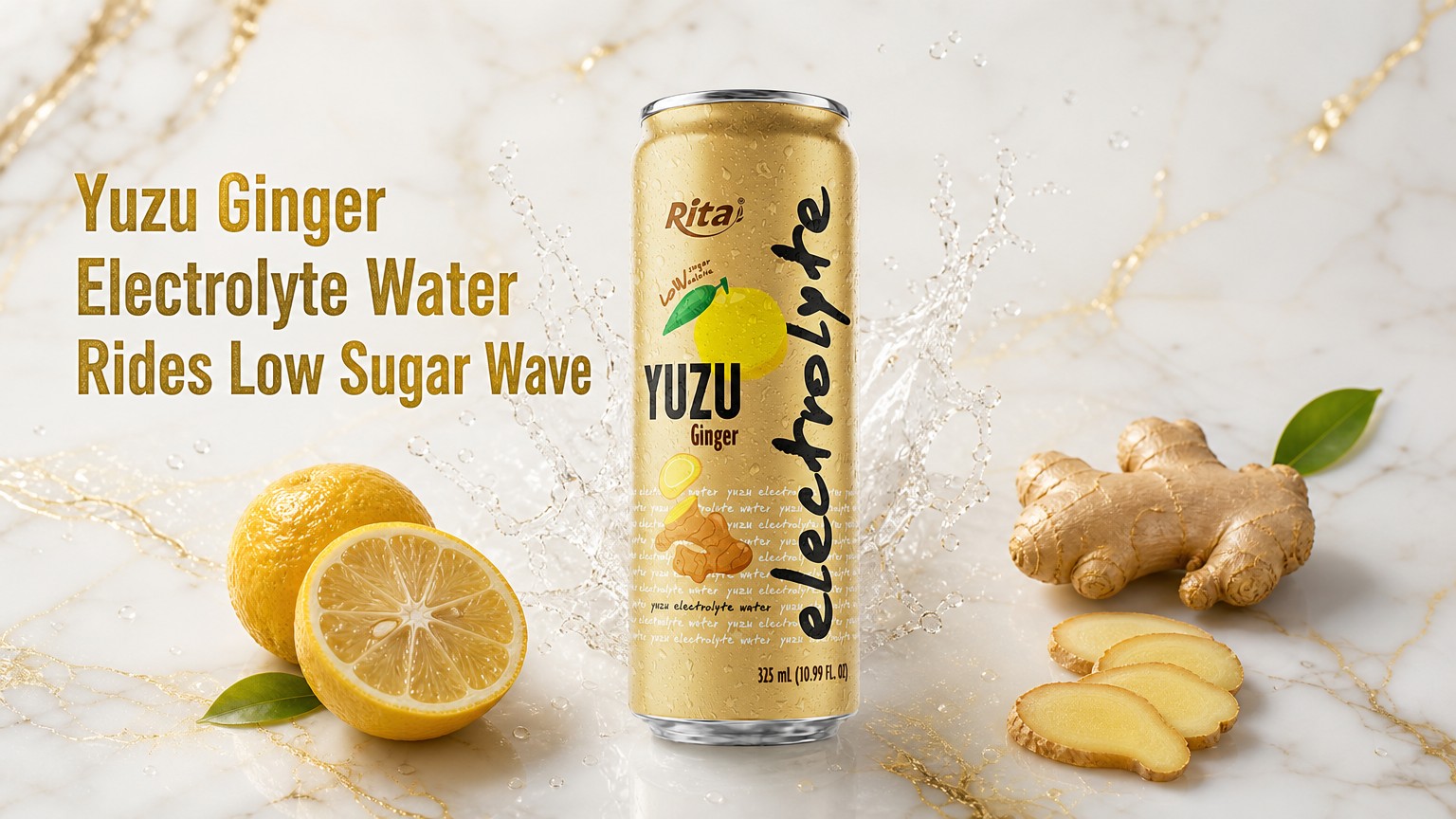
The Yuzu Ginger Electrolyte Water Drink is arriving in Asia at a moment when beverage buyers are quietly rewriting their briefs. Sugar content has moved to the centre of both regulatory debate and retail conversation, and low sugar hydration beverages now occupy the shelf position once held by conventional soft drinks. RITA Food and Drink Co., Ltd, a Vietnamese manufacturer operating since 2004, is placing its citrus-ginger release directly into that shift with a 325ml format aimed at distributors from Southeast Asia to the Indian subcontinent.
Key Takeaways
- Germany’s government has backed a sugar tax on beverages, pushing sweetened-drink policy higher on the export agenda for Asian suppliers.
- The Yuzu Ginger Electrolyte Water Drink pairs yuzu citrus with ginger in a 325ml aluminum can at 26 kcal per 100ml.
- RITA runs more than 50 automated production lines and supports OEM and ODM customization of flavor, sweetness level and artwork.
- Certifications including BRC, FSSC 22000, Halal Jakim and Kosher support cross-border listing across Asian retail channels.
Sugar Policy and Consumer Preference Reshape Asia’s Drink Aisle
Europe’s sugar debate is rewriting export assumptions faster than most beverage buyers across Asia had expected.
Germany’s federal government has publicly backed a sugar tax on beverages, a step that would align one of Europe’s largest soft drink markets with levies already active in the United Kingdom, Mexico and parts of Asia. For suppliers shipping finished drinks out of Vietnam, Thailand or Indonesia, the signal is straightforward: the sweetness figure printed on a label today may become a cost line tomorrow. Buyers in Frankfurt and Hamburg are already asking for per-100ml sugar numbers during sampling rounds, and that paperwork habit travels with every container.
Asia already has a head start on this policy route. Thailand has priced sugar content into its beverage excise system since the late 2010s, the Philippines applies a levy to sweetened drinks, and Indonesia introduced a comparable measure more recently. Exporters selling into these markets have effectively been adjusting formulas under tax pressure for years, which is why specification sheets now travel with every quotation rather than being requested afterwards.
What the European Sugar Debate Signals for Asian Exporters
The practical effect is a much shorter distance between market intelligence and formula decisions.
Exporters that can show a settled specification, a verified calorie count and a stable taste profile shorten a buyer’s review cycle considerably. The Yuzu Ginger Electrolyte Water Drink is one example of a release that arrives with its numbers already published: 26 kcal per 100ml, a pH of 4.1 and a Brix reading of 9.4, all stated on the technical sheet rather than left to interpretation.
That documentation culture matters more each season. A distributor in Manila or Osaka can benchmark the specification against competing electrolyte water drink options without waiting for a callback, which shortens tenders and removes the back-and-forth that usually delays container bookings.
Yuzu Ginger Electrolyte Water Drink Brings a Citrus-Ginger Profile to the 325ml Format
The can is built around a single flavor idea rather than a crowded ingredient story.
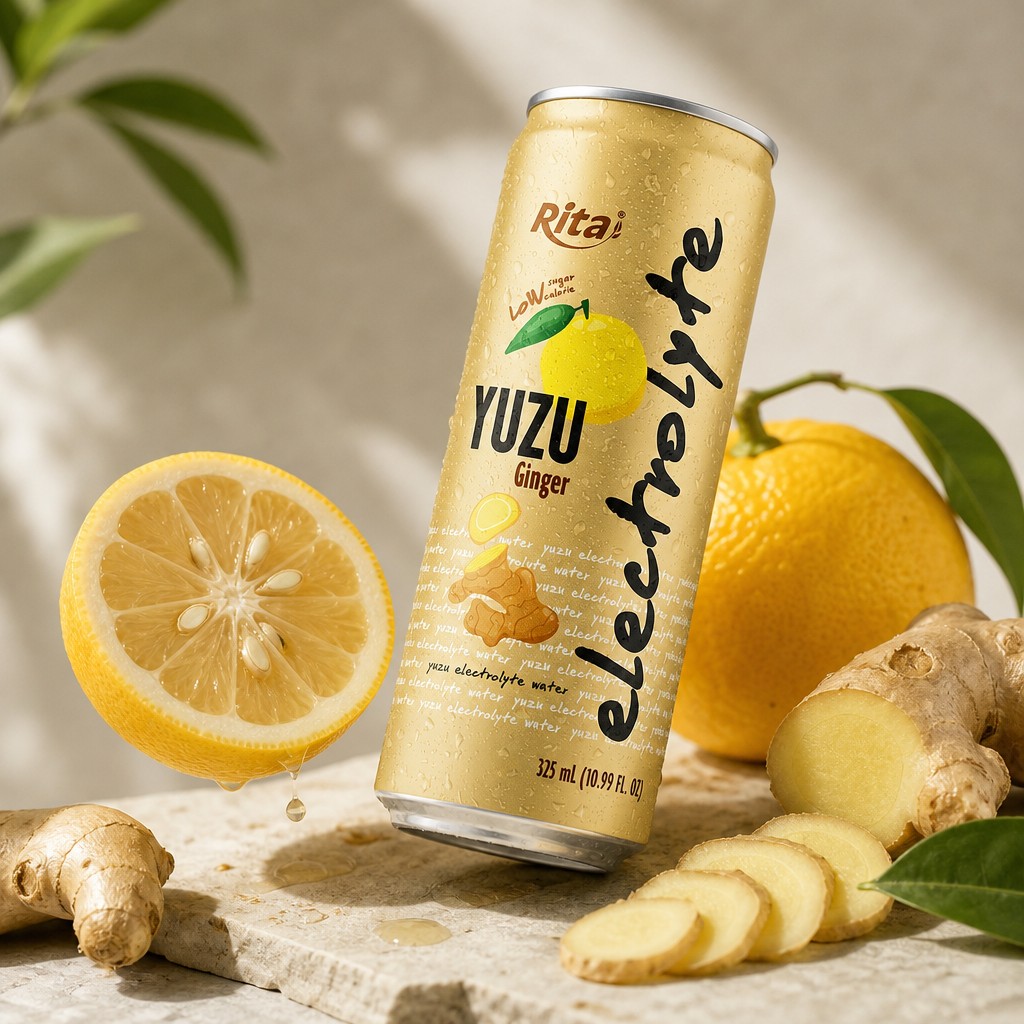
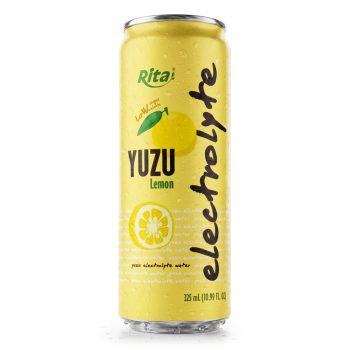
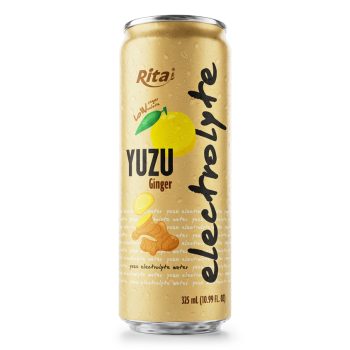
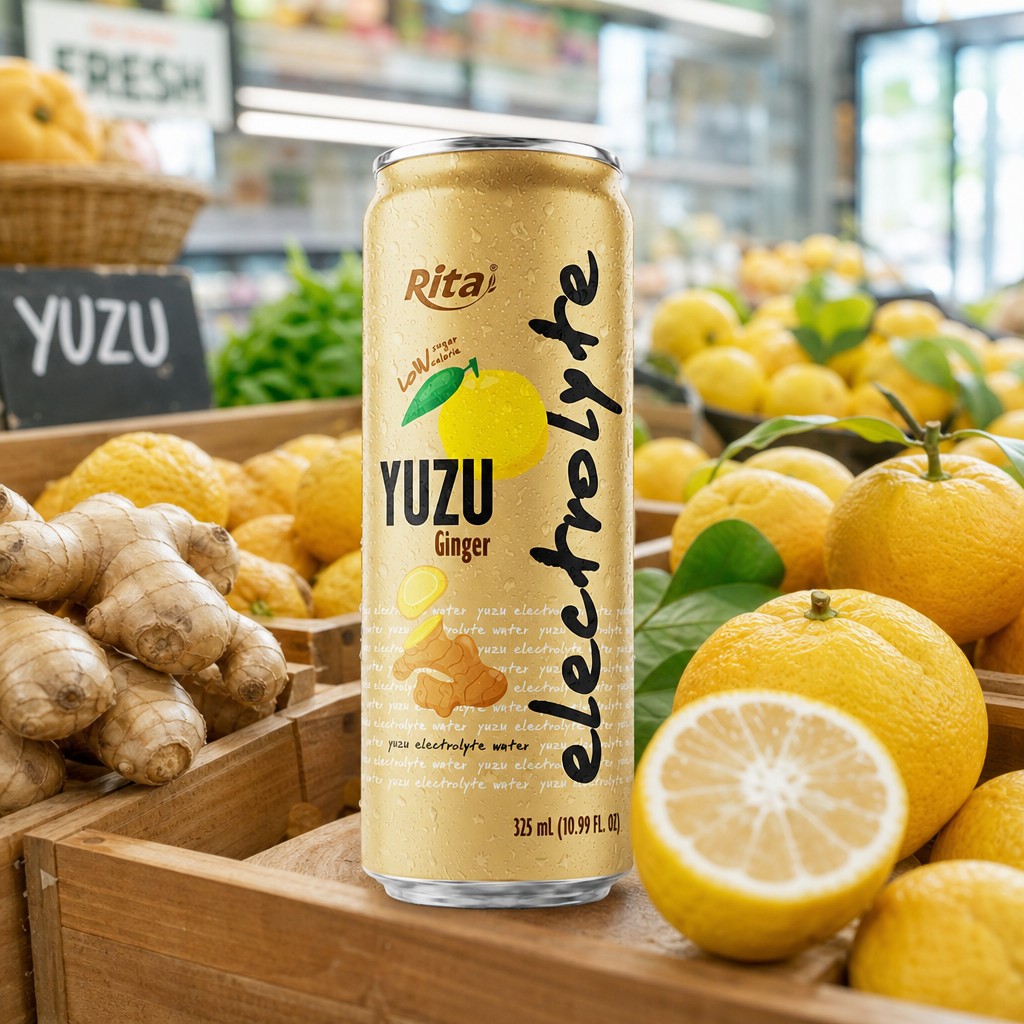
Visually, the 325ml aluminum can carries a gold-toned label illustrated with whole yuzu fruit, sliced citrus segments and ginger root, alongside a vertical black script reading ‘electrolyte’. The background repeats the phrase ‘water yuzu electrolyte’ in white lettering, while a ‘Low sugar calorie’ badge sits near the top of the label. Fine condensation across the can surface in product photography reinforces the chilled, thirst-quenching read the brand is after on shelf and in cooler doors.
Formulation Notes and Label Numbers
The drink pairs the bright citrus character of yuzu with the warmth of ginger, delivered through an electrolyte blend in a base free of artificial flavors, colors or preservatives.
| Specification | Detail |
|---|---|
| Format | 325ml aluminum can |
| Energy | 26 kcal per 100ml |
| pH | 4.1 |
| Brix | 9.4 |
| Sweetness positioning | Low sugar formula |
| Additives | No artificial flavors, colors or preservatives |
| Key components | Yuzu, ginger, electrolyte blend |
Read together, the figures describe a drink that finishes slightly tangy with a gentle spice on the back palate, a profile that comes across as refreshing rather than syrupy. At 9.4 Brix, the yuzu ginger drink sits below the sweetness level of many conventional fruit-flavored soft drinks, a gap that becomes more visible the moment a buyer lines up three cans and tastes them in sequence.
Served cold, the citrus-ginger combination keeps the product in the space between flavored water and full-strength soda, which is exactly where a growing share of convenience store shoppers across Asia are currently looking. That middle position is also why the release is being discussed as a range extender rather than a direct substitute for cola or juice lines.
Category Positioning Across Southeast, East and South Asia
Retailers from Bangkok to Osaka are giving light, low-sugar formats more cooler space.
Across Southeast Asia, the ready-to-drink aisle is consolidating around a few clear propositions: coconut-based drinks, tea blends, fruit juices and now lightly seasoned waters. The low sugar hydration beverage segment sits alongside these rather than competing head-on with them, which gives distributors a reason to carry it as a companion listing instead of a substitute. Markets as varied as Indonesia, the Philippines, Vietnam, Malaysia and Singapore share the same underlying pull toward convenient single-serve cans that travel well in warm climates.
Where the Yuzu Ginger Electrolyte Water Drink Sits in the Aisle
The 325ml size is deliberate: small enough for one sitting, large enough to justify a cooler position.
That volume matches the pack shoppers reach for during commutes, desk hours and post-meal moments across India, Bangladesh, Thailand and Taiwan. In Japan and South Korea, where canned drinks are dispensed through a dense network of vending machines, a slim illustrated can competes on shelf presence as much as on formula. Buyers in Pakistan and Sri Lanka tend to evaluate pack integrity first, which favors the rigidity of aluminum over flexible formats on longer distribution routes.
| Segment | Typical format | Sweetness positioning | Primary buyer focus |
|---|---|---|---|
| Yuzu Ginger Electrolyte Water Drink | 325ml aluminum can | Low sugar, 26 kcal per 100ml | Published specification, certification file |
| Conventional soft drinks | 300ml can or PET | Higher sweetness | Brand recognition and price |
| Coconut-based drinks | 330ml can or PET | Lightly sweet | Origin story and pack appeal |
| Tea and honey blends | 500ml PET | Varies by variant | Flavor variety and rotation |
Demographically, demand comes from commuters, students and office staff buying one unit at a time, a habit that favors small cans over large bottles. In Taiwan and Vietnam, single-serve cans sold through mini-marts dominate impulse purchases, and buyers there increasingly filter listings by sugar figure before they filter by price. For anyone comparing these options, the differentiator is rarely the liquid alone; it is whether the supplier can produce the drink under a private label, adjust the sweetener level to a local brief and hold the same taste profile across successive containers.
From Our Orchards: Ingredient Sourcing Behind the Ginger Note
Ginger used across RITA’s beverage range traces back to the Mekong Delta raw material area, where the company secures agricultural inputs that feed into its blending programs and its wider catalog of fruit and botanical drinks.
A field-to-bottle walkthrough filmed at https://www.youtube.com/watch?v=jiBixXjeG8A follows that ingredient route from grower plots through to finished beverage, illustrating how regional sourcing underpins the flavor consistency buyers ask about during sampling.
RITA’s OEM and ODM Platform Opens Customization Routes for Asian Distributors
Behind the can sits a manufacturer built for volume, repeat orders and private label work.
RITA Food and Drink Co., Ltd has operated from Vietnam since 2004, running more than 50 automated production lines and shipping over 1,200 containers a month to buyers across more than 200 countries and territories. The company supplies beverage brands in over 180 markets and covers tropical fruit juices, coconut products, tea-based drinks, energy drinks and water-style beverages in aluminum cans, glass bottles, PET and PP formats. That breadth is what allows a relationship with an OEM beverage manufacturer to extend well beyond a single item on a purchase order.
Certification Stack for Cross-Border Supply
Documentation is usually the first thing an importer asks for.
- BRC and FSSC 22000 food safety certification
- Halal Jakim and Halal HCA-GCC approval for Southeast Asian and Gulf listings
- Kosher certification for wider retail acceptance
- ISO, GMP, HACCP and SMETA audit coverage
Taken together, that stack shortens the approval process for retailers working in Asia beverage market channels, where halal documentation in particular can determine whether an item reaches the shelf at all. For buyers assembling a regional range, RITA’s OEM beverage production service offers a route to adjust flavor, sweetener level and can artwork against a local brief before the first production run is locked.
Category context matters as well when a distributor is building an order. RITA’s wider soft drinks portfolio includes carbonated and still options that are frequently bundled with the Yuzu Ginger Electrolyte Water Drink when convenience store chains in Thailand, Indonesia or the Philippines negotiate a mixed-container arrangement.
The quieter advantage is research and development capacity: the ability to shift Brix readings, swap sweetener systems, rework label artwork for local scripts and retest across successive samples without restarting the brief. For a brand owner weighing a second or third flavor, that flexibility decides whether a range grows or stalls after its first shipment. The Yuzu Ginger Electrolyte Water Drink is therefore best read as one node in a broader catalog rather than a standalone launch, and the full product page details how it sits alongside RITA’s juice, tea and coconut lines for buyers planning a multi-category container.
Frequently Asked Questions
What is the Yuzu Ginger Electrolyte Water Drink?
It is a 325ml aluminum can beverage from RITA that combines yuzu citrus flavor with ginger and an electrolyte blend, formulated as a low sugar drink with no artificial flavors, colors or preservatives.
What do the label numbers show?
The drink is specified at 26 kcal per 100ml, with a pH of 4.1 and a Brix of 9.4, figures that are published on the technical sheet for buyer review.
Which markets can order the product?
RITA exports to more than 200 countries and territories and supplies beverage brands in over 180 markets, covering Southeast Asia, East Asia and South Asia.
Can distributors change the recipe or the label?
Yes. Through OEM and ODM programs, buyers can adjust flavor direction, sweetener level, pack format and label artwork to suit local preferences before production.
Which certifications support the product?
The manufacturing file includes BRC, FSSC 22000, Halal Jakim, Halal HCA-GCC, Kosher, ISO, GMP, HACCP and SMETA.