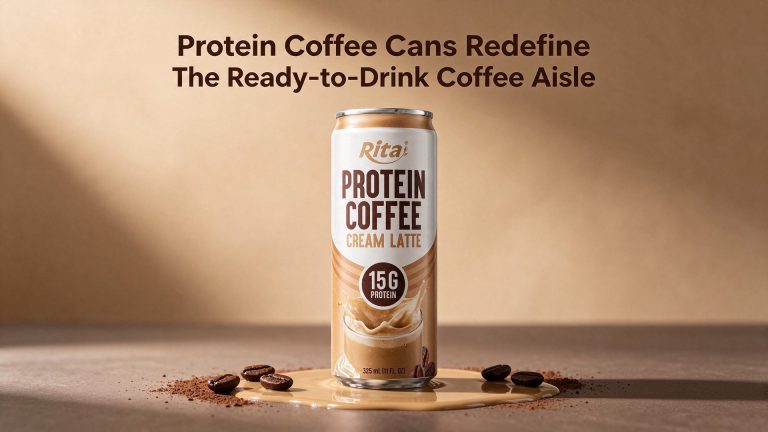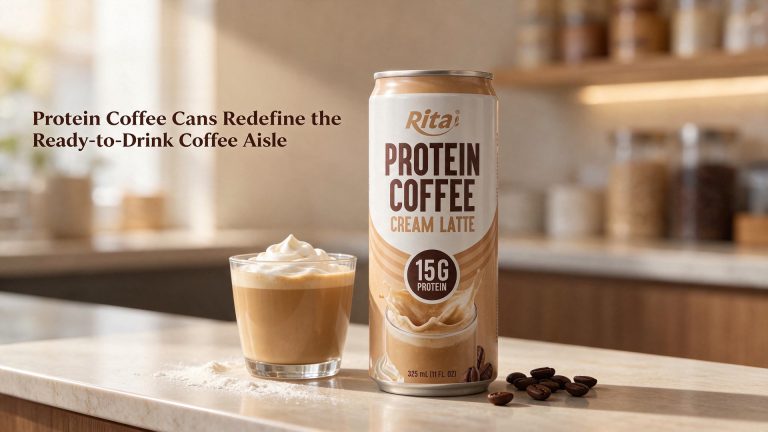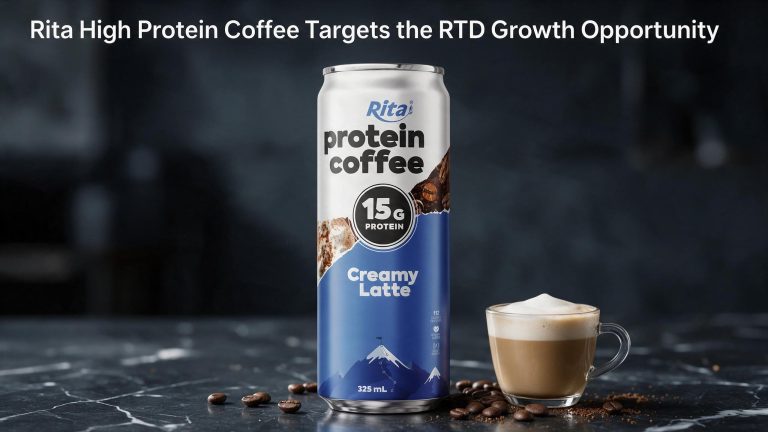
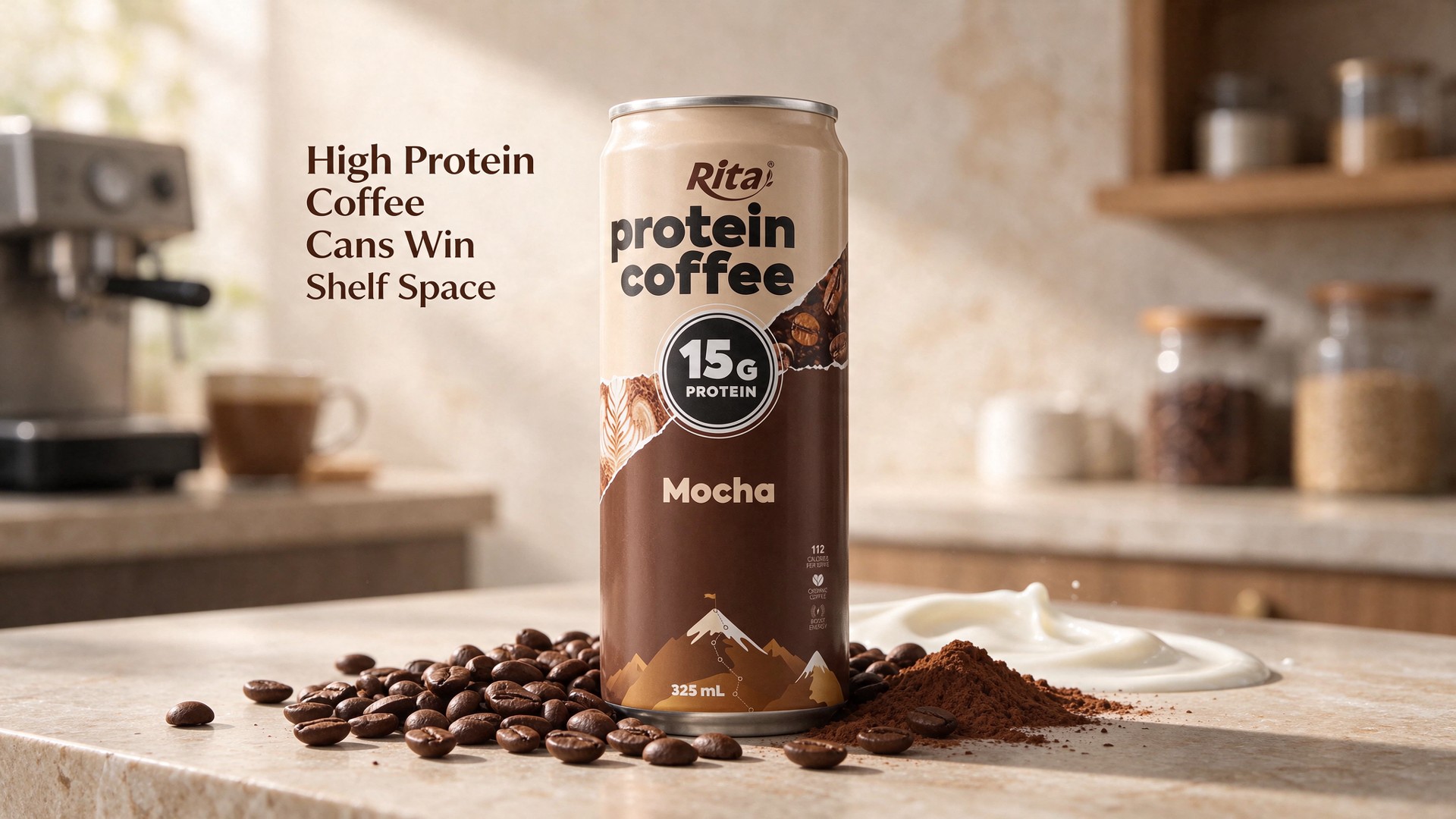
The high protein coffee mocha drink has moved from specialty shelves into mainstream ready-to-drink retail, and Vietnamese manufacturer RITA Food and Drink Co., Ltd. has built a 325ml canned format specifically for export programs. The RITA High Protein Coffee Mocha Drink delivers 15g of protein alongside a roasted mocha profile in a single sleek aluminum can, a specification that mirrors how quickly protein-fortified coffee has become a standard line item for distributors reviewing their next order cycle.
Key Takeaways
- Protein coffee is shifting from specialty fitness channels into mainstream ready-to-drink coffee sets across Asia.
- Each 325ml aluminum can carries 15g of protein, a 14.0 Brix sweetness level and a rounded mocha flavor.
- A 24-month shelf life and export-grade packaging make the SKU practical for long-distance distribution.
- RITA operates as an OEM/ODM partner with private label flexibility and certifications spanning BRC, FSSC 22000, Halal, Kosher, ISO, GMP, HACCP and SMETA.
- Wider industry signals, from softer trading at major brewers to RTD tax debates in Europe, keep cost discipline high on buyer agendas.
Why The High Protein Coffee Mocha Drink Is Winning Shelf Space
Protein-fortified coffee has crossed from a niche fitness-shelf item into a mainstream ready-to-drink category, and canned formats are leading the shift in retail coolers.
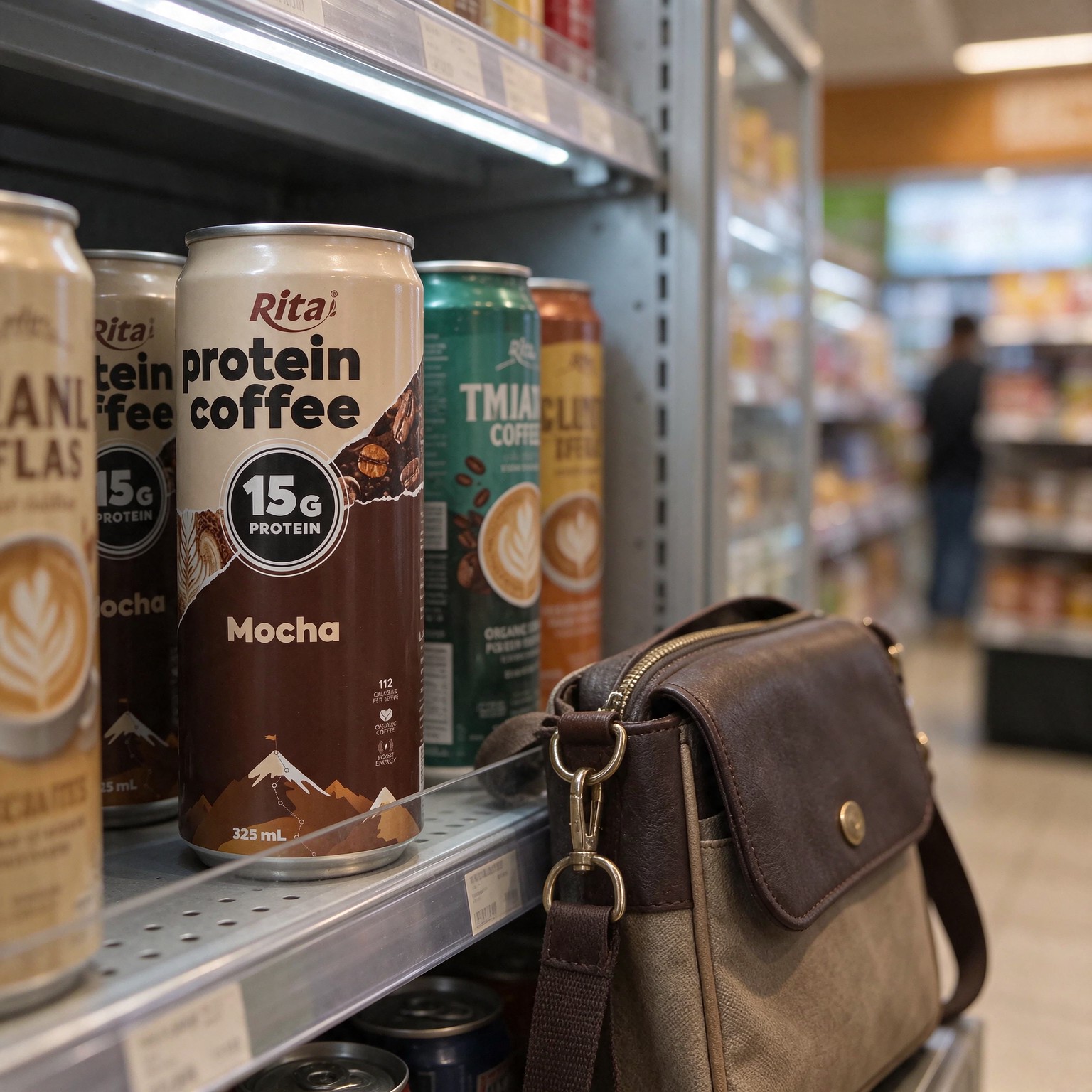
The pull is visible across the distribution map. Convenience chains in Thailand, Indonesia, the Philippines, Malaysia, Vietnam and Singapore have widened their chilled coffee sets, while Japan, South Korea and Taiwan continue to reward premium canned coffee with steady repeat purchase. South Asian markets including India, Bangladesh, Sri Lanka and Pakistan are adding imported and locally filled protein coffee lines to modern trade shelves, giving buyers a reason to review specifications earlier in the calendar year.
From Gym Bags To Convenience Store Coolers
Consumption occasions have widened well beyond the gym. Morning commutes, office desks and late-shift breaks now account for a meaningful share of cans opened each day, and a sealed can suits those moments better than a sachet or a powdered tub that requires a shaker and clean water.
Portability is the deciding factor for most retail buyers.
The 325ml sleek can also travels well through warm supply chains, holds its print quality under humid conditions and presents a consistent face on shelf. Those three details recur in buyer feedback whenever a protein coffee can is compared against a carton or a plastic bottle alternative, and they are the reason aluminum has stayed the preferred format for premium RTD coffee.
Why Mocha Leads The Flavor Conversation
Mocha occupies a useful middle ground between plain black coffee and dessert-style sweet drinks. The combination of roasted coffee notes with cocoa depth reads as indulgent without pushing sweetness too far, which makes the flavor easier to place in both mainstream and premium coffee sets. It also gives marketing teams a familiar story to tell: coffee, cocoa, milk, nothing exotic to explain on shelf talkers or social posts.
Technical balance supports that position. A Brix of 14.0±0.5 keeps sweetness in check so the roast stays forward on the palate, while a pH of 6.5±0.5 contributes to a smooth, rounded mouthfeel from first sip to finish. The result is a mocha that tastes composed rather than sugary, a distinction shoppers notice when they compare cans side by side in the chiller. For buyers, that balance also reduces the risk of a flavor being rejected in markets where sweeter coffee variants have historically underperformed.
Inside The Formulation Of The RITA High Protein Coffee Mocha Drink
The formulation behind the high protein coffee mocha drink is deliberately short: milk-derived protein, instant coffee, alkalised cocoa and a controlled sweetness level.
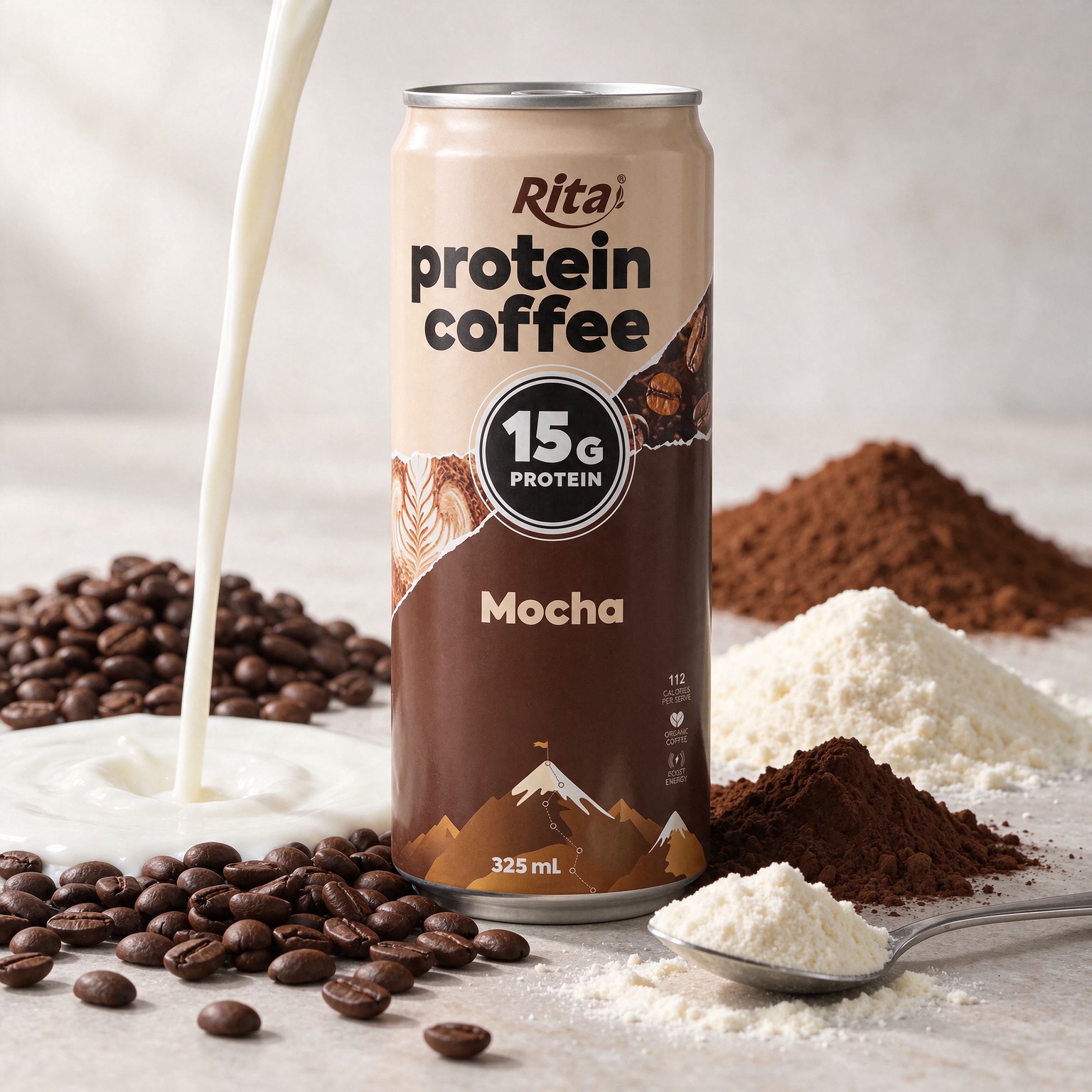
Whole milk powder and milk protein concentrate provide the body of the drink, instant coffee powder carries the roast, and alkalised cocoa powder rounds out the mocha character. Together they create a creamy mouthfeel with well-defined coffee and cocoa notes rather than the thin, chalky texture that often disappoints buyers sampling protein beverages for the first time. No artificial flavors, colors or preservatives are added, which keeps the ingredient statement short and straightforward to translate during label review in different destinations.
Taste Profile And Technical Parameters
The published specification gives procurement teams a clear reference point before sampling begins. Consistency across batches matters more than any single figure, and the values below are the ones quality departments check most often during supplier qualification.
| Parameter | Specification |
|---|---|
| Product format | Ready-to-drink coffee beverage |
| Packaging | 325 ml sleek aluminum can |
| Declared protein | 15 g per can |
| Typical serving specification | 17.6 g per serving basis |
| Sweetness (Brix) | 14.0 ± 0.5 |
| pH | 6.5 ± 0.5 |
| Flavor | Mocha, coffee and cocoa notes |
| Shelf life | 24 months under dry, cool storage |
| Additives | No artificial flavors, colors or preservatives |
Figures are indicative and subject to confirmation against the final agreed product brief.
For tasters, the profile reads as a balanced mocha: roasted coffee first, cocoa following, then a milky finish that lingers without heaviness. The protein content is present in the texture rather than the flavor, which is why the drink can sit comfortably next to conventional canned lattes in a blind line-up. That neutrality is an advantage in mixed tastings where a strong protein off-note would otherwise end the conversation quickly.
Clean Label Positioning Without Artificial Additives
Clean-label expectations now influence a growing share of beverage tenders across the region, and the ingredient list is often the first document a buyer opens. A statement that lists whole milk powder, milk protein concentrate, instant coffee powder and alkalised cocoa powder, with no artificial flavors, colors or preservatives, moves through review faster than a longer one.
The RITA High Protein Coffee Mocha Drink product listing publishes the base declaration so importers can pre-check it against local nutrition panel formats before requesting samples. That small step saves weeks when a launch window is tight.
Simplicity also supports private label programs. When a distributor commissions its own version of a ready to drink coffee with protein, the base formulation can be adjusted for sweetness, protein level or roast intensity while the label remains straightforward to certify in the destination market.
From Our Coffee Gardens: Raw Material Sourcing
Flavor consistency starts long before a can is filled, and sourcing visits set the baseline for every batch that follows.
RITA’s team has documented its sourcing visits to Vietnam’s highland coffee gardens during peak harvest season, where cherry ripeness, drying conditions and bean grade are assessed before the crop moves into production planning.
A walkthrough of those gardens is available here: https://www.youtube.com/watch?v=F2yJLjUYiuo
Those visits matter commercially as well as technically. Harvest windows in the highlands shift from year to year, and buyers who understand the timing can plan promotions and container schedules around periods when coffee supply is most stable. Transparency at this stage also shortens traceability conversations during audits, since the documentation trail begins at the garden rather than at the warehouse gate.
Export Readiness And Private Label Opportunity
A 24-month shelf life under dry, cool storage turns the can into a practical export unit.
RITA Food and Drink Co., Ltd., established in 2004, runs more than 50 automated production lines and ships over 1,200 containers per month to more than 200 countries and territories. Operating as a Vietnamese OEM beverage manufacturer with advanced R&D capacity, the company positions the protein mocha can within a wider coffee drinks portfolio that also covers lattes, black coffee and flavored variants, so a buyer can consolidate multiple SKUs with a single supplier rather than coordinating several factories.
Production facilities hold BRC, FSSC 22000, Halal Jakim, Halal HCA-GCC, Kosher, ISO, GMP, HACCP and SMETA certifications. That combination matters for Muslim-majority markets in Southeast Asia and the Gulf, for kosher-conscious retail programs, and for the social compliance audits that large grocery groups now run as standard procedure before listing a new importer.
What Distributors Request First
In practice, conversations with a new distributor tend to follow the same sequence:
- Confirmation of protein level, sweetness and flavor direction against a reference sample.
- Label and artwork adaptation for the destination language and nutrition panel format.
- MOQ, artwork lead time and container loading plans for the first order.
- Certificate copies required by the importer or retail chain.
- Private label scope, including formulation tweaks and exclusive flavor rights where relevant.
The full product page for the protein mocha can publishes the base specification, while the broader ready-to-drink coffee drink catalog shows adjacent formats for buyers comparing options. RITA’s OEM and ODM teams handle formulation, packaging and nutritional specification changes under private label agreements, giving a private label coffee manufacturer a credible route to market without building production capacity of its own.
Industry Signals Shaping The Next Order Cycle
Asahi Group has flagged that sales in Europe and the Asia-Pacific region are tracking below plan, a reminder that volume growth in mature coffee markets is harder to come by than headline forecasts suggest. Buyers negotiating forward volumes are using that caution to push for tighter pricing and more flexible shipment schedules.
In Germany, the spirits industry has publicly criticised a rushed proposal to extend taxation to ready-to-drink formats, arguing that the consultation window was too short for meaningful industry input. The debate is a useful signal for coffee RTD suppliers as well: duty treatment of canned mixed drinks remains unsettled in several European jurisdictions, and importers increasingly ask for tariff classification clarity before signing annual contracts.
Two other items sit on procurement risk lists. An Australian consumer watchdog has urged television networks to restrict alcohol advertising during sports broadcasts, a move that reshapes media buying for beverage brands planning seasonal campaigns. Separately, a recent Microsoft outage underscored how dependent digital identity and supply-chain systems have become for beverage firms, from customs filings to order management.
On the plant side, food and beverage manufacturers are being encouraged to capture waste heat for energy efficiency, a cost angle that will surface in supplier questionnaires over the coming year. For protein coffee specifically, the practical takeaway is simpler: buyers want a stable specification, a credible certification file and a can that arrives on shelf looking exactly like the sample they approved.
Frequently Asked Questions
What is the Rita High Protein Coffee Mocha Drink?
It is a ready-to-drink coffee beverage produced by RITA Food and Drink Co., Ltd., supplied in a 325ml sleek aluminum can with a mocha flavor built from whole milk powder, milk protein concentrate, instant coffee powder and alkalised cocoa powder.
How much protein does each 325ml can contain?
Each can declares 15g of protein, with a typical serving specification of 17.6 g on a per-serving basis, alongside a Brix of 14.0±0.5 and a pH of 6.5±0.5.
What certifications support export of this RTD coffee beverage?
Production is carried out under BRC, FSSC 22000, Halal Jakim, Halal HCA-GCC, Kosher, ISO, GMP, HACCP and SMETA certifications, supporting acceptance across a wide range of import markets.
Can the product be produced under a private label?
Yes. RITA provides OEM and ODM services covering formulation, packaging and nutritional specification, allowing distributors to develop their own brand versions of the drink.
What is the shelf life and storage requirement?
The can carries a 24-month shelf life when stored in dry, cool conditions, which makes it suitable for long-distance export and extended distribution cycles.