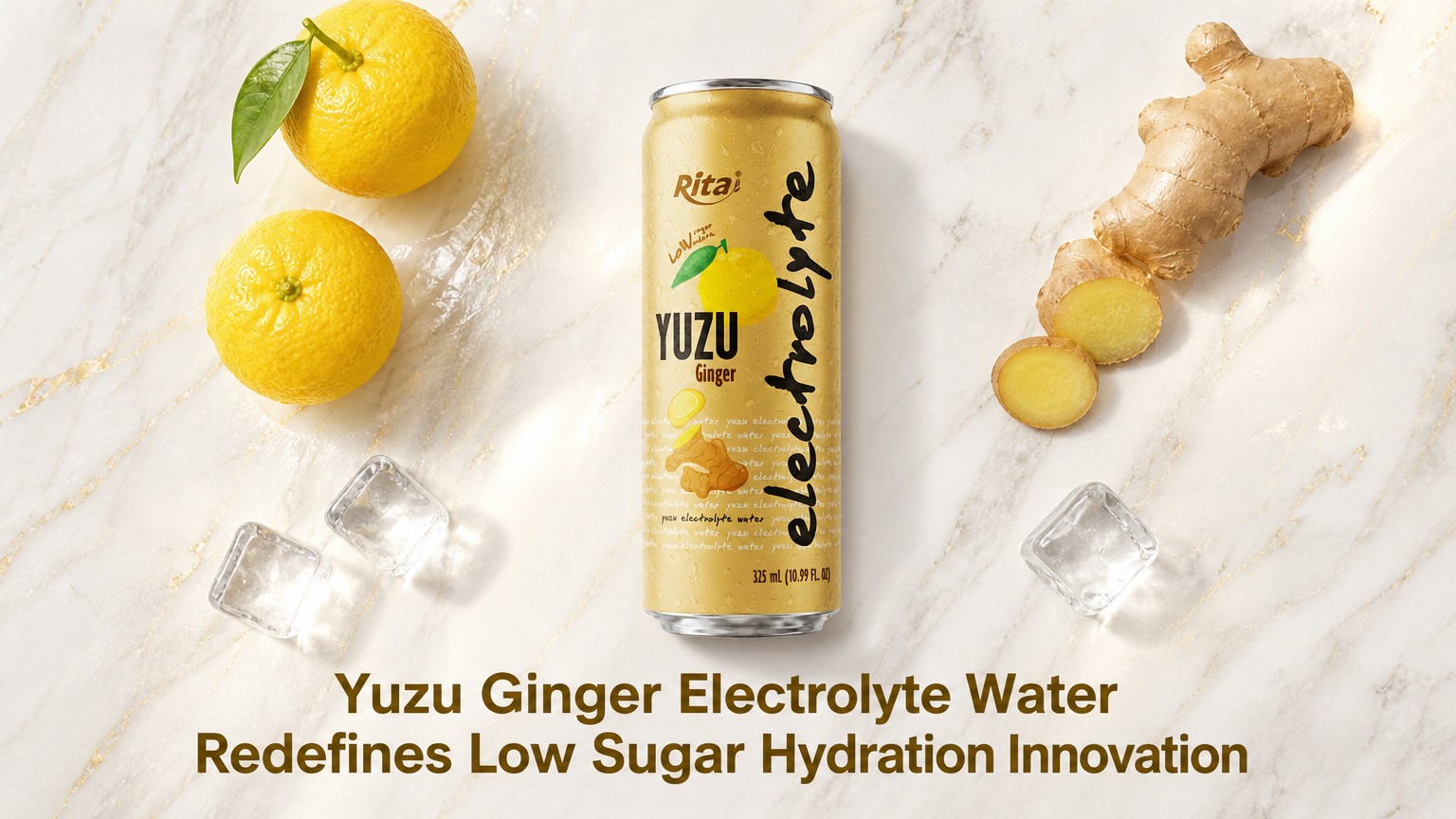
The global beverage industry is entering a phase of rapid product reinvention, and few launches illustrate this shift as clearly as the Yuzu Ginger Electrolyte Water Drink 325ml Low Sugar Hydration Beverage. Positioned at the crossroads of Asian flavor heritage and contemporary clean-label expectations, the product signals how manufacturers are re-engineering everyday refreshment for a generation that reads labels closely and shops with intent. As consumers across fast-growing urban centers weigh taste, sugar content, and packaging convenience in equal measure, low-sugar electrolyte water has emerged as one of the most closely watched categories in functional hydration.
Key Takeaways
- Yuzu ginger electrolyte water blends East Asian citrus and ginger traditions with modern low-sugar formulation trends.
- The 325ml slim aluminum can format aligns with on-the-go retail demand across convenience stores, gyms, and transit hubs.
- RITA Food and Drink Co., Ltd. brings OEM and ODM scale, exporting to more than 200 countries and territories.
- Clean-label positioning without artificial flavors, colors, or preservatives resonates with urban shoppers.
- Private-label partnerships offer beverage brands a fast route into the functional hydration segment.
Why Yuzu Ginger Electrolyte Water Fits the Innovation Wave
Innovation in beverages today is less about novelty for its own sake and more about solving a specific shopper tension. Consumers want something that tastes distinctive yet familiar, refreshing yet restrained in sugar, and visually appealing enough to photograph for social feeds. The Yuzu Ginger Electrolyte Water Drink 325ml Low Sugar Hydration Beverage answers all three demands in a single format.
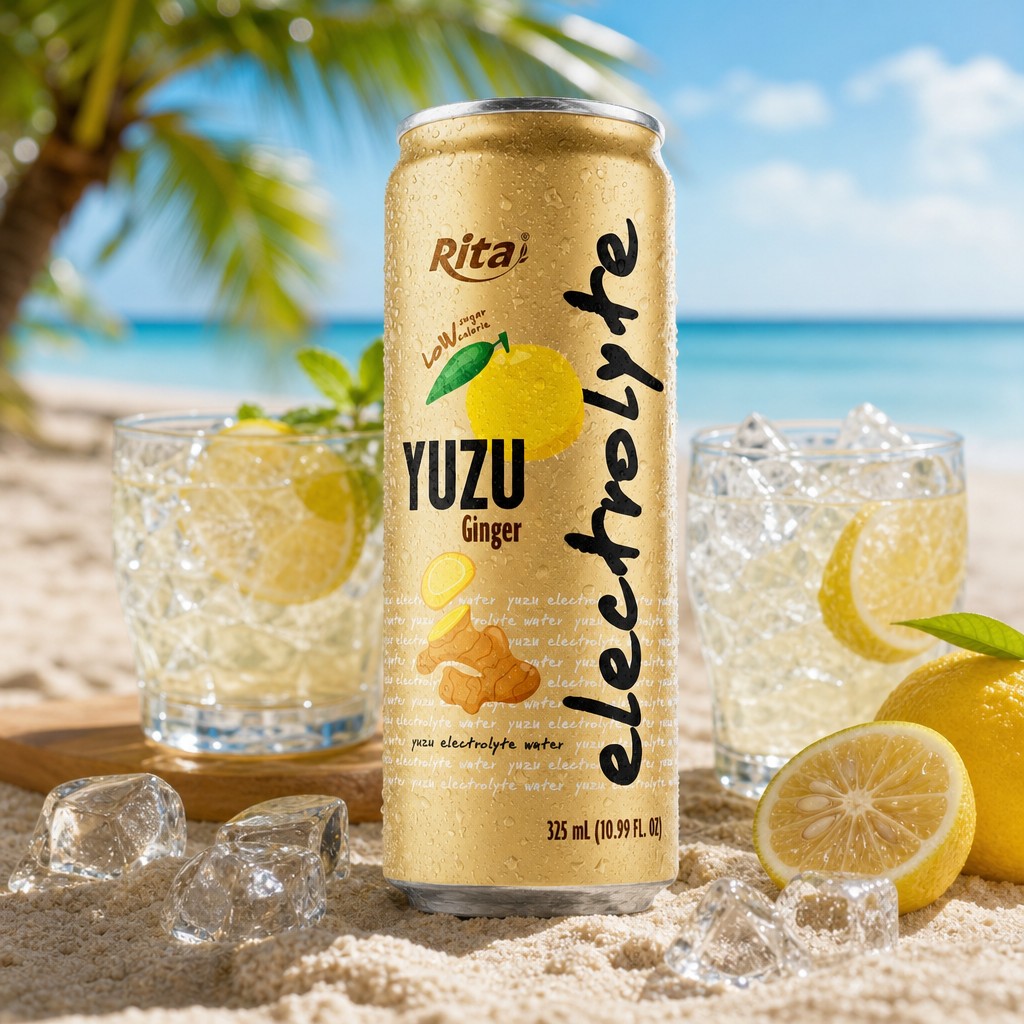
Yuzu, a citrus fruit long prized across East Asian cuisine, delivers a bright tangy note that stands apart from conventional lemon-lime profiles. Paired with fresh ginger juice, the flavor becomes layered rather than one-dimensional, offering gentle spiciness that balances the citrus brightness. This yuzu-ginger fusion gives the drink a distinctly Asian identity while remaining approachable to adventurous palates unfamiliar with either ingredient.

 ” alt=”Yuzu ginger electrolyte water in a 325ml aluminum can with citrus and ginger ingredients”>
Flavor Innovation Meets Clean-Label Expectations
The formulation philosophy reflects a broader industry pivot. Rather than relying on synthetic flavor systems, the drink uses natural yuzu extract and real ginger juice, supported by an electrolyte blend of sodium and potassium. No artificial flavors, colors, or preservatives are used, which places the product firmly within the clean-label movement that has reshaped purchasing decisions across Asia’s modern trade channels.
For brand owners evaluating shelf placement, this composition matters. Retail buyers in convenience chains and premium supermarkets increasingly screen for ingredient transparency before approving new SKUs. A short, recognizable ingredient list reduces friction at the point of decision and supports the storytelling that marketing teams need in a crowded aisle.
Low Sugar Numbers That Retail Buyers Notice
Sugar has become the single most scrutinized metric in beverage procurement. The Yuzu Ginger Electrolyte Water Drink records approximately 4.5 grams of sugar and 26 kilocalories per 100 milliliters, figures that position it comfortably within the low-sugar band consumers are actively seeking. Across the full 325ml can, that translates to a modest total sugar load while still delivering the flavor intensity shoppers expect from a citrus-ginger profile.
| Attribute | Specification |
|---|---|
| Volume | 325 ml slim aluminum can |
| Sugar per 100 ml | Approximately 4.5 g |
| Calories per 100 ml | Approximately 26 kcal |
| Key ingredients | Natural yuzu extract, fresh ginger juice, electrolyte blend |
| Additives | No artificial flavors, colors, or preservatives |
Source: Product specification, RITA Food and Drink Co., Ltd.
Target Markets Across Asia and Beyond
Demand for functional hydration is accelerating across Southeast Asia, East Asia, and South Asia. In metropolitan centers such as Bangkok, Jakarta, Manila, Kuala Lumpur, Ho Chi Minh City, Singapore, Tokyo, Seoul, Taipei, Mumbai, and Dhaka, consumers are gravitating toward beverages that fit active routines without excess sweetness. The low sugar hydration beverage format is particularly resonant among commuters, gym-goers, and office workers who want a portable option that fits into a bag or cup holder.
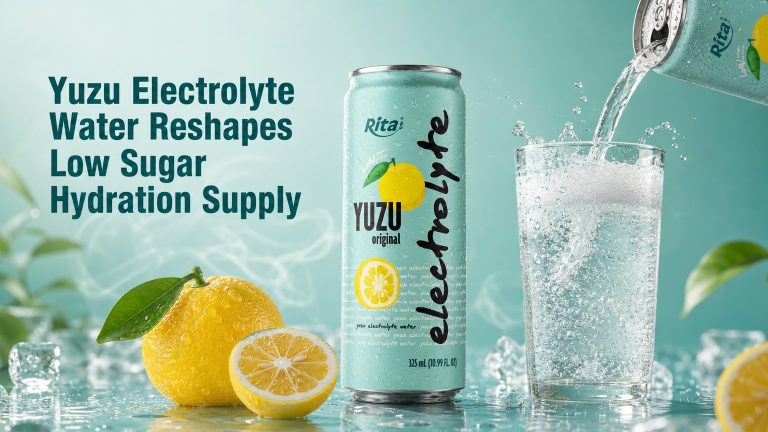
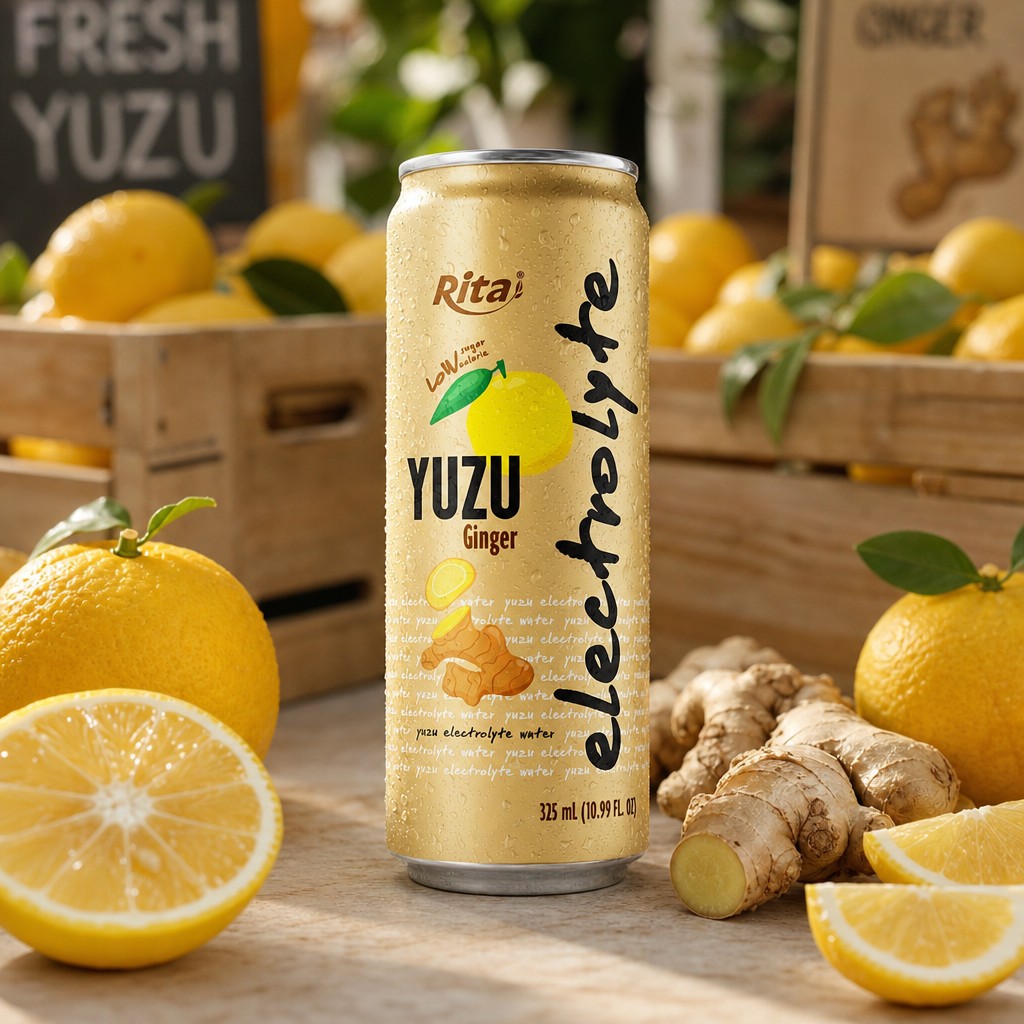
Convenience stores remain the frontline battleground. In markets like Thailand, the Philippines, and Vietnam, the chilled beverage cabinet is where brand trial happens. A compact 325ml can with a striking golden-yellow palette and stylized yuzu and ginger graphics stands out under fluorescent retail lighting, while the visual condensation droplets printed on the can reinforce the perception of a chilled, refreshing pour. That shelf impact matters when a shopper scans dozens of options in seconds.
Where Distribution Opportunities Concentrate
Beyond convenience retail, several channels are opening for electrolyte-forward drinks. Gyms and fitness studios increasingly stock grab-and-go coolers near reception desks. Airport and transit kiosks favor compact formats that travelers can consume quickly. Premium supermarkets allocate dedicated space for functional beverages, and e-commerce platforms bundle multipacks for home delivery. Export-oriented distributors targeting the Middle East, where low-sugar and functional positioning is gaining preference, represent another growth avenue.
- Convenience and forecourt retail – impulse purchase driven by chilled display and pack design.
- Health and fitness venues – post-workout replenishment occasions with electrolyte messaging.
- Travel and transit hubs – single-serve formats suited to short dwell times.
- Premium grocery – shelf placement alongside other functional and low-sugar lines.
- Modern trade and e-commerce – multipack offerings and subscription-style replenishment.
Packaging Design as a Competitive Advantage
Packaging is no longer a passive container; it is a primary marketing asset. The 325ml slim aluminum can used for this product delivers on several fronts simultaneously. Aluminum offers durability during long-haul shipping, recyclability that aligns with circular-economy commitments, and a premium tactile feel that plastic alternatives struggle to match. The slim profile also maximizes facings on shelf, allowing retailers to display more units within the same width.
The visual system reinforces the product story. A golden-yellow color palette evokes citrus brightness, while minimalist design elements keep the label uncluttered. Stylized illustrations of whole yuzu, sliced yuzu, and ginger root communicate the flavor profile instantly, even from a distance. The repeating background pattern built around the words water, yuzu, and electrolyte adds texture without competing with the primary brand mark. Condensation droplets rendered on the can surface create an immediate cue of cold refreshment, a detail that consistently influences first-purchase decisions in ambient-temperature retail environments.
 ” alt=”325ml aluminum can of yuzu ginger electrolyte water on a retail shelf”>
Aluminum Versus Alternative Formats
Format selection is a strategic decision that affects freight economics, shelf life, and consumer perception. Aluminum cans ship efficiently due to their stackability and light weight relative to glass, and they chill faster than PET, which matters in tropical climates where ambient temperatures hover above 30 degrees Celsius. For brands considering private-label entry, the choice of a slim can signals premium positioning without requiring a custom mold investment.
| Format | Chill Speed | Recyclability | Premium Perception |
|---|---|---|---|
| Slim aluminum can (325ml) | Fast | High | Strong |
| PET bottle | Moderate | Moderate | Standard |
| Glass bottle | Slow | High | Strong |
| PP bottle | Moderate | Moderate | Standard |
Comparison reflects general packaging characteristics for chilled single-serve beverages.
Manufacturing Scale and Export Capability Behind the Product
Behind every successful SKU is a manufacturer capable of delivering consistency at volume. RITA Food and Drink Co., Ltd., established in 2004, operates as a leading Vietnamese OEM and ODM beverage manufacturer and global exporter, supplying brands in more than 180 countries and territories. The company runs over 50 automated production lines and ships more than 1,200 containers per month, a scale that allows it to support both regional launches and multi-market rollouts without compromising lead times.
For beverage entrepreneurs evaluating contract manufacturing partners, this capacity translates into practical advantages. Large-scale automated lines reduce batch-to-batch variability, while in-house R&D teams can adapt flavor profiles, sweetness levels, and packaging formats to meet specific market briefs. Private-label solutions enable emerging brands to enter the OEM beverage manufacturing pathway without building their own facilities, accelerating time-to-shelf from concept to first shipment.
The company’s portfolio spans tropical fruit juices, coconut products, functional drinks, energy drinks, and more, packaged in aluminum cans, glass bottles, PET, and PP bottles. This breadth means a single manufacturing relationship can cover an entire category expansion strategy, from a flagship electrolyte water to complementary lines in soft drinks and refreshment beverages.
Certifications That Open Doors in Regulated Markets
Export ambitions stall quickly without the right compliance framework. RITA holds a comprehensive certification portfolio including BRC, FSSC 22000, Halal Jakim, Halal HCA-GCC, Kosher, ISO, GMP, HACCP, and SMETA. These credentials matter for market access: Halal certification unlocks distribution in Indonesia, Malaysia, and the Gulf states, while BRC and FSSC 22000 are frequently required by European and Australian retail chains. For a brand planning a multi-country launch of a low-sugar electrolyte drink, pre-certified manufacturing removes a significant barrier.
The company’s export record now spans more than 200 countries and territories, reflecting a logistics network built over two decades. That reach gives prospective partners confidence that regulatory documentation, labeling requirements, and shipping protocols have been navigated successfully across diverse jurisdictions.
Industry Context and Competitive Signals
The broader beverage landscape is sending mixed but instructive signals. Boston Beer’s Jim Koch has pointed to the spirits-ade segment as a hot growth area, underscoring how consumers are gravitating toward lighter, more sessionable flavor experiences. Celsius Holdings’ CEO has forecast a bullish outlook for the energy-drink market with major retail expansion potential, indicating that functional positioning continues to attract investment. Meanwhile, Keurig Dr Pepper faces an antitrust trial in the United States, a reminder that distribution control remains a strategic battleground. Quarter Proof’s introduction of Demi, a mid-strength spirit, further illustrates how brands are responding to a perceived consumer need for moderation.
These developments share a common thread: consumers are redefining what they expect from a drink. Moderation, functional cues, and flavor distinction are converging into a single purchase criterion. A yuzu ginger electrolyte water drink that carries low sugar numbers, a clean ingredient list, and a culturally rooted flavor story sits squarely within that convergence.
What Buyers Should Evaluate Before Listing
Retail buyers and distributors assessing new electrolyte SKUs typically weigh several factors in sequence. Flavor differentiation comes first, because a product that tastes like every other citrus water struggles to earn repeat purchase. Sugar and calorie figures follow, given tightening labeling regulations across multiple Asian jurisdictions. Packaging durability and visual appeal determine initial trial rates, while certification coverage and manufacturer reliability govern long-term supply confidence.
The Yuzu Ginger Electrolyte Water Drink addresses each of these checkpoints. Its distinctive yuzu-ginger profile avoids direct comparison with lemon-lime incumbents. Its approximately 4.5 grams of sugar per 100 milliliters meets the low-sugar threshold many buyers now apply as a filter. Its aluminum can presentation delivers shelf impact, and its manufacturer’s certification stack supports entry into regulated markets. For brands exploring ODM beverage development for private-label electrolyte ranges, these attributes form a credible starting brief.
From Orchard to Can, Sourcing the Flavor Story
Ingredient provenance has become part of the product narrative consumers respond to. RITA maintains direct relationships with raw material areas across Vietnam’s Mekong Delta, a region long recognized for producing high-quality fruit inputs used in premium beverage manufacturing. The company’s sourcing visits and quality inspections at these growing areas ensure that the citrus and ginger components entering its formulations meet consistent flavor and freshness standards before they reach the blending stage.
Understanding where ingredients originate gives brand teams material for storytelling on packaging, in trade presentations, and across digital channels. A brief account of raw material sourcing elevates a product from commodity status to a considered choice, which is increasingly how shoppers in urban Asia evaluate beverages.
For a closer look at the growing areas that supply RITA’s fruit inputs, readers can explore the Mekong Delta raw material area, which details the region’s role in the company’s supply chain.
A field-level view of these sourcing operations is also available through this video tour of the Mekong Delta fruit farms:
Looking Ahead, the Opportunity for Partners
The convergence of low-sugar demand, Asian flavor storytelling, and scalable contract manufacturing creates a timely window for beverage brands and distributors. A product like the Yuzu Ginger Electrolyte Water Drink 325ml Low Sugar Hydration Beverage demonstrates how innovation need not be radical to be effective. By pairing a culturally distinctive flavor with disciplined sugar levels, clean-label composition, and a premium can format, it offers a template that brand owners can adapt for their own portfolios.
For companies weighing whether to enter the functional hydration category, the practical path runs through experienced manufacturing partners. RITA’s combination of production scale, R&D depth, certification coverage, and export infrastructure provides a foundation that shortens development cycles and de-risks market entry. As the category matures, brands that move early with well-positioned SKUs will be best placed to capture shelf space and consumer loyalty before the segment becomes saturated.
Frequently Asked Questions
What flavors define the Yuzu Ginger Electrolyte Water Drink?
The drink combines natural yuzu extract, a bright East Asian citrus, with fresh ginger juice that adds gentle spiciness. An electrolyte blend of sodium and potassium rounds out the composition, and the formula contains no artificial flavors, colors, or preservatives.
How much sugar is in a 325ml can?
Each 100 milliliters contains approximately 4.5 grams of sugar and about 26 kilocalories. Across the full 325ml slim aluminum can, the total sugar load remains modest while preserving the citrus-ginger flavor intensity.
Which retail channels suit this product best?
Convenience stores, premium supermarkets, gyms, transit kiosks, and e-commerce platforms are the primary channels. The compact can format and high-visibility golden-yellow design perform well in impulse-driven chilled displays.
Can the product be produced under private label?
Yes. RITA Food and Drink Co., Ltd. offers OEM and ODM solutions with in-house R&D, enabling brand owners to customize flavor profiles, sweetness levels, and packaging while drawing on the company’s existing certification portfolio.
What certifications support export of this beverage?
The manufacturer holds BRC, FSSC 22000, Halal Jakim, Halal HCA-GCC, Kosher, ISO, GMP, HACCP, and SMETA certifications, covering requirements across Middle Eastern, European, and Asia-Pacific markets.