The global ready-to-drink (RTD) tea market is experiencing remarkable growth, driven by evolving consumer preferences toward convenient and flavorful beverages. Among the diverse product segments, mango-infused tea drinks are gaining significant traction, particularly in developed markets such as the United States and Europe. For importers, distributors, and wholesalers, understanding this trend and identifying reliable suppliers of wholesale mango tea drinks becomes crucial for capitalizing on emerging opportunities.
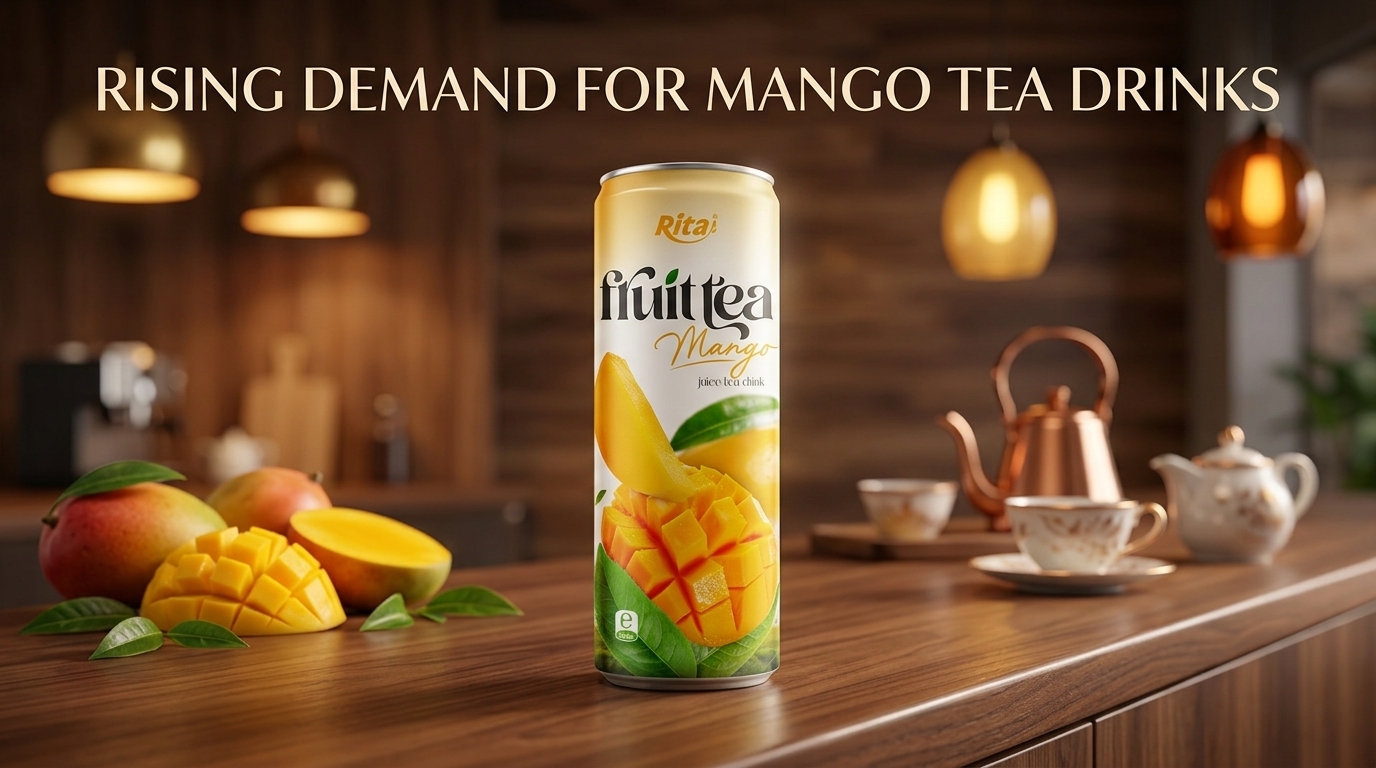
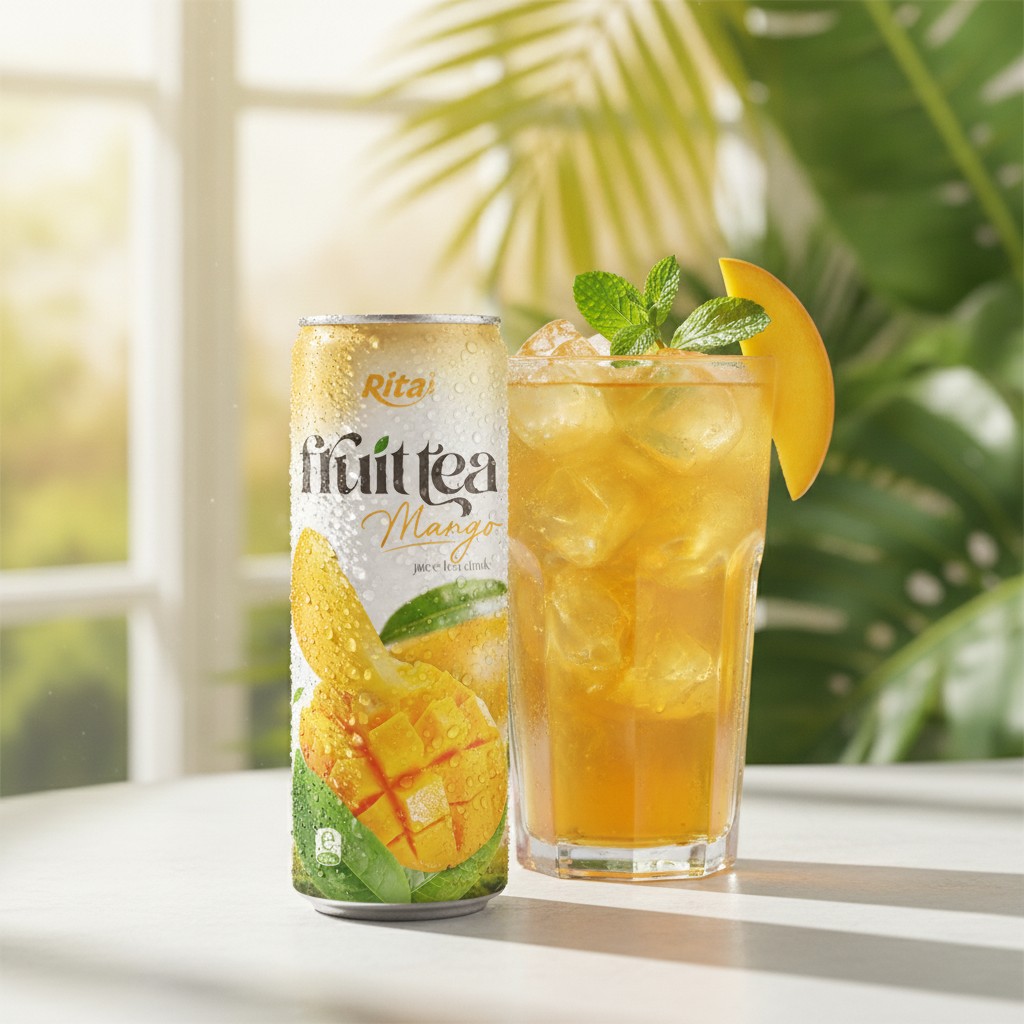
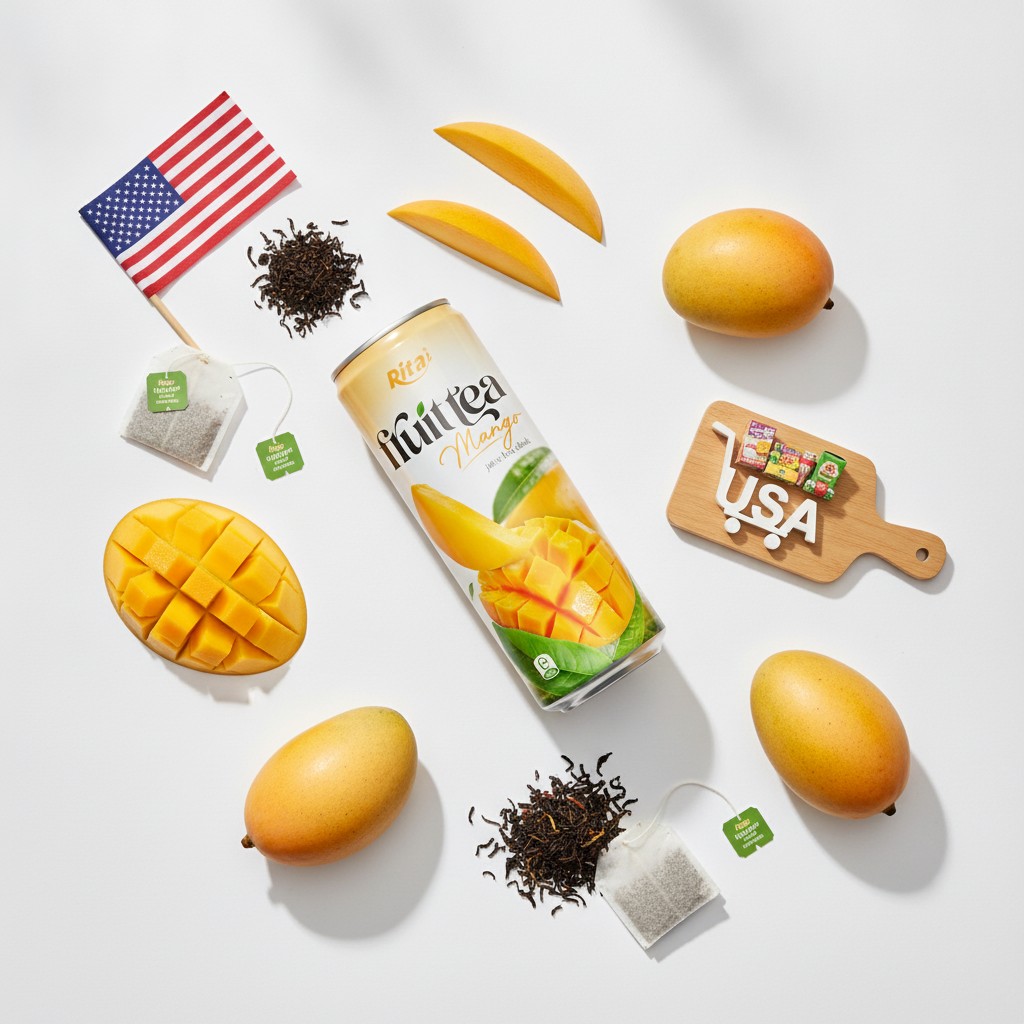
This article provides a comprehensive analysis of the mango tea drink market, focusing on consumption patterns, distribution channels, and the strategic advantages of sourcing from Vietnam-based manufacturers. We use the 320ml can mango tea drink from Rita Food & Drink Co., Ltd as a concrete example to illustrate key market dynamics and operational considerations.
Key Takeaways
- The USA and Europe represent high-growth markets for wholesale mango tea drinks, driven by demand for natural ingredients and exotic flavors.
- Vietnamese manufacturers like Rita offer competitive OEM/ODM capabilities, enabling private label development for global brands.
- Understanding local regulations, packaging preferences, and distribution networks is essential for successful market entry.
- The 320ml can format aligns perfectly with on-the-go consumption trends in both regions.
- Partnerships with experienced suppliers reduce time-to-market and ensure consistent quality across large volumes.
Market Overview for Mango Tea Drinks
The RTD tea sector has outpaced traditional carbonated soft drinks in growth rate over the past five years. Flavored teas, particularly those featuring tropical fruits like mango, are leading this expansion because they offer a natural sweetness and vibrant taste profile. Consumers in the USA and Europe are increasingly seeking beverages with recognizable ingredients and less added sugar, making mango tea drinks an attractive option.
Wholesale 320ml Can Mango Tea Drink.
According to industry reports, the North American RTD tea market is projected to exceed $10 billion by 2027, with fruit-flavored variants accounting for a sizable share. Similarly, Europe’s demand for premium and organic tea beverages is rising steadily, especially in countries like Germany, the UK, and France. For businesses exploring wholesale mango tea drink options, aligning with these consumer preferences is fundamental.
Wholesale 320ml Can Mango Tea.
Why Mango Tea Appeals to Western Palates
Mango is one of the most universally loved fruits. Its sweetness pairs harmoniously with the slight astringency of green or black tea. This combination creates a refreshing beverage that can be enjoyed year-round. Moreover, the growing interest in Vietnamese cuisine and ingredients has increased familiarity with tropical fruit flavors among Western consumers.
Product developers often use green tea as a base because it offers a lighter, more delicate flavor that complements mango without overwhelming it. The result is a drink that appeals to health-conscious buyers looking for lower caffeine options compared to coffee. However, we must emphasize that no health claims are made here – only taste and consumer preference observations.
The USA Market for Wholesale Mango Tea Drinks
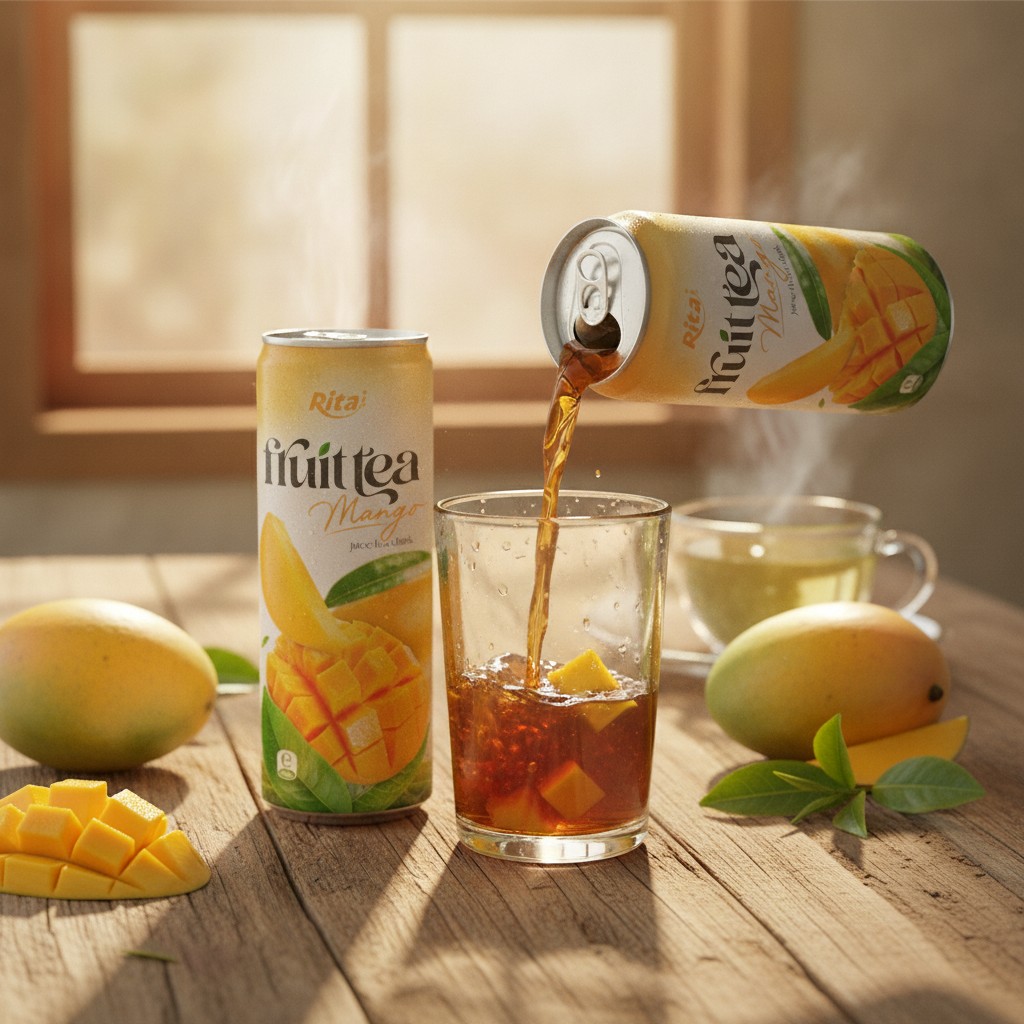
The United States is the largest single market for RTD tea globally. American consumers appreciate convenience, and canned beverages are particularly popular for lunch boxes, road trips, and office breaks. The 320ml can size fits perfectly into standard vending machines and retail shelves, offering a single-serve portion that is neither too small nor too large.
Distribution Channels in the USA
Wholesale mango tea drink suppliers targeting the USA must navigate a complex distribution ecosystem. Key channels include:
- Supermarkets and hypermarkets: Walmart, Kroger, Publix, and regional chains.
- Convenience stores: 7-Eleven, Circle K, and independent gas stations.
- Foodservice: Coffee shops, restaurants, and corporate cafeterias.
- Online retailers: Amazon, Thrive Market, and specialty e-commerce platforms.
Each channel has specific requirements regarding packaging, pricing, and promotional support. For instance, private label mango tea drinks are increasingly sought after by major retailers aiming to differentiate their store brands. This is where OEM/ODM partnerships with Vietnamese manufacturers become highly advantageous.
Regulatory Considerations for Importing into the USA
All beverages imported into the USA must comply with FDA regulations. The manufacturer must provide ingredient declarations, nutritional facts, and facility registration. Fortunately, many Vietnamese producers, including Rita, hold certifications such as BRC, FSSC 22000, and HALAL, which streamline the approval process. Importers should verify that their supplier has experience with US food safety standards.
Additionally, labeling requirements include English-language ingredient lists, net contents (can be 320ml or 11.6 fl oz), and the name of the manufacturer or distributor. Including a barcode and product traceability information is also recommended for retail distribution.
European Market Dynamics for Mango Tea Drinks
Europe is a diverse market with varying tastes across countries. Southern Europeans tend to prefer sweeter, fruit-forward beverages, while Northern Europeans lean toward less sugary options. Nonetheless, mango tea has found a solid foothold in the UK, Germany, the Netherlands, and Scandinavia. The demand for natural and sustainably sourced ingredients is particularly strong in Europe.
Packaging Preferences in Europe
European consumers are environmentally conscious, so recyclable packaging is a significant selling point. Aluminum cans are widely recycled across EU countries, making them an eco-friendly choice. Moreover, the sleek 320ml can design appeals to modern aesthetic sensibilities and convenience. Many European retailers prefer cans over plastic bottles for their lower carbon footprint.
Import and Labeling Requirements in the EU
Importing beverages into the European Union requires compliance with EU food law. The supplier must provide a Certificate of Free Sale, ingredient lists in the local language(s), and detailed nutritional information. Products containing green tea extract must also meet limits on caffeine content if added. Certifications like EU Organic and Kosher can further enhance marketability.
Wholesale mango tea drink shipments to Europe often require a local importer or agent who handles customs clearance and distribution. Many Vietnamese exporters offer door-to-door logistics, simplifying the process for first-time importers. Rita, for instance, has experience shipping to European markets and can assist with documentation.
Why Vietnamese Manufacturers Are Key Suppliers
Vietnam has emerged as a leading supplier of tropical fruit beverages, including mango tea drinks. The country benefits from abundant mango harvests, low production costs, and a strong manufacturing base. Rita Food & Drink Co., Ltd exemplifies the capabilities of Vietnamese producers with its modern facilities and global certifications.
Customization Through OEM/ODM
One of the most attractive aspects of Vietnamese suppliers is their flexibility in private label production. Importers and distributors can develop their own brand of mango tea drink with custom formulations, sweetness levels, and packaging designs. Rita offers comprehensive OEM/ODM services, from concept development to final delivery, with minimum order quantities that accommodate both startups and established companies.
For example, a US distributor can work with Rita to create a unique mango tea blend that uses green tea leaves sourced from Vietnamese highlands. The product can be packed in 320ml cans with the distributor’s label, providing a distinct product for their market segment.
Production Scale and Quality Assurance
Vietnamese manufacturers can handle large-scale orders efficiently. Rita’s capacity of approximately 1,200 containers per month ensures that even substantial import orders are fulfilled on time. Quality control is maintained through ISO, HACCP, BRC, and other certifications. This reliability is critical for importers who cannot afford supply chain disruptions.
Additionally, the long shelf life of canned beverages (typically 12–24 months) allows for cost-effective shipping by sea, making wholesale mango tea drink imports economically viable.
Strategic Recommendations for Importers and Distributors
To succeed in the mango tea drink market, businesses should consider the following steps:
- Conduct market research: Identify specific consumer segments (e.g., millennials, health-conscious adults) and tailor product positioning accordingly.
- Choose the right packaging: The 320ml can is versatile for retail and foodservice. Consider also offering multi-pack options for grocery chains.
- Partner with an experienced supplier: Look for manufacturers with a proven track record in exporting to your target market. Rita is a tea drinks manufacturer that specializes in canned beverages and provides full support.
- Leverage private label trends: Many retailers are expanding their store brand portfolios. Offering a custom-branded mango tea drink can be a compelling sales proposition.
- Plan for seasonal promotions: Mango tea has strong summer appeal, but can also be positioned as an exotic winter treat when paired with spices.
Finally, building a strong relationship with the manufacturer can lead to exclusive distribution rights and early access to new product innovations. Rita’s OEM service is designed to support long-term partnerships.
Frequently Asked Questions
What is a wholesale mango tea drink?
A wholesale mango tea drink refers to a ready-to-drink beverage that combines mango flavor with tea, sold in bulk quantities (e.g., pallets or containers) to distributors, retailers, or foodservice operators. It typically comes in cans or bottles and can be customized under private label agreements.
How do I import mango tea drinks from Vietnam into the USA?
To import mango tea drinks from Vietnam into the USA, you need to find a reliable supplier like Rita, who can provide necessary certifications (BRC, FSSC 22000). You must also comply with FDA regulations, arrange shipping and customs clearance, and ensure proper labeling in English. Many suppliers offer FOB or CIF terms to simplify logistics.
What are the typical MOQ for private label mango tea drinks?
Minimum order quantities (MOQ) vary by manufacturer. For Rita, MOQ for private label mango tea drinks is typically one 20-foot container (around 1,000 cartons of 24 cans each). Smaller MOQs may be available for trial orders. It’s best to discuss directly with the supplier.
Does mango tea drink contain caffeine?
Mango tea drinks made from green or black tea leaves naturally contain caffeine, typically less than coffee. The exact amount depends on the tea base used. Herbal tea versions may be caffeine-free. The product formulation can be customized according to buyer specifications.
What is the shelf life of a canned mango tea drink?
Canned mango tea drinks generally have a shelf life of 12 to 24 months when stored in a cool, dry place away from direct sunlight. The aluminum can protects the beverage from light and oxygen, preserving flavor and quality over time.
Frequently Asked Questions
What is a wholesale mango tea drink?
A wholesale mango tea drink refers to a ready-to-drink beverage that combines mango flavor with tea, sold in bulk quantities (e.g., pallets or containers) to distributors, retailers, or foodservice operators. It typically comes in cans or bottles and can be customized under private label agreements.
How do I import mango tea drinks from Vietnam into the USA?
To import mango tea drinks from Vietnam into the USA, you need to find a reliable supplier like Rita, who can provide necessary certifications (BRC, FSSC 22000). You must also comply with FDA regulations, arrange shipping and customs clearance, and ensure proper labeling in English. Many suppliers offer FOB or CIF terms to simplify logistics.
What are the typical MOQ for private label mango tea drinks?
Minimum order quantities (MOQ) vary by manufacturer. For Rita, MOQ for private label mango tea drinks is typically one 20-foot container (around 1,000 cartons of 24 cans each). Smaller MOQs may be available for trial orders. It’s best to discuss directly with the supplier.
Does mango tea drink contain caffeine?
Mango tea drinks made from green or black tea leaves naturally contain caffeine, typically less than coffee. The exact amount depends on the tea base used. Herbal tea versions may be caffeine-free. The product formulation can be customized according to buyer specifications.
What is the shelf life of a canned mango tea drink?
Canned mango tea drinks generally have a shelf life of 12 to 24 months when stored in a cool, dry place away from direct sunlight. The aluminum can protects the beverage from light and oxygen, preserving flavor and quality over time.