The demand for NFC tropical fruit juice in bulk packaging has grown significantly among importers and distributors targeting premium beverage segments. Unlike reconstituted alternatives, Not-From-Concentrate juice retains the original texture and aroma, making it a preferred choice for consumers seeking authentic fruit experiences. This article examines market dynamics for NFC tropical fruit juice in 2L PET bottles, with a focus on wholesale channels in the United States and Europe.
Key Takeaways
- NFC tropical fruit juice wholesale opportunities are expanding in USA and Europe due to rising preference for natural, non‑concentrate beverages.
- Large‑format 2L PET bottles offer logistical advantages for retailers and foodservice operators while reducing packaging waste.
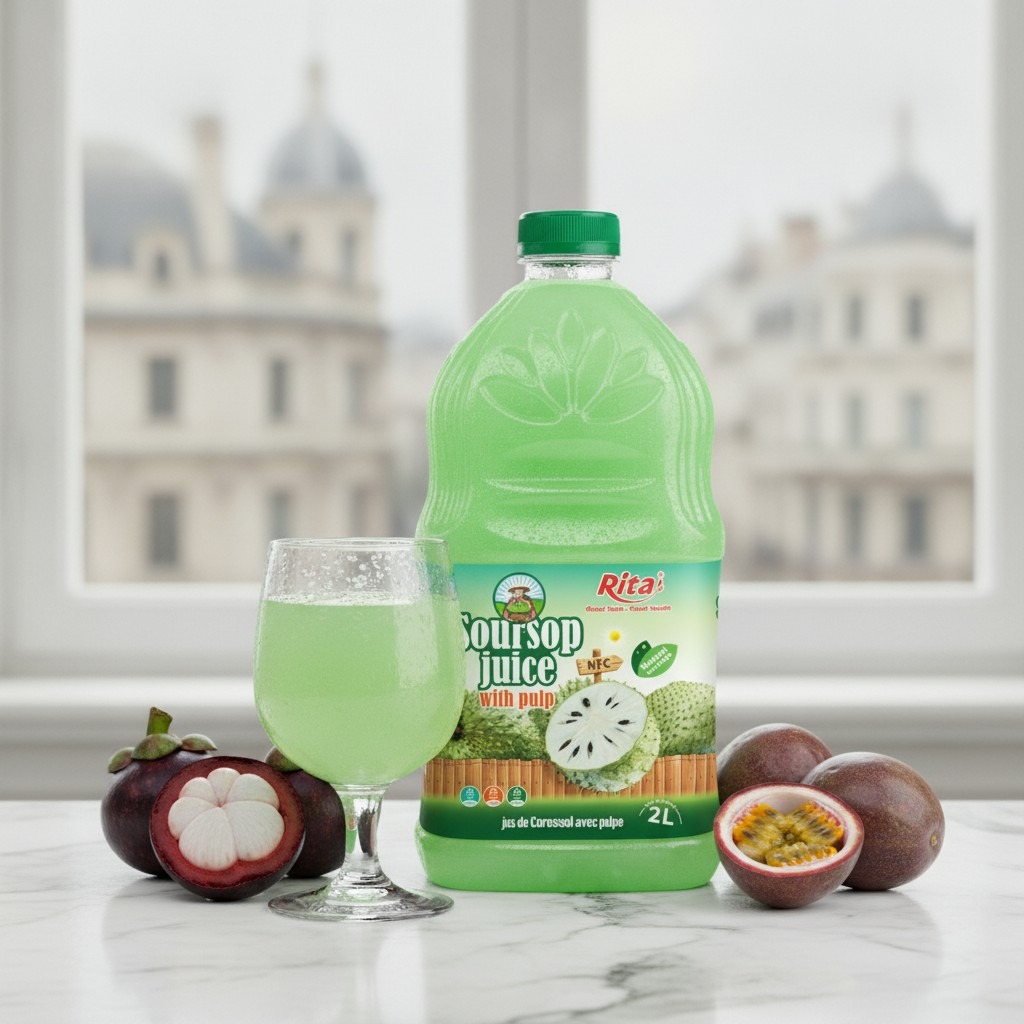
- Soursop and mangosteen juices illustrate consumer appetite for exotic flavors, providing differentiation in competitive beverage aisles.
- Vietnamese manufacturers like Rita Food & Drink Co.,Ltd offer flexible OEM/ODM services, enabling private label development for international buyers.
Why 2L PET Bottles Are Gaining Traction in Tropical Juice Distribution
Portion control and convenience drive packaging innovation in the global juice market. The 2‑liter PET bottle strikes a balance between single‑serve and family‑size formats, appealing to households as well as small foodservice establishments. For importers, the lightweight nature of PET reduces freight costs compared to glass, while the resealable cap maintains product freshness after opening.
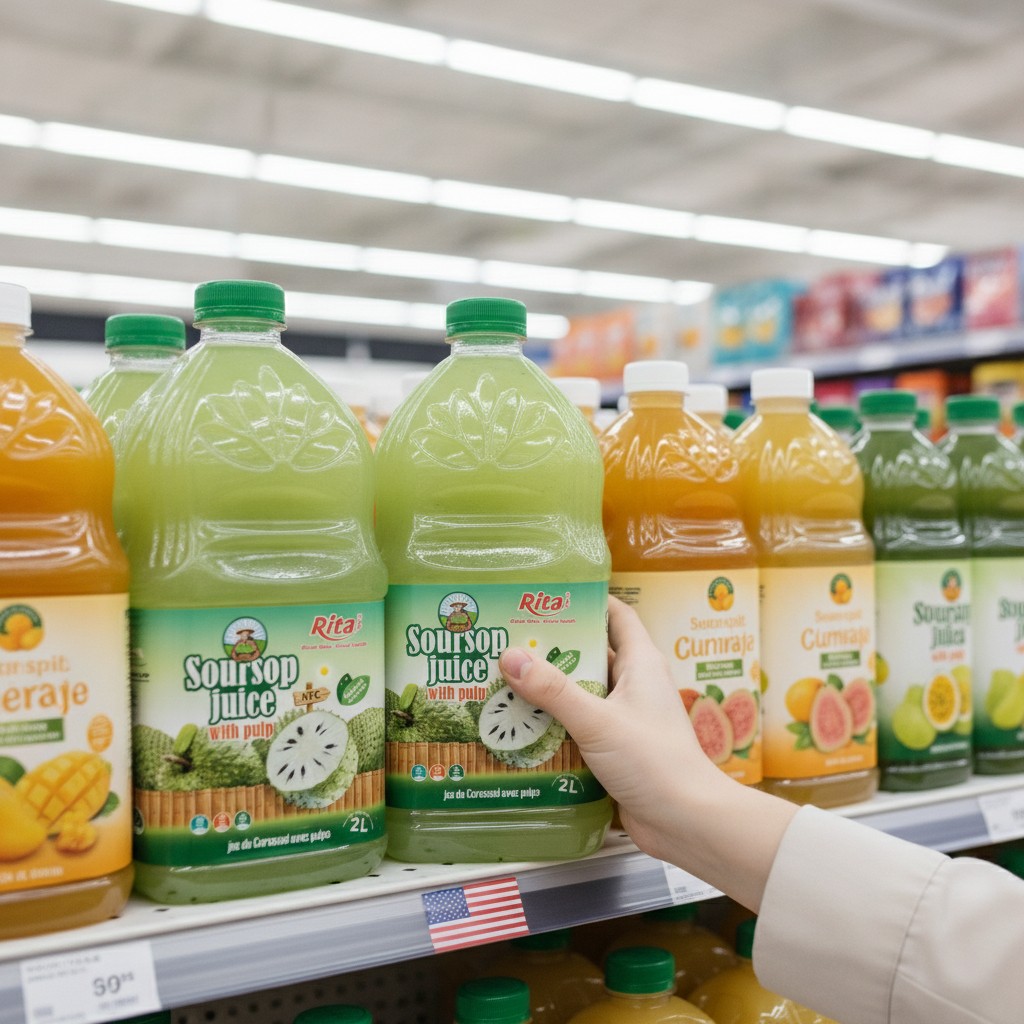
Retailers in North America and Europe increasingly allocate shelf space to large‑format juices because they generate higher turnover per unit. The transparent PET material also allows the natural color of NFC tropical fruit juice—whether pale purple from mangosteen or creamy white from soursop—to act as a visual marketing tool. This packaging trend aligns with the broader shift toward sustainability, as PET is fully recyclable and widely accepted in curbside programs.
USA Market: Growing Appetite for Exotic, Not‑From‑Concentrate Juices
American consumers have steadily moved away from sugar‑laden concentrates toward beverages with minimal processing. The term “NFC” signals authenticity and quality, which resonates with health‑conscious shoppers even though the product itself does not require health claims. According to industry reports, the U.S. juice market is projected to exceed $20 billion by 2027, with tropical variants growing at a faster pace than traditional orange or apple juice.
For distributors, introducing an NFC tropical fruit juice in a 2L PET bottle addresses two key demand drivers: exotic flavor exploration and portion value. Soursop, often called “graviola” in Latin America, is already familiar in Hispanic communities, while mangosteen enjoys recognition among Asian‑American demographics. The large format makes the product suitable for parties, brunch occasions, and restaurant beverage stations, where servers can pour without needing multiple small bottles.
Private label opportunities are particularly attractive in the U.S. market. Supermarket chains and club stores frequently seek exclusive product lines to differentiate themselves. A Vietnamese manufacturer equipped with OEM service capabilities can help retailers launch a branded NFC tropical fruit juice without investing in production infrastructure. The NFC tropical fruit juice wholesale model has proven successful for several regional grocery cooperatives.
Europe: Stringent Quality Standards Create Entry Barriers and Premium Pricing
European Union regulations require any product labeled as “fruit juice” to contain 100% fruit content, with no added sugars or preservatives. This legal framework naturally favors NFC products over concentrates that may have been diluted. However, European buyers demand rigorous documentation, including certificates of analysis, pesticide residue tests, and organic certifications if applicable.
Despite these hurdles, the premium price commanded by NFC tropical fruit juice in Europe compensates for the compliance costs. Retail prices for a 2L bottle of exotic juice can reach €5–€7, compared to €2–€3 for conventional apple or orange juice. This margin attracts distributors who specialize in gourmet and ethnic foods. Countries such as Germany, the United Kingdom, and the Netherlands have large Southeast Asian expatriate communities that recognize mangosteen and soursop, creating a ready customer base.
Logistics play a crucial role in European distribution. Shelf life of NFC juice typically ranges from 9 to 12 months when aseptically packed, but the cold chain must be maintained during the final mile. Rita’s production facilities, covering 30,000 m² and equipped with 50+ production lines, ensure consistent quality and timely dispatch. European buyers can rely on the company’s track record of exporting to over 200 countries.
Soursop and Mangosteen: Exotic Flavors Driving Category Growth
Flavor innovation is a critical success factor in the mature juice category. While apple, orange, and grape remain staples, younger demographics actively seek novel taste experiences. Soursop offers a creamy, mildly acidic profile reminiscent of pineapple and strawberry, while mangosteen delivers a sweet‑tart flavor often described as tropical lychee. These fruits are not yet commoditized, meaning suppliers can negotiate higher wholesale prices.
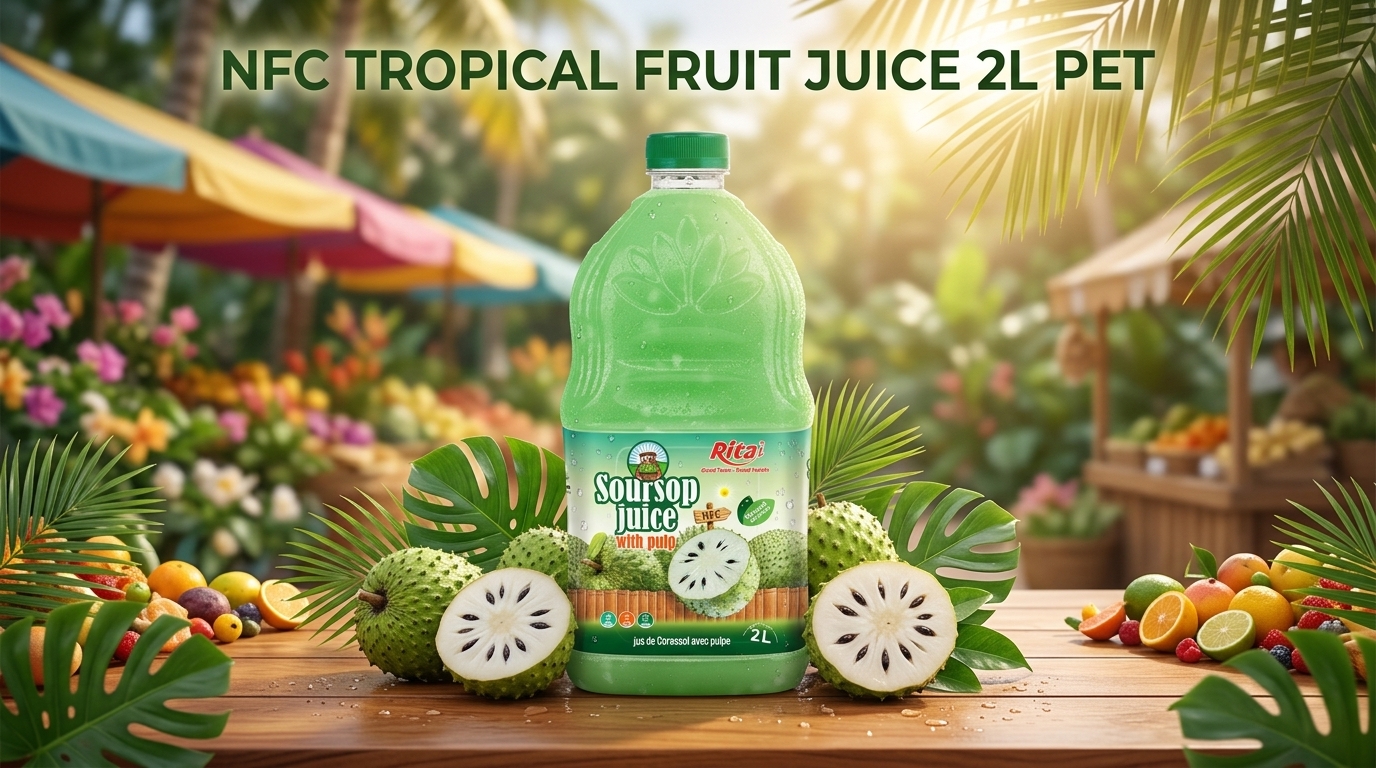
For B2B buyers, sourcing NFC tropical fruit juice with pulp adds texture that differentiates the product from clear juices. The presence of pulp signals authenticity and minimal processing, aligning with the “clean label” movement. In fact, many European retailers list pulp content as a positive attribute on shelf tags. Rita’s NFC Soursop Juice with Pulp, packaged in a 2L PET bottle, exemplifies this trend. The product uses NFC (Not‑From‑Concentrate) technology that preserves the fruit’s natural structure.
Market Entry Strategies for NFC Tropical Fruit Juice
New entrants to the U.S. or European market should consider the following steps:
- Conduct sensory panels to adjust sweetness and acidity to local palates. For example, European consumers often prefer less sweetness than North Americans.
- Invest in certification: BRC, FSSC 22000, and organic (USDA or EU Organic) give buyers confidence.
- Partner with a manufacturer that offers flexible MOQ and private label support. Rita’s ODM service allows customization of flavor, viscosity, and packaging design.
- Leverage trade shows such as SIAL, Anuga, or Expo West to connect with distributors who handle premium fruit juices.
Production Capabilities and OEM/ODM Advantages
Large‑scale production capacity is a prerequisite for winning long‑term contracts in the USA and Europe. Rita operates a 30,000 m² factory with over 500 employees and capacity of approximately 1,200 containers per month. This scale allows the company to stabilize raw material costs and offer competitive pricing on NFC tropical fruit juice wholesale orders.
OEM/ODM services extend beyond simple bottling. Clients can customize the juice formulation (sugar level, fruit blend ratio, pulp percentage), choose from multiple packaging options (PET, glass, aluminum can, PP), and even design labels that reflect their brand identity. For a 2L PET bottle, the production line can handle volumes from a pilot run of a few hundred units to full container orders. This flexibility is especially valuable for startups testing a tropical juice concept before scaling.
Rita’s certifications—ISO, HACCP, HALAL, KOSHER, BRC, FSSC 22000, USDA Organic, EU Organic, SMETA—cover nearly all requirements for Western markets. Importers can therefore reduce due diligence time by sourcing from a single supplier that meets multiple standards simultaneously. The company’s transparent communication and dedicated customer support further simplify the import process.
Frequently Asked Questions
What does “NFC” mean in fruit juice labeling?
NFC stands for Not‑From‑Concentrate. The juice is extracted from fresh fruit and then pasteurized, without removing water to create concentrate. This process retains more of the fruit’s original flavor and texture compared to reconstituted juices.
How long is the shelf life of NFC tropical fruit juice in a 2L PET bottle?
Typically 9 to 12 months when stored in a cool, dry place away from direct sunlight. Once opened, it should be refrigerated and consumed within 5–7 days.
Can the 2L PET bottle be customized with private labeling?
Yes. Rita provides comprehensive private label services, including custom bottle design, label artwork, and formula adjustments to suit target markets. Minimum order quantities are flexible.
Which certifications are important for exporting NFC juice to Europe?
Buyers often require BRCGS or FSSC 22000 for food safety, as well as organic certification (EU Organic) if marketing organic products. HALAL or KOSHER may also be needed depending on the distribution channel.
Is soursop juice with pulp suitable for foodservice applications?
Absolutely. The pulp adds body and visual appeal, making it ideal for smoothie bars, hotel breakfast buffets, and cocktail mixers. The 2L format is practical for high‑volume dispensing.