The global beverage industry is witnessing a significant shift toward functional and flavorful alternatives to traditional sodas. Among the emerging categories, sparkling kombucha prebiotic lemon green tea has captured the attention of importers, distributors, and F&B businesses seeking to align with consumer demand for low-sugar, shelf-stable, and premium sparkling drinks. This article explores the market dynamics, opportunities, and strategic considerations for stakeholders eyeing this segment in key regions such as the United States and Europe.
Key Takeaways
- The sparkling kombucha prebiotic lemon green tea category is growing rapidly in the U.S. and Europe, driven by demand for sophisticated, low-sugar beverages.
- Southeast Asian manufacturers like Rita Food & Drink Co., Ltd offer scalable OEM/ODM solutions with competitive pricing and global certifications.
- Product formulations that balance citrus acidity with green tea earthiness appeal to both traditional kombucha drinkers and new consumers seeking lighter fizz options.
- Packaging innovation in 500ml cans supports retail visibility and export efficiency, especially for trendy cafe and online channels.
Why Sparkling Kombucha Prebiotic Lemon Green Tea Is Gaining Traction
The intersection of fermented teas, functional ingredients like prebiotic fiber, and sparkling water has created a new beverage archetype. Unlike early kombucha lines that were often vinegary or overly sweet, modern formulations such as sparkling kombucha prebiotic lemon green tea deliver a refined taste profile. The citrus sharpness of lemon combined with the grassy undertones of green tea offers a balanced, layered experience that appeals to both health-conscious millennials and Gen Z consumers.
According to recent market reports, the kombucha segment in the United States is projected to exceed $3 billion by 2028, with flavored and sparkling variants leading growth. Similarly, European markets—particularly the UK, Germany, and Scandinavia—are experiencing double-digit annual increases in kombucha consumption. The addition of prebiotic fiber as a clean-label ingredient further positions these products for retail placement in premium grocery chains and specialty beverage stores.
United States Market Opportunities for Sparkling Kombucha
The U.S. market remains the largest and most dynamic for kombucha and functional sparkling drinks. Consumers are increasingly replacing soda with alternatives that offer complexity and lower sugar content. Sparkling kombucha prebiotic lemon green tea fits perfectly into this trend because it provides natural carbonation, a sophisticated flavor profile, and a clean ingredient list.
Importers and distributors targeting U.S. chains such as Whole Foods, Sprouts, and Target should note that shelf-stable 500ml cans are preferred for their convenience and recyclability. The product’s prebiotic content—derived from natural sources like chicory root or inulin—aligns with the growing digestive wellness category without making direct health claims. Instead, brands can emphasize the taste experience and modern lifestyle alignment.
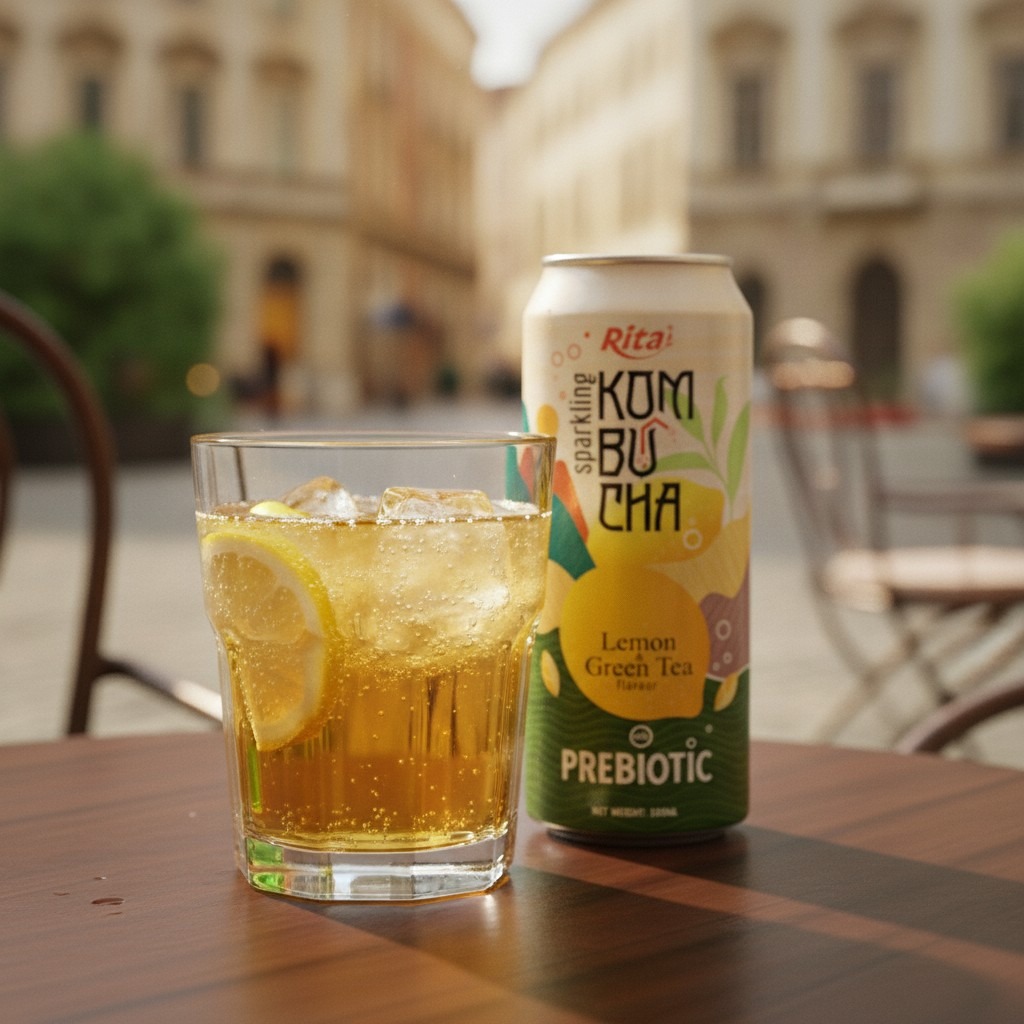
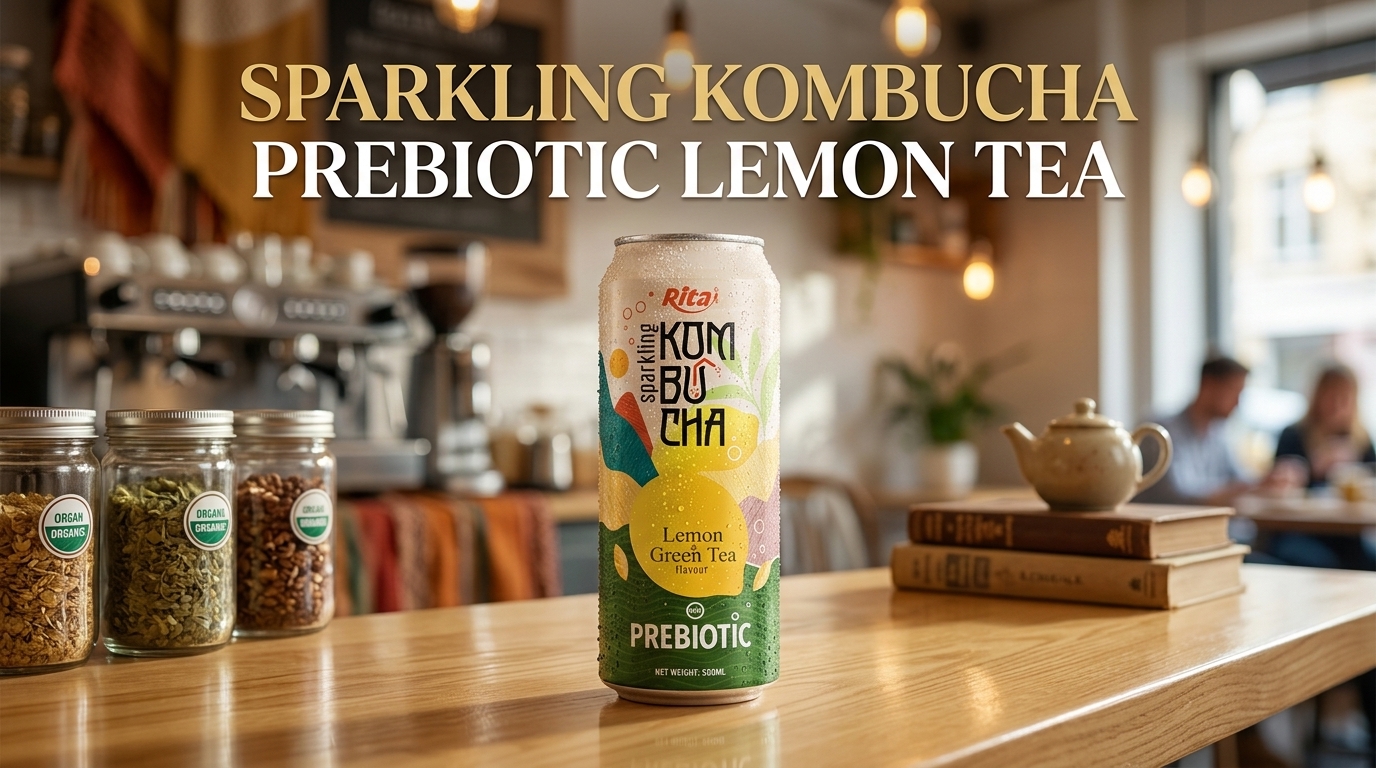
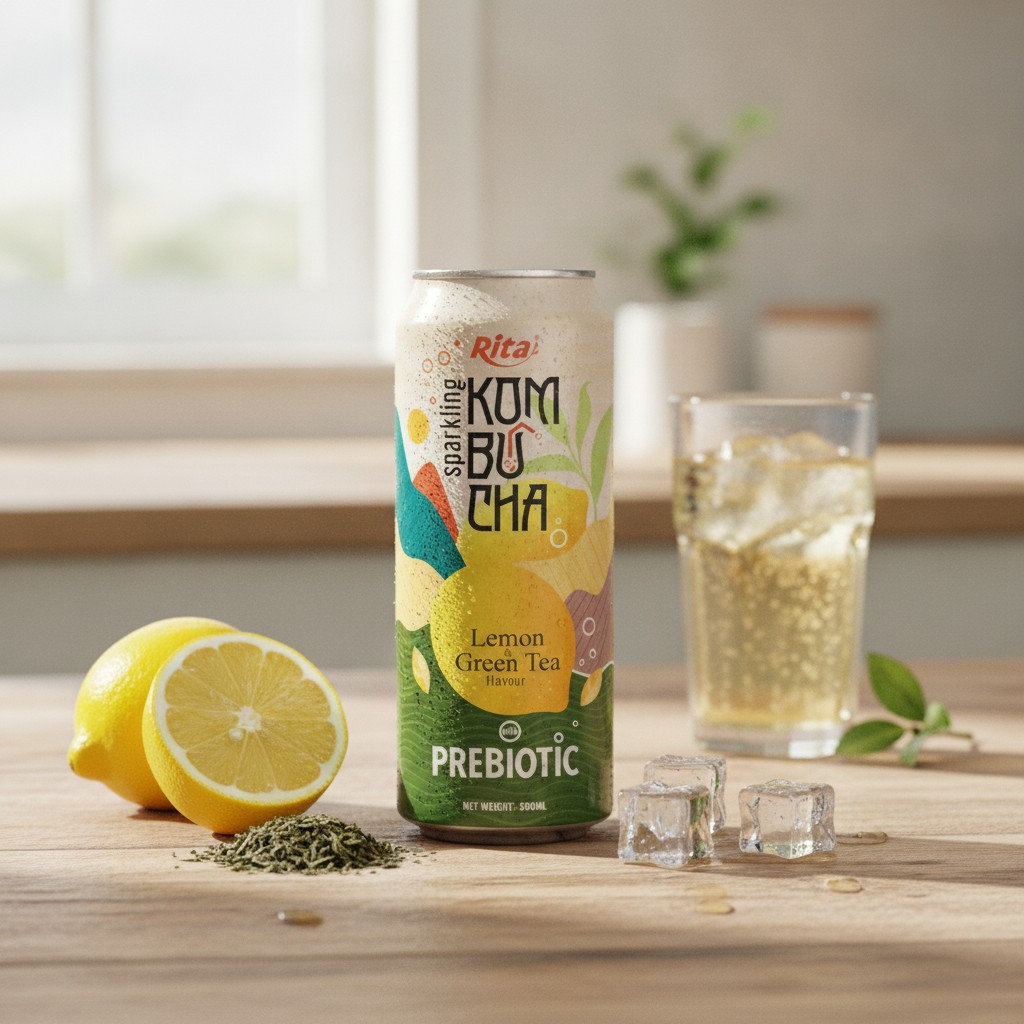
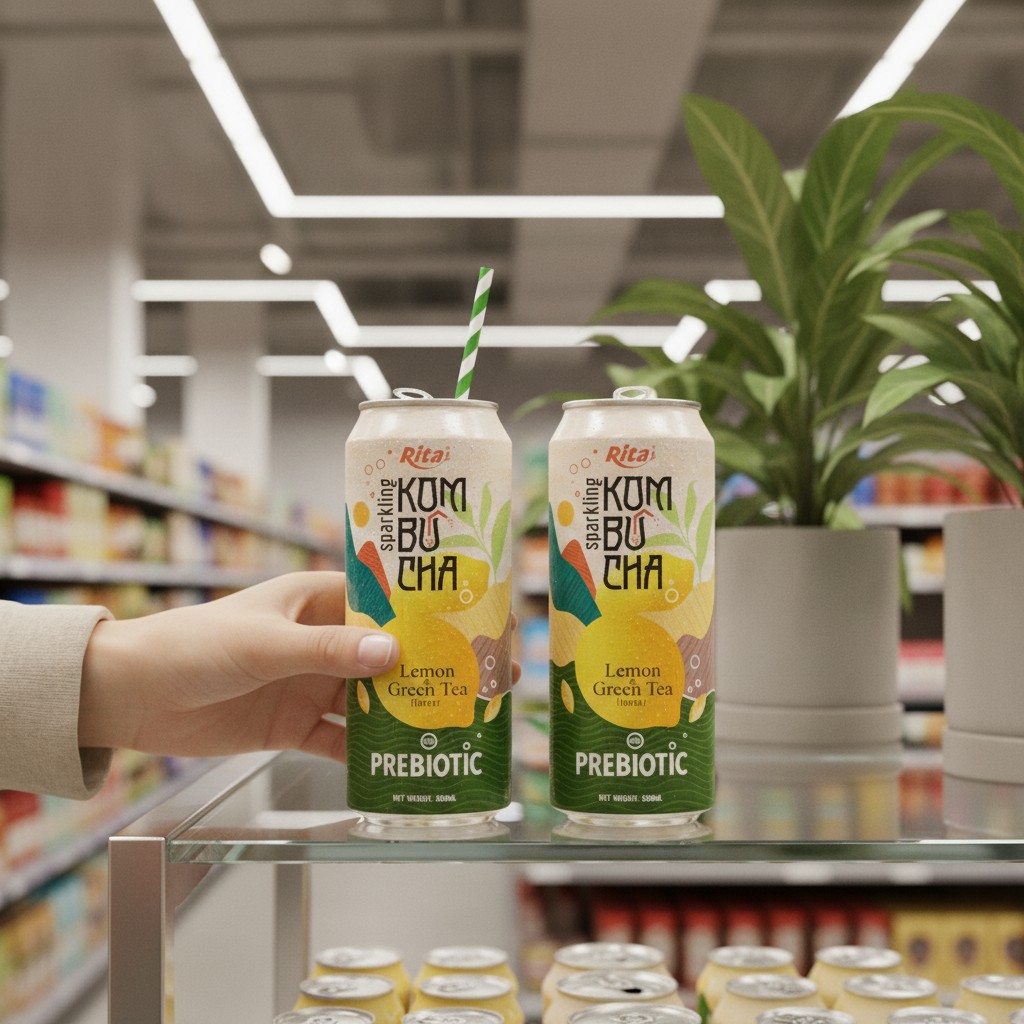
One example of a product meeting these criteria is the Sparkling Kombucha Prebiotic With Lemon And Green Tea 500ml Cans produced by Rita Food & Drink Co., Ltd. This SKU demonstrates how Vietnamese manufacturers are delivering export-ready kombucha with consistent quality and competitive pricing.
European Market Dynamics and Consumer Preferences
Europe’s beverage market is increasingly fragmented, with local and international brands competing for shelf space. In countries like the UK, Germany, and the Netherlands, kombucha has moved from a niche health drink to a mainstream refreshment option. For sparkling kombucha prebiotic lemon green tea to succeed in Europe, the flavor must resonate with local palates—lemon and green tea is a universally accepted combination that avoids polarizing notes.
European importers often require certifications such as BRC, FSSC 22000, and Halal or Kosher depending on the target country. Products manufactured at facilities with these credentials, like those of Rita, can expedite market entry. Additionally, the 500ml can format is versatile for single-serve retail, multi-pack e-commerce, and foodservice accounts like cafes and juice bars.
The rising interest in low-ABV and non-alcoholic alternatives also benefits kombucha. Many European consumers are participating in ‘Sober Curious’ movements, and sparkling kombucha offers a sophisticated option for social occasions. The prebiotic aspect, while not marketed as a health benefit in Europe due to strict regulations, can be framed as a natural fiber source in ingredient declarations.
Product Innovation and Formulation Flexibility
One of the key advantages of sourcing from established OEM/ODM partners is the ability to customize flavor profiles, sweetness levels, and carbonation. The Sparkling Kombucha Prebiotic With Lemon And Green Tea 500ml Cans serves as a template: a base of fermented kombucha tea is blended with natural lemon flavor and green tea extract, then lightly carbonated and fortified with prebiotic fiber.
For private-label clients, manufacturers like Rita can adjust the ratio of lemon to green tea, modify the sugar content (low or zero), and choose between different types of prebiotic fibers. The 500ml can size is optimal for both retail and on-the-go consumption, and MOQ flexibility allows distributors to test markets before scaling.
Packaging design also plays a critical role. The slim, modern can with soft green and yellow tones communicates freshness and sophistication. This design language works across Western markets and can be adapted for regional preferences through label localization.
Why Vietnam Is a Strategic Sourcing Hub
Vietnam has emerged as a major manufacturing base for beverage exports, particularly for kombucha, fruit juices, and coconut water. Companies like Rita Food & Drink Co., Ltd operate large-scale facilities with over 50 production lines, 500 employees, and capacity of ~1,200 containers per month. This enables consistent supply for large American and European buyers while maintaining competitive pricing.
For importers looking at sparkling kombucha prebiotic lemon green tea as a staple SKU, Vietnamese manufacturers offer several advantages: short lead times, full compliance with international food safety standards (ISO, HACCP, BRC, FSSC, HALAL, KOSHER), and strong R&D capabilities. Rita’s experience exporting to 200+ countries means they understand the documentation and labeling requirements for each target market.
Furthermore, the company provides comprehensive OEM/ODM services, including custom formulation, packaging design, and logistics support. This reduces the time-to-market for new brands and allows distributors to launch their own kombucha line without heavy upfront investment in production infrastructure.
OEM and Private Label Opportunities
For beverage startups or established distributors who want to enter the kombucha segment, sparkling kombucha prebiotic lemon green tea is an ideal product for private labeling. Rita offers options to adjust the flavor intensity (more lemon, stronger green tea), sweetness level (using cane sugar, stevia, or monk fruit), and carbonation level. The prebiotic fiber can be sourced from inulin or other clean-label ingredients as per buyer specifications.
Minimum order quantities (MOQ) are flexible for trial runs, allowing buyers to test consumer response with small batches before committing to large-scale shipments. This is particularly valuable in the U.S. and Europe where market trends shift quickly. Additionally, customized multi-pack designs (e.g., 4-pack, 6-pack) can help distributors target specific retail channels like club stores or convenience chains.
The product’s shelf life (typically 9–12 months when stored properly) and nitrogen-flush canning technology ensure freshness throughout the supply chain. Certifications such as BRC and FSSC 22000 further reduce trade barriers, as major retailers often mandate these for new listings.
Distribution and Go‑to‑Market Strategies
Successfully launching a sparkling kombucha prebiotic lemon green tea product in the U.S. or Europe requires a clear distribution strategy. For the U.S., targeting natural products expos like Expo West or engaging with specialty distributors (UNFI, KeHE) can accelerate retail placement. In Europe, country-specific importers or direct relationships with health food chains (REWE, Edeka, Carrefour Biomonde) are common.
Digital channels also play an important role. E‑commerce platforms like Amazon, Thrive Market, and local equivalents allow brands to build direct‑to‑consumer momentum. The sleek packaging of the Rita product example is well‑suited for social media marketing, as bright citrus and green tea imagery resonates well on Instagram and TikTok.
Moreover, foodservice accounts—cafes, juice bars, and hotel minibars—are strong secondary channels for 500ml cans. The convenient format and distinct flavor make it a premium alternative to standard sodas or sparkling waters.
Regulatory and Labeling Considerations
Importers must ensure that sparkling kombucha prebiotic lemon green tea complies with local regulations. In the U.S., the FDA requires that any prebiotic ingredient be listed on the ingredient panel, but functional claims are strictly prohibited. Similarly, European EFSA regulations prevent health claims unless sufficiently substantiated. Therefore, marketing should focus on taste, lifestyle, and ingredient transparency rather than functional benefits.
Rita’s products are manufactured in Halal‑certified facilities and come with full documentation for customs clearance. For U.S. entry, an FSMA-compliant foreign supplier verification program (FSVP) can be easily set up. Europe benefits from the BRC and FSSC certifications, which satisfy most retailer quality audits.
Frequently Asked Questions
What is sparkling kombucha prebiotic lemon green tea?
It is a carbonated beverage made from fermented tea (kombucha) combined with natural lemon flavor and green tea extract, plus added prebiotic fiber. It offers a crisp, citrusy taste with a light fizz, packaged in 500ml cans.
Why is this product popular in the USA and Europe?
Consumers are seeking low-sugar, sophisticated alternatives to soda. The combination of lemon and green tea provides a balanced flavor profile, while the prebiotic fiber appeals to interest in digestive wellness. The 500ml can format is convenient for on-the-go consumption.
Can I source this product for private label?
Yes, manufacturers like Rita Food & Drink Co., Ltd offer OEM/ODM services. You can customize the flavor ratio, sweetness level, carbonation, and packaging design. MOQ is flexible for trial orders.
What certifications does a good supplier have?
Key certifications include ISO, HACCP, BRC, FSSC 22000, HALAL, and KOSHER. These ensure compliance with U.S. FDA and European EFSA regulations, and facilitate placement in major retailers.